 675235ed05
Deallocating many of the properties created for each unit test. Since all XCTestCase instances survive until the end of the test suite, any properties created for a test will be preserved as well. This frees up around 3.7 MB (~6%) of memory from the entire test suite, as measured on my desktop. |Before|After| |----|----| |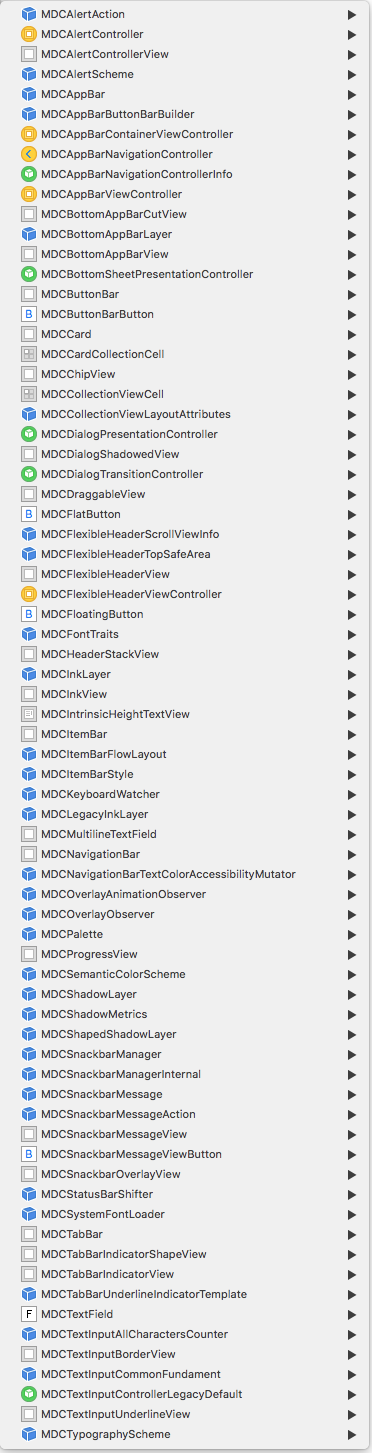|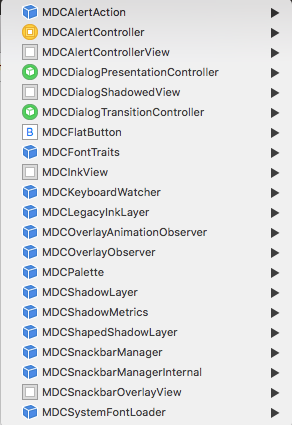| See also: https://qualitycoding.org/xctestcase-teardown/ Closes #5395


Tabs

Tabs are bars of buttons used to navigate between groups of content.

Design & API documentation
- Material Design guidelines: Tabs
- Class: MDCTabBarUnderlineIndicatorTemplate
- Class: MDCTabBar
- Class: MDCTabBarIndicatorAttributes
- Class: MDCTabBarViewController
- Protocol: MDCTabBarControllerDelegate
- Protocol: MDCTabBarDelegate
- Protocol: MDCTabBarIndicatorContext
- Protocol: MDCTabBarIndicatorTemplate
- Enumeration: Enumerations
- Enumeration: MDCTabBarAlignment
- Enumeration: MDCTabBarItemAppearance
- Enumeration: MDCTabBarItemState
- Enumeration: MDCTabBarTextTransform
Table of contents
Overview
When a user taps a tab, the content changes to match the selected subject in the tabs.
We provide this functionality through MDCTabBar which communicates via a delegate as well as MDCTabBarViewController which provides a view containment model similar to UITabViewController.
Tabs can also show a badge (usually a number) like UITabBar.
Installation
Installation with CocoaPods
Add the following to your Podfile:
pod 'MaterialComponents/Tabs'
Then, run the following command:
pod install
Importing
To import the component:
Swift
import MaterialComponents.MaterialTabs
Objective-C
#import "MaterialTabs.h"
Usage
Importing
To use the tab bar in your code, import the MaterialTabs umbrella header (Objective-C) or MaterialComponents module (Swift).
Swift
import MaterialComponents
Objective-C
#import "MaterialTabs.h"
Delegate
Conform your class to the MDCTabBarDelegate protocol and set it as the tab bar's delegate to handle updating the UI when the user selects a tab.
Selected item
Update the selected tab programmatically by setting selectedItem, optionally with an animation. Delegate methods are not called for programmatic changes, so callers are responsible for updating UI as needed after updating the selected item.
Appearance
Set the itemAppearance property on the tab bar to switch between item display modes. Items can be displayed as titles (the default), icons, or combined.
Styling
By default, the tab bar is configured to display items with white text and icons. To customize the color of the tab bar, set the tintColor, selectedItemTintColor, unselectedItemTintColor, inkColor, and barTintColor properties. If selectedItemTintColor is nil, the tab bar's tintColor will be used automatically for selected items.
Configure where items are placed in the tab bar by setting the alignment property.
Custom selection indicators
The currently-selected tab is indicated visually by a selection indicator. By default this is an
underline, but you can customize its appearance by defining a selection indicator template and
setting the selectionIndicatorTemplate property on the tab bar. Template objects are provided
contextual information about a tab's content and return attributes that describe how that tab's
indicator should appear. The indicator will then automatically display the provided shape and
animate changes as the user selects different tabs.
See MDCTabBarIndicatorTemplate and MDCTabBarIndicatorAttributes for details.
Bottom navigation
Implement positionForBar: and return UIBarPositionBottom to configure the tab bar as a bottom
navigation bar. The bar will automatically update with the appropriate styling.
Examples
Creating a tab bar
Swift
let tabBar = MDCTabBar(frame: view.bounds)
tabBar.items = [
UITabBarItem(title: "Recents", image: UIImage(named: "phone"), tag: 0),
UITabBarItem(title: "Favorites", image: UIImage(named: "heart"), tag: 0),
]
tabBar.itemAppearance = .titledImages
tabBar.autoresizingMask = [.flexibleWidth, .flexibleBottomMargin]
tabBar.sizeToFit()
view.addSubview(tabBar)
Objective-C
MDCTabBar *tabBar = [[MDCTabBar alloc] initWithFrame:self.view.bounds];
tabBar.items = @[
    [[UITabBarItem alloc] initWithTitle:@"Recents" image:[UIImage imageNamed:@"phone"] tag:0],
    [[UITabBarItem alloc] initWithTitle:@"Favorites" image:[UIImage imageNamed:@"heart"] tag:0],
];
tabBar.itemAppearance = MDCTabBarItemAppearanceTitledImages;
tabBar.autoresizingMask =
    UIViewAutoresizingFlexibleWidth | UIViewAutoresizingFlexibleBottomMargin;
[tabBar sizeToFit];
[self.view addSubview:tabBar];
Extensions
Color Theming
You can theme a tab bar with your app's color scheme using the ColorThemer extension.
You must first add the Color Themer extension to your project:
pod 'MaterialComponents/Tabs+ColorThemer'
Swift
// Step 1: Import the ColorThemer extension
import MaterialComponents.MaterialTabs_ColorThemer

// Step 2: Create or get a color scheme
let colorScheme = MDCSemanticColorScheme()

// Step 3: Apply the color scheme to your component
// Primary variant
MDCTabBarColorThemer.applySemanticColorScheme(colorScheme, toTabs: component)
// Or surface variant
MDCTabBarColorThemer.applySurfaceVariant(withColorScheme: colorScheme, toTabs: component)
Objective-C
// Step 1: Import the ColorThemer extension
#import "MaterialTabs+ColorThemer.h"

// Step 2: Create or get a color scheme
id<MDCColorScheming> colorScheme = [[MDCSemanticColorScheme alloc] init];

// Step 3: Apply the color scheme to your component
// Primary variant
[MDCTabBarColorThemer applySemanticColorScheme:colorScheme toTabs:component];
// Or surface variant
[MDCTabBarColorThemer applySurfaceVariantWithColorScheme:colorScheme toTabs:component];
Typography Theming
You can theme a tab bar with your app's typography scheme using the TypographyThemer extension.
You must first add the Typography Themer extension to your project:
pod 'MaterialComponents/Tabs+TypographyThemer'
Swift
// Step 1: Import the TypographyThemer extension
import MaterialComponents.MaterialTabs_TypographyThemer

// Step 2: Create or get a typography scheme
let typographyScheme = MDCTypographyScheme()

// Step 3: Apply the typography scheme to your component
MDCTabBarTypographyThemer.applyTypographyScheme(typographyScheme, to: component)
Objective-C
// Step 1: Import the TypographyThemer extension
#import "MaterialTabs+TypographyThemer.h"

// Step 2: Create or get a typography scheme
id<MDCTypographyScheming> typographyScheme = [[MDCTypographyScheme alloc] init];

// Step 3: Apply the typography scheme to your component
[MDCTabBarTypographyThemer applyTypographyScheme:colorScheme
     toTabBar:component];