This change splits out the implementation-specific files (required for
writing a Snapshot test case) from the supplemental files (conveniences
for making the test cases easier to write). This work is part of #7253.
Closes#7354
Instead of having to update snapshot targets manually, the podspec could
search for components with a "tests/snapshot" subdirectory and use that
to generate subspecs.
Initially this PR was supposed to consist of a revert of #6619 (which reverted #6611) with some small tweaks to fix whatever was wrong in #6611. It turned into something else! I had a hard time figuring out a way to both run MDCDragons/MDCCatalog with ⌘R _and_ run snapshot tests within either of the two apps' schemes. The only way I was able to manage it was by abandoning our convention for podspecs (only for snapshot tests), which relies heavily on nested subspecs and test_specs. In its place, I wrote a probably not very idiomatic ruby module that aims to allow for all snapshot testing source files to funnel into a single unit test target but still give us some flexibility in how we configure snapshot tests on a per component basis.
Closes#6700.
Sets up MDC iOS to allow each component to export "Test fakes" and test data for use by other components when performing tests.  The initial commit includes "test data" for MDCTypographyScheme that uses non-default values for each UIFont.

Contributors writing tests, particularly those that use shared components like schemes, can do so more quickly by accessing test data and test fakes directly from the component rather than having to write custom objects for each test.

**Bonus**
The new typography data has already confirmed the Dialogs bug #6637, which would have been discovered sooner if we didn't rely on the typographic defaults that already matched component defaults.

## Typical Usage

### Build/dependency management systems

**bazel BUILD files:**
```
deps = [
        "//components/schemes/Typography:TestingSupport",
],
```

**CocoaPods Podspec files:**
```ruby
  component.dependency "MaterialComponentsTestingSupport/schemes/Typography"
```

### Source includes

**Swift**
```swift
import MaterialComponentsTestingSupport.MaterialTypographyScheme_TestingSupport
```

**Objective-C**
```objc
#import <MaterialComponentsTestingSupporrt/MaterialTypographyScheme+TestingSupport.h>
```
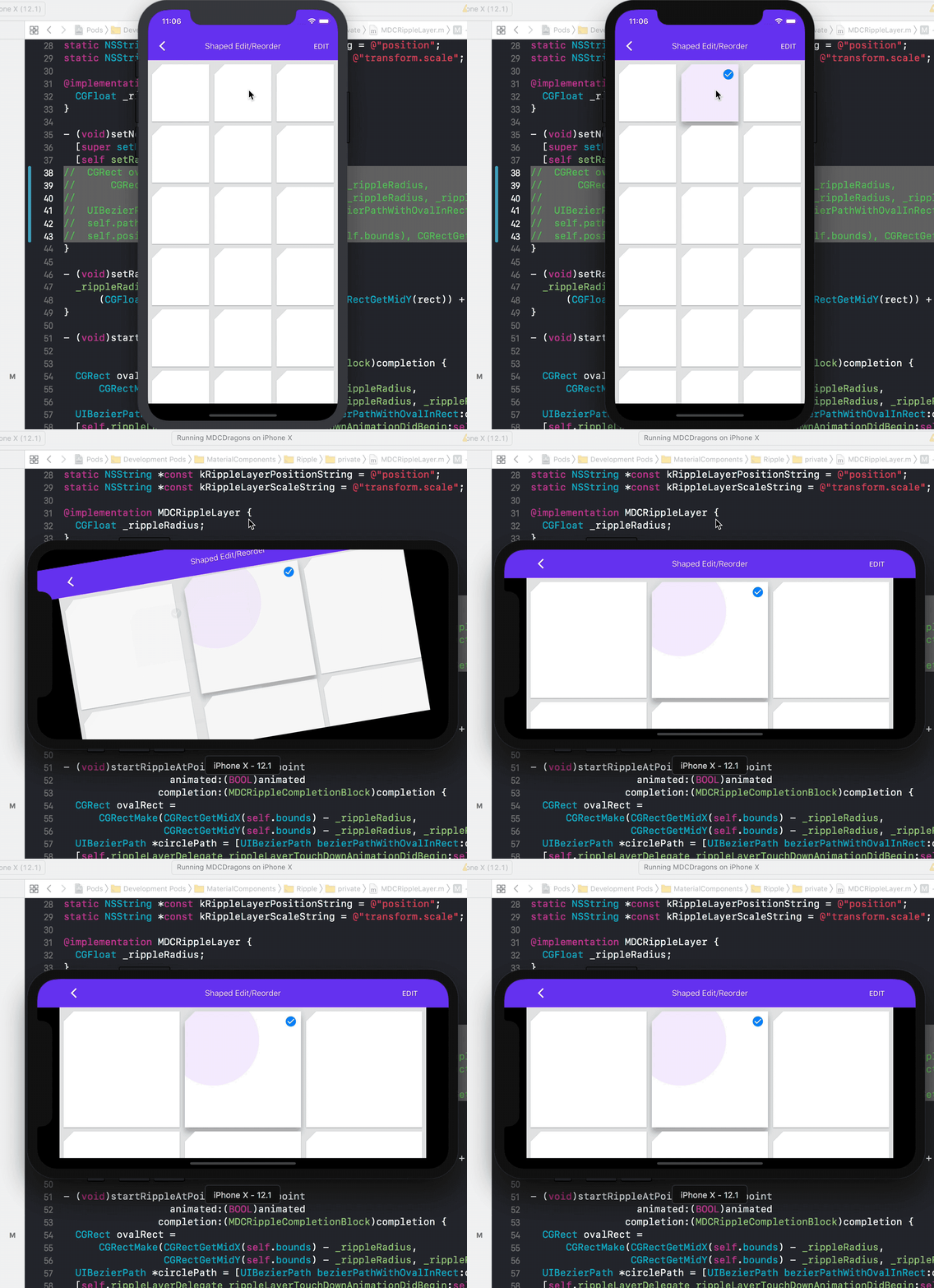
This fixes a long standing issue in our Ink/Ripple implementation where with auto layout the ink view doesn't fit itself correctly when there is a re-layout, as an example during an orientation change.
There were a few things needed to be fixed/added to be able to make the Ripple work correctly:
1. every time MDCRippleView lays out its view, the MDCRippleLayer sublayers need to receive the new bounds and need to lay out the ripple based on the new bounds.
2. The MDCRippleView should at all times be the size of it's superView.
2. When an MDCRippleLayer exists and needs to be laid out again, it needs to recalculate the ripple layer's position and path. This can happen as an example during a ripple animation when an orientation change occurs. This can also happen when there is a ripple overlay that isn't transient is on a surface and there is an orientation change.
3. Lastly, moving the MDCRippleLayer animations away from `removeOnCompletion = NO;` to having the final visual values be set prior to the animation, solves an issue where a `setNeedsLayout` reverts certain animations (an animation over layer.position) back to their original values and causes the ripple to be incorrectly centered.
Resolves#4533Resolves#4603
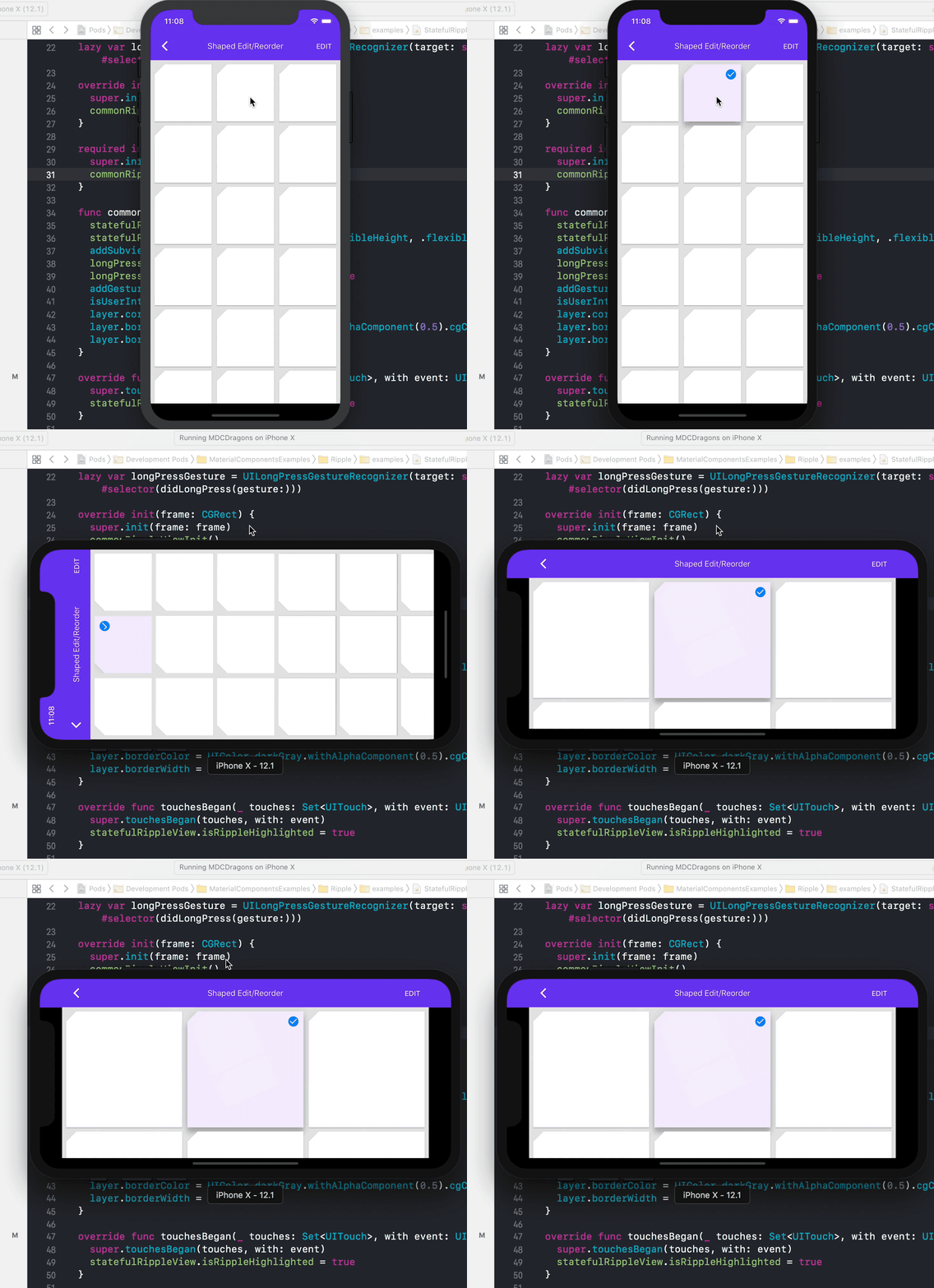
Below are provided gifs showing the fix.
Before:
After: