mirror of
https://github.com/flutter/flutter.git
synced 2026-02-20 02:29:02 +08:00
 d843863c4a
Fixes https://github.com/flutter/flutter/issues/137696

This will get the tree green again.

The problem is that `CustomSemanticsAction` has static state in it, and todays test seed order makes things unhappy.
5118 lines
197 KiB
Dart
5118 lines
197 KiB
Dart
// Copyright 2014 The Flutter Authors. All rights reserved.
|
||
// Use of this source code is governed by a BSD-style license that can be
|
||
// found in the LICENSE file.
|
||
|
||
import 'dart:math' as math;
|
||
import 'dart:ui' show Offset, Rect, SemanticsAction, SemanticsFlag, SemanticsUpdate, SemanticsUpdateBuilder, StringAttribute, TextDirection;
|
||
|
||
import 'package:collection/collection.dart';
|
||
import 'package:flutter/foundation.dart';
|
||
import 'package:flutter/painting.dart' show MatrixUtils, TransformProperty;
|
||
import 'package:flutter/services.dart';
|
||
import 'package:vector_math/vector_math_64.dart';
|
||
|
||
import 'binding.dart' show SemanticsBinding;
|
||
import 'semantics_event.dart';
|
||
|
||
export 'dart:ui' show Offset, Rect, SemanticsAction, SemanticsFlag, StringAttribute, TextDirection, VoidCallback;
|
||
|
||
export 'package:flutter/foundation.dart' show DiagnosticLevel, DiagnosticPropertiesBuilder, DiagnosticsNode, DiagnosticsTreeStyle, Key, TextTreeConfiguration;
|
||
export 'package:flutter/services.dart' show TextSelection;
|
||
export 'package:vector_math/vector_math_64.dart' show Matrix4;
|
||
|
||
export 'semantics_event.dart' show SemanticsEvent;
|
||
|
||
/// Signature for a function that is called for each [SemanticsNode].
|
||
///
|
||
/// Return false to stop visiting nodes.
|
||
///
|
||
/// Used by [SemanticsNode.visitChildren].
|
||
typedef SemanticsNodeVisitor = bool Function(SemanticsNode node);
|
||
|
||
/// Signature for [SemanticsAction]s that move the cursor.
|
||
///
|
||
/// If `extendSelection` is set to true the cursor movement should extend the
|
||
/// current selection or (if nothing is currently selected) start a selection.
|
||
typedef MoveCursorHandler = void Function(bool extendSelection);
|
||
|
||
/// Signature for the [SemanticsAction.setSelection] handlers to change the
|
||
/// text selection (or re-position the cursor) to `selection`.
|
||
typedef SetSelectionHandler = void Function(TextSelection selection);
|
||
|
||
/// Signature for the [SemanticsAction.setText] handlers to replace the
|
||
/// current text with the input `text`.
|
||
typedef SetTextHandler = void Function(String text);
|
||
|
||
/// Signature for a handler of a [SemanticsAction].
|
||
///
|
||
/// Returned by [SemanticsConfiguration.getActionHandler].
|
||
typedef SemanticsActionHandler = void Function(Object? args);
|
||
|
||
/// Signature for a function that receives a semantics update and returns no result.
|
||
///
|
||
/// Used by [SemanticsOwner.onSemanticsUpdate].
|
||
typedef SemanticsUpdateCallback = void Function(SemanticsUpdate update);
|
||
|
||
/// Signature for the [SemanticsConfiguration.childConfigurationsDelegate].
|
||
///
|
||
/// The input list contains all [SemanticsConfiguration]s that rendering
|
||
/// children want to merge upward. One can tag a render child with a
|
||
/// [SemanticsTag] and look up its [SemanticsConfiguration]s through
|
||
/// [SemanticsConfiguration.tagsChildrenWith].
|
||
///
|
||
/// The return value is the arrangement of these configs, including which
|
||
/// configs continue to merge upward and which configs form sibling merge group.
|
||
///
|
||
/// Use [ChildSemanticsConfigurationsResultBuilder] to generate the return
|
||
/// value.
|
||
typedef ChildSemanticsConfigurationsDelegate = ChildSemanticsConfigurationsResult Function(List<SemanticsConfiguration>);
|
||
|
||
final int _kUnblockedUserActions = SemanticsAction.didGainAccessibilityFocus.index
|
||
| SemanticsAction.didLoseAccessibilityFocus.index;
|
||
|
||
/// A tag for a [SemanticsNode].
|
||
///
|
||
/// Tags can be interpreted by the parent of a [SemanticsNode]
|
||
/// and depending on the presence of a tag the parent can for example decide
|
||
/// how to add the tagged node as a child. Tags are not sent to the engine.
|
||
///
|
||
/// As an example, the [RenderSemanticsGestureHandler] uses tags to determine
|
||
/// if a child node should be excluded from the scrollable area for semantic
|
||
/// purposes.
|
||
///
|
||
/// The provided [name] is only used for debugging. Two tags created with the
|
||
/// same [name] and the `new` operator are not considered identical. However,
|
||
/// two tags created with the same [name] and the `const` operator are always
|
||
/// identical.
|
||
class SemanticsTag {
|
||
/// Creates a [SemanticsTag].
|
||
///
|
||
/// The provided [name] is only used for debugging. Two tags created with the
|
||
/// same [name] and the `new` operator are not considered identical. However,
|
||
/// two tags created with the same [name] and the `const` operator are always
|
||
/// identical.
|
||
const SemanticsTag(this.name);
|
||
|
||
/// A human-readable name for this tag used for debugging.
|
||
///
|
||
/// This string is not used to determine if two tags are identical.
|
||
final String name;
|
||
|
||
@override
|
||
String toString() => '${objectRuntimeType(this, 'SemanticsTag')}($name)';
|
||
}
|
||
|
||
/// The result that contains the arrangement for the child
|
||
/// [SemanticsConfiguration]s.
|
||
///
|
||
/// When the [PipelineOwner] builds the semantics tree, it uses the returned
|
||
/// [ChildSemanticsConfigurationsResult] from
|
||
/// [SemanticsConfiguration.childConfigurationsDelegate] to decide how semantics nodes
|
||
/// should form.
|
||
///
|
||
/// Use [ChildSemanticsConfigurationsResultBuilder] to build the result.
|
||
class ChildSemanticsConfigurationsResult {
|
||
ChildSemanticsConfigurationsResult._(this.mergeUp, this.siblingMergeGroups);
|
||
|
||
/// Returns the [SemanticsConfiguration]s that are supposed to be merged into
|
||
/// the parent semantics node.
|
||
///
|
||
/// [SemanticsConfiguration]s that are either semantics boundaries or are
|
||
/// conflicting with other [SemanticsConfiguration]s will form explicit
|
||
/// semantics nodes. All others will be merged into the parent.
|
||
final List<SemanticsConfiguration> mergeUp;
|
||
|
||
/// The groups of child semantics configurations that want to merge together
|
||
/// and form a sibling [SemanticsNode].
|
||
///
|
||
/// All the [SemanticsConfiguration]s in a given group that are either
|
||
/// semantics boundaries or are conflicting with other
|
||
/// [SemanticsConfiguration]s of the same group will be excluded from the
|
||
/// sibling merge group and form independent semantics nodes as usual.
|
||
///
|
||
/// The result [SemanticsNode]s from the merges are attached as the sibling
|
||
/// nodes of the immediate parent semantics node. For example, a `RenderObjectA`
|
||
/// has a rendering child, `RenderObjectB`. If both of them form their own
|
||
/// semantics nodes, `SemanticsNodeA` and `SemanticsNodeB`, any semantics node
|
||
/// created from sibling merge groups of `RenderObjectB` will be attach to
|
||
/// `SemanticsNodeA` as a sibling of `SemanticsNodeB`.
|
||
final List<List<SemanticsConfiguration>> siblingMergeGroups;
|
||
}
|
||
|
||
/// The builder to build a [ChildSemanticsConfigurationsResult] based on its
|
||
/// annotations.
|
||
///
|
||
/// To use this builder, one can use [markAsMergeUp] and
|
||
/// [markAsSiblingMergeGroup] to annotate the arrangement of
|
||
/// [SemanticsConfiguration]s. Once all the configs are annotated, use [build]
|
||
/// to generate the [ChildSemanticsConfigurationsResult].
|
||
class ChildSemanticsConfigurationsResultBuilder {
|
||
/// Creates a [ChildSemanticsConfigurationsResultBuilder].
|
||
ChildSemanticsConfigurationsResultBuilder();
|
||
|
||
final List<SemanticsConfiguration> _mergeUp = <SemanticsConfiguration>[];
|
||
final List<List<SemanticsConfiguration>> _siblingMergeGroups = <List<SemanticsConfiguration>>[];
|
||
|
||
/// Marks the [SemanticsConfiguration] to be merged into the parent semantics
|
||
/// node.
|
||
///
|
||
/// The [SemanticsConfiguration] will be added to the
|
||
/// [ChildSemanticsConfigurationsResult.mergeUp] that this builder builds.
|
||
void markAsMergeUp(SemanticsConfiguration config) => _mergeUp.add(config);
|
||
|
||
/// Marks a group of [SemanticsConfiguration]s to merge together
|
||
/// and form a sibling [SemanticsNode].
|
||
///
|
||
/// The group of [SemanticsConfiguration]s will be added to the
|
||
/// [ChildSemanticsConfigurationsResult.siblingMergeGroups] that this builder builds.
|
||
void markAsSiblingMergeGroup(List<SemanticsConfiguration> configs) => _siblingMergeGroups.add(configs);
|
||
|
||
/// Builds a [ChildSemanticsConfigurationsResult] contains the arrangement.
|
||
ChildSemanticsConfigurationsResult build() {
|
||
assert((){
|
||
final Set<SemanticsConfiguration> seenConfigs = <SemanticsConfiguration>{};
|
||
for (final SemanticsConfiguration config in <SemanticsConfiguration>[..._mergeUp, ..._siblingMergeGroups.flattened]) {
|
||
assert(
|
||
seenConfigs.add(config),
|
||
'Duplicated SemanticsConfigurations. This can happen if the same '
|
||
'SemanticsConfiguration was marked twice in markAsMergeUp and/or '
|
||
'markAsSiblingMergeGroup'
|
||
);
|
||
}
|
||
return true;
|
||
}());
|
||
return ChildSemanticsConfigurationsResult._(_mergeUp, _siblingMergeGroups);
|
||
}
|
||
}
|
||
|
||
/// An identifier of a custom semantics action.
|
||
///
|
||
/// Custom semantics actions can be provided to make complex user
|
||
/// interactions more accessible. For instance, if an application has a
|
||
/// drag-and-drop list that requires the user to press and hold an item
|
||
/// to move it, users interacting with the application using a hardware
|
||
/// switch may have difficulty. This can be made accessible by creating custom
|
||
/// actions and pairing them with handlers that move a list item up or down in
|
||
/// the list.
|
||
///
|
||
/// In Android, these actions are presented in the local context menu. In iOS,
|
||
/// these are presented in the radial context menu.
|
||
///
|
||
/// Localization and text direction do not automatically apply to the provided
|
||
/// label or hint.
|
||
///
|
||
/// Instances of this class should either be instantiated with const or
|
||
/// new instances cached in static fields.
|
||
///
|
||
/// See also:
|
||
///
|
||
/// * [SemanticsProperties], where the handler for a custom action is provided.
|
||
@immutable
|
||
class CustomSemanticsAction {
|
||
/// Creates a new [CustomSemanticsAction].
|
||
///
|
||
/// The [label] must not be empty.
|
||
const CustomSemanticsAction({required String this.label})
|
||
: assert(label != ''),
|
||
hint = null,
|
||
action = null;
|
||
|
||
/// Creates a new [CustomSemanticsAction] that overrides a standard semantics
|
||
/// action.
|
||
///
|
||
/// The [hint] must not be empty.
|
||
const CustomSemanticsAction.overridingAction({required String this.hint, required SemanticsAction this.action})
|
||
: assert(hint != ''),
|
||
label = null;
|
||
|
||
/// The user readable name of this custom semantics action.
|
||
final String? label;
|
||
|
||
/// The hint description of this custom semantics action.
|
||
final String? hint;
|
||
|
||
/// The standard semantics action this action replaces.
|
||
final SemanticsAction? action;
|
||
|
||
@override
|
||
int get hashCode => Object.hash(label, hint, action);
|
||
|
||
@override
|
||
bool operator ==(Object other) {
|
||
if (other.runtimeType != runtimeType) {
|
||
return false;
|
||
}
|
||
return other is CustomSemanticsAction
|
||
&& other.label == label
|
||
&& other.hint == hint
|
||
&& other.action == action;
|
||
}
|
||
|
||
@override
|
||
String toString() {
|
||
return 'CustomSemanticsAction(${_ids[this]}, label:$label, hint:$hint, action:$action)';
|
||
}
|
||
|
||
// Logic to assign a unique id to each custom action without requiring
|
||
// user specification.
|
||
static int _nextId = 0;
|
||
static final Map<int, CustomSemanticsAction> _actions = <int, CustomSemanticsAction>{};
|
||
static final Map<CustomSemanticsAction, int> _ids = <CustomSemanticsAction, int>{};
|
||
|
||
/// Get the identifier for a given `action`.
|
||
static int getIdentifier(CustomSemanticsAction action) {
|
||
int? result = _ids[action];
|
||
if (result == null) {
|
||
result = _nextId++;
|
||
_ids[action] = result;
|
||
_actions[result] = action;
|
||
}
|
||
return result;
|
||
}
|
||
|
||
/// Get the `action` for a given identifier.
|
||
static CustomSemanticsAction? getAction(int id) {
|
||
return _actions[id];
|
||
}
|
||
|
||
/// Resets internal state between tests. Does nothing if asserts are disabled.
|
||
@visibleForTesting
|
||
static void resetForTests() {
|
||
assert(() {
|
||
_actions.clear();
|
||
_ids.clear();
|
||
_nextId = 0;
|
||
return true;
|
||
}());
|
||
}
|
||
}
|
||
|
||
/// A string that carries a list of [StringAttribute]s.
|
||
@immutable
|
||
class AttributedString {
|
||
/// Creates a attributed string.
|
||
///
|
||
/// The [TextRange] in the [attributes] must be inside the length of the
|
||
/// [string].
|
||
///
|
||
/// The [attributes] must not be changed after the attributed string is
|
||
/// created.
|
||
AttributedString(
|
||
this.string, {
|
||
this.attributes = const <StringAttribute>[],
|
||
}) : assert(string.isNotEmpty || attributes.isEmpty),
|
||
assert(() {
|
||
for (final StringAttribute attribute in attributes) {
|
||
assert(
|
||
string.length >= attribute.range.start &&
|
||
string.length >= attribute.range.end,
|
||
'The range in $attribute is outside of the string $string',
|
||
);
|
||
}
|
||
return true;
|
||
}());
|
||
|
||
/// The plain string stored in the attributed string.
|
||
final String string;
|
||
|
||
/// The attributes this string carries.
|
||
///
|
||
/// The list must not be modified after this string is created.
|
||
final List<StringAttribute> attributes;
|
||
|
||
/// Returns a new [AttributedString] by concatenate the operands
|
||
///
|
||
/// The string attribute list of the returned [AttributedString] will contains
|
||
/// the string attributes from both operands with updated text ranges.
|
||
AttributedString operator +(AttributedString other) {
|
||
if (string.isEmpty) {
|
||
return other;
|
||
}
|
||
if (other.string.isEmpty) {
|
||
return this;
|
||
}
|
||
|
||
// None of the strings is empty.
|
||
final String newString = string + other.string;
|
||
final List<StringAttribute> newAttributes = List<StringAttribute>.of(attributes);
|
||
if (other.attributes.isNotEmpty) {
|
||
final int offset = string.length;
|
||
for (final StringAttribute attribute in other.attributes) {
|
||
final TextRange newRange = TextRange(
|
||
start: attribute.range.start + offset,
|
||
end: attribute.range.end + offset,
|
||
);
|
||
final StringAttribute adjustedAttribute = attribute.copy(range: newRange);
|
||
newAttributes.add(adjustedAttribute);
|
||
}
|
||
}
|
||
return AttributedString(newString, attributes: newAttributes);
|
||
}
|
||
|
||
/// Two [AttributedString]s are equal if their string and attributes are.
|
||
@override
|
||
bool operator ==(Object other) {
|
||
return other.runtimeType == runtimeType
|
||
&& other is AttributedString
|
||
&& other.string == string
|
||
&& listEquals<StringAttribute>(other.attributes, attributes);
|
||
}
|
||
|
||
@override
|
||
int get hashCode => Object.hash(string, attributes);
|
||
|
||
@override
|
||
String toString() {
|
||
return "${objectRuntimeType(this, 'AttributedString')}('$string', attributes: $attributes)";
|
||
}
|
||
}
|
||
|
||
/// A [DiagnosticsProperty] for [AttributedString]s, which shows a string
|
||
/// when there are no attributes, and more details otherwise.
|
||
class AttributedStringProperty extends DiagnosticsProperty<AttributedString> {
|
||
/// Create a diagnostics property for an [AttributedString] object.
|
||
///
|
||
/// Such properties are used with [SemanticsData] objects.
|
||
AttributedStringProperty(
|
||
String super.name,
|
||
super.value, {
|
||
super.showName,
|
||
this.showWhenEmpty = false,
|
||
super.defaultValue,
|
||
super.level,
|
||
super.description,
|
||
});
|
||
|
||
/// Whether to show the property when the [value] is an [AttributedString]
|
||
/// whose [AttributedString.string] is the empty string.
|
||
///
|
||
/// This overrides [defaultValue].
|
||
final bool showWhenEmpty;
|
||
|
||
@override
|
||
bool get isInteresting => super.isInteresting && (showWhenEmpty || (value != null && value!.string.isNotEmpty));
|
||
|
||
@override
|
||
String valueToString({TextTreeConfiguration? parentConfiguration}) {
|
||
if (value == null) {
|
||
return 'null';
|
||
}
|
||
String text = value!.string;
|
||
if (parentConfiguration != null &&
|
||
!parentConfiguration.lineBreakProperties) {
|
||
// This follows a similar pattern to StringProperty.
|
||
text = text.replaceAll('\n', r'\n');
|
||
}
|
||
if (value!.attributes.isEmpty) {
|
||
return '"$text"';
|
||
}
|
||
return '"$text" ${value!.attributes}'; // the attributes will be in square brackets since they're a list
|
||
}
|
||
}
|
||
|
||
/// Summary information about a [SemanticsNode] object.
|
||
///
|
||
/// A semantics node might [SemanticsNode.mergeAllDescendantsIntoThisNode],
|
||
/// which means the individual fields on the semantics node don't fully describe
|
||
/// the semantics at that node. This data structure contains the full semantics
|
||
/// for the node.
|
||
///
|
||
/// Typically obtained from [SemanticsNode.getSemanticsData].
|
||
@immutable
|
||
class SemanticsData with Diagnosticable {
|
||
/// Creates a semantics data object.
|
||
///
|
||
/// If [label] is not empty, then [textDirection] must also not be null.
|
||
SemanticsData({
|
||
required this.flags,
|
||
required this.actions,
|
||
required this.attributedLabel,
|
||
required this.attributedValue,
|
||
required this.attributedIncreasedValue,
|
||
required this.attributedDecreasedValue,
|
||
required this.attributedHint,
|
||
required this.tooltip,
|
||
required this.textDirection,
|
||
required this.rect,
|
||
required this.elevation,
|
||
required this.thickness,
|
||
required this.textSelection,
|
||
required this.scrollIndex,
|
||
required this.scrollChildCount,
|
||
required this.scrollPosition,
|
||
required this.scrollExtentMax,
|
||
required this.scrollExtentMin,
|
||
required this.platformViewId,
|
||
required this.maxValueLength,
|
||
required this.currentValueLength,
|
||
this.tags,
|
||
this.transform,
|
||
this.customSemanticsActionIds,
|
||
}) : assert(tooltip == '' || textDirection != null, 'A SemanticsData object with tooltip "$tooltip" had a null textDirection.'),
|
||
assert(attributedLabel.string == '' || textDirection != null, 'A SemanticsData object with label "${attributedLabel.string}" had a null textDirection.'),
|
||
assert(attributedValue.string == '' || textDirection != null, 'A SemanticsData object with value "${attributedValue.string}" had a null textDirection.'),
|
||
assert(attributedDecreasedValue.string == '' || textDirection != null, 'A SemanticsData object with decreasedValue "${attributedDecreasedValue.string}" had a null textDirection.'),
|
||
assert(attributedIncreasedValue.string == '' || textDirection != null, 'A SemanticsData object with increasedValue "${attributedIncreasedValue.string}" had a null textDirection.'),
|
||
assert(attributedHint.string == '' || textDirection != null, 'A SemanticsData object with hint "${attributedHint.string}" had a null textDirection.');
|
||
|
||
/// A bit field of [SemanticsFlag]s that apply to this node.
|
||
final int flags;
|
||
|
||
/// A bit field of [SemanticsAction]s that apply to this node.
|
||
final int actions;
|
||
|
||
/// A textual description for the current label of the node.
|
||
///
|
||
/// The reading direction is given by [textDirection].
|
||
///
|
||
/// This exposes the raw text of the [attributedLabel].
|
||
String get label => attributedLabel.string;
|
||
|
||
/// A textual description for the current label of the node in
|
||
/// [AttributedString] format.
|
||
///
|
||
/// The reading direction is given by [textDirection].
|
||
///
|
||
/// See also [label], which exposes just the raw text.
|
||
final AttributedString attributedLabel;
|
||
|
||
/// A textual description for the current value of the node.
|
||
///
|
||
/// The reading direction is given by [textDirection].
|
||
///
|
||
/// This exposes the raw text of the [attributedValue].
|
||
String get value => attributedValue.string;
|
||
|
||
/// A textual description for the current value of the node in
|
||
/// [AttributedString] format.
|
||
///
|
||
/// The reading direction is given by [textDirection].
|
||
///
|
||
/// See also [value], which exposes just the raw text.
|
||
final AttributedString attributedValue;
|
||
|
||
/// The value that [value] will become after performing a
|
||
/// [SemanticsAction.increase] action.
|
||
///
|
||
/// The reading direction is given by [textDirection].
|
||
///
|
||
/// This exposes the raw text of the [attributedIncreasedValue].
|
||
String get increasedValue => attributedIncreasedValue.string;
|
||
|
||
/// The value that [value] will become after performing a
|
||
/// [SemanticsAction.increase] action in [AttributedString] format.
|
||
///
|
||
/// The reading direction is given by [textDirection].
|
||
///
|
||
/// See also [increasedValue], which exposes just the raw text.
|
||
final AttributedString attributedIncreasedValue;
|
||
|
||
/// The value that [value] will become after performing a
|
||
/// [SemanticsAction.decrease] action.
|
||
///
|
||
/// The reading direction is given by [textDirection].
|
||
///
|
||
/// This exposes the raw text of the [attributedDecreasedValue].
|
||
String get decreasedValue => attributedDecreasedValue.string;
|
||
|
||
/// The value that [value] will become after performing a
|
||
/// [SemanticsAction.decrease] action in [AttributedString] format.
|
||
///
|
||
/// The reading direction is given by [textDirection].
|
||
///
|
||
/// See also [decreasedValue], which exposes just the raw text.
|
||
final AttributedString attributedDecreasedValue;
|
||
|
||
/// A brief description of the result of performing an action on this node.
|
||
///
|
||
/// The reading direction is given by [textDirection].
|
||
///
|
||
/// This exposes the raw text of the [attributedHint].
|
||
String get hint => attributedHint.string;
|
||
|
||
/// A brief description of the result of performing an action on this node
|
||
/// in [AttributedString] format.
|
||
///
|
||
/// The reading direction is given by [textDirection].
|
||
///
|
||
/// See also [hint], which exposes just the raw text.
|
||
final AttributedString attributedHint;
|
||
|
||
/// A textual description of the widget's tooltip.
|
||
///
|
||
/// The reading direction is given by [textDirection].
|
||
final String tooltip;
|
||
|
||
/// The reading direction for the text in [label], [value],
|
||
/// [increasedValue], [decreasedValue], and [hint].
|
||
final TextDirection? textDirection;
|
||
|
||
/// The currently selected text (or the position of the cursor) within [value]
|
||
/// if this node represents a text field.
|
||
final TextSelection? textSelection;
|
||
|
||
/// The total number of scrollable children that contribute to semantics.
|
||
///
|
||
/// If the number of children are unknown or unbounded, this value will be
|
||
/// null.
|
||
final int? scrollChildCount;
|
||
|
||
/// The index of the first visible semantic child of a scroll node.
|
||
final int? scrollIndex;
|
||
|
||
/// Indicates the current scrolling position in logical pixels if the node is
|
||
/// scrollable.
|
||
///
|
||
/// The properties [scrollExtentMin] and [scrollExtentMax] indicate the valid
|
||
/// in-range values for this property. The value for [scrollPosition] may
|
||
/// (temporarily) be outside that range, e.g. during an overscroll.
|
||
///
|
||
/// See also:
|
||
///
|
||
/// * [ScrollPosition.pixels], from where this value is usually taken.
|
||
final double? scrollPosition;
|
||
|
||
/// Indicates the maximum in-range value for [scrollPosition] if the node is
|
||
/// scrollable.
|
||
///
|
||
/// This value may be infinity if the scroll is unbound.
|
||
///
|
||
/// See also:
|
||
///
|
||
/// * [ScrollPosition.maxScrollExtent], from where this value is usually taken.
|
||
final double? scrollExtentMax;
|
||
|
||
/// Indicates the minimum in-range value for [scrollPosition] if the node is
|
||
/// scrollable.
|
||
///
|
||
/// This value may be infinity if the scroll is unbound.
|
||
///
|
||
/// See also:
|
||
///
|
||
/// * [ScrollPosition.minScrollExtent], from where this value is usually taken.
|
||
final double? scrollExtentMin;
|
||
|
||
/// The id of the platform view, whose semantics nodes will be added as
|
||
/// children to this node.
|
||
///
|
||
/// If this value is non-null, the SemanticsNode must not have any children
|
||
/// as those would be replaced by the semantics nodes of the referenced
|
||
/// platform view.
|
||
///
|
||
/// See also:
|
||
///
|
||
/// * [AndroidView], which is the platform view for Android.
|
||
/// * [UiKitView], which is the platform view for iOS.
|
||
final int? platformViewId;
|
||
|
||
/// The maximum number of characters that can be entered into an editable
|
||
/// text field.
|
||
///
|
||
/// For the purpose of this function a character is defined as one Unicode
|
||
/// scalar value.
|
||
///
|
||
/// This should only be set when [SemanticsFlag.isTextField] is set. Defaults
|
||
/// to null, which means no limit is imposed on the text field.
|
||
final int? maxValueLength;
|
||
|
||
/// The current number of characters that have been entered into an editable
|
||
/// text field.
|
||
///
|
||
/// For the purpose of this function a character is defined as one Unicode
|
||
/// scalar value.
|
||
///
|
||
/// This should only be set when [SemanticsFlag.isTextField] is set. This must
|
||
/// be set when [maxValueLength] is set.
|
||
final int? currentValueLength;
|
||
|
||
/// The bounding box for this node in its coordinate system.
|
||
final Rect rect;
|
||
|
||
/// The set of [SemanticsTag]s associated with this node.
|
||
final Set<SemanticsTag>? tags;
|
||
|
||
/// The transform from this node's coordinate system to its parent's coordinate system.
|
||
///
|
||
/// By default, the transform is null, which represents the identity
|
||
/// transformation (i.e., that this node has the same coordinate system as its
|
||
/// parent).
|
||
final Matrix4? transform;
|
||
|
||
/// The elevation of this node relative to the parent semantics node.
|
||
///
|
||
/// See also:
|
||
///
|
||
/// * [SemanticsConfiguration.elevation] for a detailed discussion regarding
|
||
/// elevation and semantics.
|
||
final double elevation;
|
||
|
||
/// The extent of this node along the z-axis beyond its [elevation]
|
||
///
|
||
/// See also:
|
||
///
|
||
/// * [SemanticsConfiguration.thickness] for a more detailed definition.
|
||
final double thickness;
|
||
|
||
/// The identifiers for the custom semantics actions and standard action
|
||
/// overrides for this node.
|
||
///
|
||
/// The list must be sorted in increasing order.
|
||
///
|
||
/// See also:
|
||
///
|
||
/// * [CustomSemanticsAction], for an explanation of custom actions.
|
||
final List<int>? customSemanticsActionIds;
|
||
|
||
/// Whether [flags] contains the given flag.
|
||
bool hasFlag(SemanticsFlag flag) => (flags & flag.index) != 0;
|
||
|
||
/// Whether [actions] contains the given action.
|
||
bool hasAction(SemanticsAction action) => (actions & action.index) != 0;
|
||
|
||
@override
|
||
String toStringShort() => objectRuntimeType(this, 'SemanticsData');
|
||
|
||
@override
|
||
void debugFillProperties(DiagnosticPropertiesBuilder properties) {
|
||
super.debugFillProperties(properties);
|
||
properties.add(DiagnosticsProperty<Rect>('rect', rect, showName: false));
|
||
properties.add(TransformProperty('transform', transform, showName: false, defaultValue: null));
|
||
properties.add(DoubleProperty('elevation', elevation, defaultValue: 0.0));
|
||
properties.add(DoubleProperty('thickness', thickness, defaultValue: 0.0));
|
||
final List<String> actionSummary = <String>[
|
||
for (final SemanticsAction action in SemanticsAction.values)
|
||
if ((actions & action.index) != 0)
|
||
action.name,
|
||
];
|
||
final List<String?> customSemanticsActionSummary = customSemanticsActionIds!
|
||
.map<String?>((int actionId) => CustomSemanticsAction.getAction(actionId)!.label)
|
||
.toList();
|
||
properties.add(IterableProperty<String>('actions', actionSummary, ifEmpty: null));
|
||
properties.add(IterableProperty<String?>('customActions', customSemanticsActionSummary, ifEmpty: null));
|
||
|
||
final List<String> flagSummary = <String>[
|
||
for (final SemanticsFlag flag in SemanticsFlag.values)
|
||
if ((flags & flag.index) != 0)
|
||
flag.name,
|
||
];
|
||
properties.add(IterableProperty<String>('flags', flagSummary, ifEmpty: null));
|
||
properties.add(AttributedStringProperty('label', attributedLabel));
|
||
properties.add(AttributedStringProperty('value', attributedValue));
|
||
properties.add(AttributedStringProperty('increasedValue', attributedIncreasedValue));
|
||
properties.add(AttributedStringProperty('decreasedValue', attributedDecreasedValue));
|
||
properties.add(AttributedStringProperty('hint', attributedHint));
|
||
properties.add(StringProperty('tooltip', tooltip, defaultValue: ''));
|
||
properties.add(EnumProperty<TextDirection>('textDirection', textDirection, defaultValue: null));
|
||
if (textSelection?.isValid ?? false) {
|
||
properties.add(MessageProperty('textSelection', '[${textSelection!.start}, ${textSelection!.end}]'));
|
||
}
|
||
properties.add(IntProperty('platformViewId', platformViewId, defaultValue: null));
|
||
properties.add(IntProperty('maxValueLength', maxValueLength, defaultValue: null));
|
||
properties.add(IntProperty('currentValueLength', currentValueLength, defaultValue: null));
|
||
properties.add(IntProperty('scrollChildren', scrollChildCount, defaultValue: null));
|
||
properties.add(IntProperty('scrollIndex', scrollIndex, defaultValue: null));
|
||
properties.add(DoubleProperty('scrollExtentMin', scrollExtentMin, defaultValue: null));
|
||
properties.add(DoubleProperty('scrollPosition', scrollPosition, defaultValue: null));
|
||
properties.add(DoubleProperty('scrollExtentMax', scrollExtentMax, defaultValue: null));
|
||
}
|
||
|
||
@override
|
||
bool operator ==(Object other) {
|
||
return other is SemanticsData
|
||
&& other.flags == flags
|
||
&& other.actions == actions
|
||
&& other.attributedLabel == attributedLabel
|
||
&& other.attributedValue == attributedValue
|
||
&& other.attributedIncreasedValue == attributedIncreasedValue
|
||
&& other.attributedDecreasedValue == attributedDecreasedValue
|
||
&& other.attributedHint == attributedHint
|
||
&& other.tooltip == tooltip
|
||
&& other.textDirection == textDirection
|
||
&& other.rect == rect
|
||
&& setEquals(other.tags, tags)
|
||
&& other.scrollChildCount == scrollChildCount
|
||
&& other.scrollIndex == scrollIndex
|
||
&& other.textSelection == textSelection
|
||
&& other.scrollPosition == scrollPosition
|
||
&& other.scrollExtentMax == scrollExtentMax
|
||
&& other.scrollExtentMin == scrollExtentMin
|
||
&& other.platformViewId == platformViewId
|
||
&& other.maxValueLength == maxValueLength
|
||
&& other.currentValueLength == currentValueLength
|
||
&& other.transform == transform
|
||
&& other.elevation == elevation
|
||
&& other.thickness == thickness
|
||
&& _sortedListsEqual(other.customSemanticsActionIds, customSemanticsActionIds);
|
||
}
|
||
|
||
@override
|
||
int get hashCode => Object.hash(
|
||
flags,
|
||
actions,
|
||
attributedLabel,
|
||
attributedValue,
|
||
attributedIncreasedValue,
|
||
attributedDecreasedValue,
|
||
attributedHint,
|
||
tooltip,
|
||
textDirection,
|
||
rect,
|
||
tags,
|
||
textSelection,
|
||
scrollChildCount,
|
||
scrollIndex,
|
||
scrollPosition,
|
||
scrollExtentMax,
|
||
scrollExtentMin,
|
||
platformViewId,
|
||
maxValueLength,
|
||
Object.hash(
|
||
currentValueLength,
|
||
transform,
|
||
elevation,
|
||
thickness,
|
||
customSemanticsActionIds == null ? null : Object.hashAll(customSemanticsActionIds!),
|
||
),
|
||
);
|
||
|
||
static bool _sortedListsEqual(List<int>? left, List<int>? right) {
|
||
if (left == null && right == null) {
|
||
return true;
|
||
}
|
||
if (left != null && right != null) {
|
||
if (left.length != right.length) {
|
||
return false;
|
||
}
|
||
for (int i = 0; i < left.length; i++) {
|
||
if (left[i] != right[i]) {
|
||
return false;
|
||
}
|
||
}
|
||
return true;
|
||
}
|
||
return false;
|
||
}
|
||
}
|
||
|
||
class _SemanticsDiagnosticableNode extends DiagnosticableNode<SemanticsNode> {
|
||
_SemanticsDiagnosticableNode({
|
||
super.name,
|
||
required super.value,
|
||
required super.style,
|
||
required this.childOrder,
|
||
});
|
||
|
||
final DebugSemanticsDumpOrder childOrder;
|
||
|
||
@override
|
||
List<DiagnosticsNode> getChildren() => value.debugDescribeChildren(childOrder: childOrder);
|
||
}
|
||
|
||
/// Provides hint values which override the default hints on supported
|
||
/// platforms.
|
||
///
|
||
/// On iOS, these values are always ignored.
|
||
@immutable
|
||
class SemanticsHintOverrides extends DiagnosticableTree {
|
||
/// Creates a semantics hint overrides.
|
||
const SemanticsHintOverrides({
|
||
this.onTapHint,
|
||
this.onLongPressHint,
|
||
}) : assert(onTapHint != ''),
|
||
assert(onLongPressHint != '');
|
||
|
||
/// The hint text for a tap action.
|
||
///
|
||
/// If null, the standard hint is used instead.
|
||
///
|
||
/// The hint should describe what happens when a tap occurs, not the
|
||
/// manner in which a tap is accomplished.
|
||
///
|
||
/// Bad: 'Double tap to show movies'.
|
||
/// Good: 'show movies'.
|
||
final String? onTapHint;
|
||
|
||
/// The hint text for a long press action.
|
||
///
|
||
/// If null, the standard hint is used instead.
|
||
///
|
||
/// The hint should describe what happens when a long press occurs, not
|
||
/// the manner in which the long press is accomplished.
|
||
///
|
||
/// Bad: 'Double tap and hold to show tooltip'.
|
||
/// Good: 'show tooltip'.
|
||
final String? onLongPressHint;
|
||
|
||
/// Whether there are any non-null hint values.
|
||
bool get isNotEmpty => onTapHint != null || onLongPressHint != null;
|
||
|
||
@override
|
||
int get hashCode => Object.hash(onTapHint, onLongPressHint);
|
||
|
||
@override
|
||
bool operator ==(Object other) {
|
||
if (other.runtimeType != runtimeType) {
|
||
return false;
|
||
}
|
||
return other is SemanticsHintOverrides
|
||
&& other.onTapHint == onTapHint
|
||
&& other.onLongPressHint == onLongPressHint;
|
||
}
|
||
|
||
@override
|
||
void debugFillProperties(DiagnosticPropertiesBuilder properties) {
|
||
super.debugFillProperties(properties);
|
||
properties.add(StringProperty('onTapHint', onTapHint, defaultValue: null));
|
||
properties.add(StringProperty('onLongPressHint', onLongPressHint, defaultValue: null));
|
||
}
|
||
}
|
||
|
||
/// Contains properties used by assistive technologies to make the application
|
||
/// more accessible.
|
||
///
|
||
/// The properties of this class are used to generate a [SemanticsNode]s in the
|
||
/// semantics tree.
|
||
@immutable
|
||
class SemanticsProperties extends DiagnosticableTree {
|
||
/// Creates a semantic annotation.
|
||
const SemanticsProperties({
|
||
this.enabled,
|
||
this.checked,
|
||
this.mixed,
|
||
this.expanded,
|
||
this.selected,
|
||
this.toggled,
|
||
this.button,
|
||
this.link,
|
||
this.header,
|
||
this.textField,
|
||
this.slider,
|
||
this.keyboardKey,
|
||
this.readOnly,
|
||
this.focusable,
|
||
this.focused,
|
||
this.inMutuallyExclusiveGroup,
|
||
this.hidden,
|
||
this.obscured,
|
||
this.multiline,
|
||
this.scopesRoute,
|
||
this.namesRoute,
|
||
this.image,
|
||
this.liveRegion,
|
||
this.maxValueLength,
|
||
this.currentValueLength,
|
||
this.label,
|
||
this.attributedLabel,
|
||
this.value,
|
||
this.attributedValue,
|
||
this.increasedValue,
|
||
this.attributedIncreasedValue,
|
||
this.decreasedValue,
|
||
this.attributedDecreasedValue,
|
||
this.hint,
|
||
this.tooltip,
|
||
this.attributedHint,
|
||
this.hintOverrides,
|
||
this.textDirection,
|
||
this.sortKey,
|
||
this.tagForChildren,
|
||
this.onTap,
|
||
this.onLongPress,
|
||
this.onScrollLeft,
|
||
this.onScrollRight,
|
||
this.onScrollUp,
|
||
this.onScrollDown,
|
||
this.onIncrease,
|
||
this.onDecrease,
|
||
this.onCopy,
|
||
this.onCut,
|
||
this.onPaste,
|
||
this.onMoveCursorForwardByCharacter,
|
||
this.onMoveCursorBackwardByCharacter,
|
||
this.onMoveCursorForwardByWord,
|
||
this.onMoveCursorBackwardByWord,
|
||
this.onSetSelection,
|
||
this.onSetText,
|
||
this.onDidGainAccessibilityFocus,
|
||
this.onDidLoseAccessibilityFocus,
|
||
this.onDismiss,
|
||
this.customSemanticsActions,
|
||
}) : assert(label == null || attributedLabel == null, 'Only one of label or attributedLabel should be provided'),
|
||
assert(value == null || attributedValue == null, 'Only one of value or attributedValue should be provided'),
|
||
assert(increasedValue == null || attributedIncreasedValue == null, 'Only one of increasedValue or attributedIncreasedValue should be provided'),
|
||
assert(decreasedValue == null || attributedDecreasedValue == null, 'Only one of decreasedValue or attributedDecreasedValue should be provided'),
|
||
assert(hint == null || attributedHint == null, 'Only one of hint or attributedHint should be provided');
|
||
|
||
/// If non-null, indicates that this subtree represents something that can be
|
||
/// in an enabled or disabled state.
|
||
///
|
||
/// For example, a button that a user can currently interact with would set
|
||
/// this field to true. A button that currently does not respond to user
|
||
/// interactions would set this field to false.
|
||
final bool? enabled;
|
||
|
||
/// If non-null, indicates that this subtree represents a checkbox
|
||
/// or similar widget with a "checked" state, and what its current
|
||
/// state is.
|
||
///
|
||
/// When the [Checkbox.value] of a tristate Checkbox is null,
|
||
/// indicating a mixed-state, this value shall be false, in which
|
||
/// case, [mixed] will be true.
|
||
///
|
||
/// This is mutually exclusive with [toggled] and [mixed].
|
||
final bool? checked;
|
||
|
||
/// If non-null, indicates that this subtree represents a checkbox
|
||
/// or similar widget with a "half-checked" state or similar, and
|
||
/// whether it is currently in this half-checked state.
|
||
///
|
||
/// This must be null when [Checkbox.tristate] is false, or
|
||
/// when the widget is not a checkbox. When a tristate
|
||
/// checkbox is fully unchecked/checked, this value shall
|
||
/// be false.
|
||
///
|
||
/// This is mutually exclusive with [checked] and [toggled].
|
||
final bool? mixed;
|
||
|
||
/// If non-null, indicates that this subtree represents something
|
||
/// that can be in an "expanded" or "collapsed" state.
|
||
///
|
||
/// For example, if a [SubmenuButton] is opened, this property
|
||
/// should be set to true; otherwise, this property should be
|
||
/// false.
|
||
final bool? expanded;
|
||
|
||
/// If non-null, indicates that this subtree represents a toggle switch
|
||
/// or similar widget with an "on" state, and what its current
|
||
/// state is.
|
||
///
|
||
/// This is mutually exclusive with [checked] and [mixed].
|
||
final bool? toggled;
|
||
|
||
/// If non-null indicates that this subtree represents something that can be
|
||
/// in a selected or unselected state, and what its current state is.
|
||
///
|
||
/// The active tab in a tab bar for example is considered "selected", whereas
|
||
/// all other tabs are unselected.
|
||
final bool? selected;
|
||
|
||
/// If non-null, indicates that this subtree represents a button.
|
||
///
|
||
/// TalkBack/VoiceOver provides users with the hint "button" when a button
|
||
/// is focused.
|
||
final bool? button;
|
||
|
||
/// If non-null, indicates that this subtree represents a link.
|
||
///
|
||
/// iOS's VoiceOver provides users with a unique hint when a link is focused.
|
||
/// Android's Talkback will announce a link hint the same way it does a
|
||
/// button.
|
||
final bool? link;
|
||
|
||
/// If non-null, indicates that this subtree represents a header.
|
||
///
|
||
/// A header divides into sections. For example, an address book application
|
||
/// might define headers A, B, C, etc. to divide the list of alphabetically
|
||
/// sorted contacts into sections.
|
||
final bool? header;
|
||
|
||
/// If non-null, indicates that this subtree represents a text field.
|
||
///
|
||
/// TalkBack/VoiceOver provide special affordances to enter text into a
|
||
/// text field.
|
||
final bool? textField;
|
||
|
||
/// If non-null, indicates that this subtree represents a slider.
|
||
///
|
||
/// Talkback/\VoiceOver provides users with the hint "slider" when a
|
||
/// slider is focused.
|
||
final bool? slider;
|
||
|
||
/// If non-null, indicates that this subtree represents a keyboard key.
|
||
final bool? keyboardKey;
|
||
|
||
/// If non-null, indicates that this subtree is read only.
|
||
///
|
||
/// Only applicable when [textField] is true.
|
||
///
|
||
/// TalkBack/VoiceOver will treat it as non-editable text field.
|
||
final bool? readOnly;
|
||
|
||
/// If non-null, whether the node is able to hold input focus.
|
||
///
|
||
/// If [focusable] is set to false, then [focused] must not be true.
|
||
///
|
||
/// Input focus indicates that the node will receive keyboard events. It is not
|
||
/// to be confused with accessibility focus. Accessibility focus is the
|
||
/// green/black rectangular highlight that TalkBack/VoiceOver draws around the
|
||
/// element it is reading, and is separate from input focus.
|
||
final bool? focusable;
|
||
|
||
/// If non-null, whether the node currently holds input focus.
|
||
///
|
||
/// At most one node in the tree should hold input focus at any point in time,
|
||
/// and it should not be set to true if [focusable] is false.
|
||
///
|
||
/// Input focus indicates that the node will receive keyboard events. It is not
|
||
/// to be confused with accessibility focus. Accessibility focus is the
|
||
/// green/black rectangular highlight that TalkBack/VoiceOver draws around the
|
||
/// element it is reading, and is separate from input focus.
|
||
final bool? focused;
|
||
|
||
/// If non-null, whether a semantic node is in a mutually exclusive group.
|
||
///
|
||
/// For example, a radio button is in a mutually exclusive group because only
|
||
/// one radio button in that group can be marked as [checked].
|
||
final bool? inMutuallyExclusiveGroup;
|
||
|
||
/// If non-null, whether the node is considered hidden.
|
||
///
|
||
/// Hidden elements are currently not visible on screen. They may be covered
|
||
/// by other elements or positioned outside of the visible area of a viewport.
|
||
///
|
||
/// Hidden elements cannot gain accessibility focus though regular touch. The
|
||
/// only way they can be focused is by moving the focus to them via linear
|
||
/// navigation.
|
||
///
|
||
/// Platforms are free to completely ignore hidden elements and new platforms
|
||
/// are encouraged to do so.
|
||
///
|
||
/// Instead of marking an element as hidden it should usually be excluded from
|
||
/// the semantics tree altogether. Hidden elements are only included in the
|
||
/// semantics tree to work around platform limitations and they are mainly
|
||
/// used to implement accessibility scrolling on iOS.
|
||
final bool? hidden;
|
||
|
||
/// If non-null, whether [value] should be obscured.
|
||
///
|
||
/// This option is usually set in combination with [textField] to indicate
|
||
/// that the text field contains a password (or other sensitive information).
|
||
/// Doing so instructs screen readers to not read out the [value].
|
||
final bool? obscured;
|
||
|
||
/// Whether the [value] is coming from a field that supports multiline text
|
||
/// editing.
|
||
///
|
||
/// This option is only meaningful when [textField] is true to indicate
|
||
/// whether it's a single-line or multiline text field.
|
||
///
|
||
/// This option is null when [textField] is false.
|
||
final bool? multiline;
|
||
|
||
/// If non-null, whether the node corresponds to the root of a subtree for
|
||
/// which a route name should be announced.
|
||
///
|
||
/// Generally, this is set in combination with
|
||
/// [SemanticsConfiguration.explicitChildNodes], since nodes with this flag
|
||
/// are not considered focusable by Android or iOS.
|
||
///
|
||
/// See also:
|
||
///
|
||
/// * [SemanticsFlag.scopesRoute] for a description of how the announced
|
||
/// value is selected.
|
||
final bool? scopesRoute;
|
||
|
||
/// If non-null, whether the node contains the semantic label for a route.
|
||
///
|
||
/// See also:
|
||
///
|
||
/// * [SemanticsFlag.namesRoute] for a description of how the name is used.
|
||
final bool? namesRoute;
|
||
|
||
/// If non-null, whether the node represents an image.
|
||
///
|
||
/// See also:
|
||
///
|
||
/// * [SemanticsFlag.isImage], for the flag this setting controls.
|
||
final bool? image;
|
||
|
||
/// If non-null, whether the node should be considered a live region.
|
||
///
|
||
/// A live region indicates that updates to semantics node are important.
|
||
/// Platforms may use this information to make polite announcements to the
|
||
/// user to inform them of updates to this node.
|
||
///
|
||
/// An example of a live region is a [SnackBar] widget. On Android and iOS,
|
||
/// live region causes a polite announcement to be generated automatically,
|
||
/// even if the widget does not have accessibility focus. This announcement
|
||
/// may not be spoken if the OS accessibility services are already
|
||
/// announcing something else, such as reading the label of a focused widget
|
||
/// or providing a system announcement.
|
||
///
|
||
/// See also:
|
||
///
|
||
/// * [SemanticsFlag.isLiveRegion], the semantics flag this setting controls.
|
||
/// * [SemanticsConfiguration.liveRegion], for a full description of a live region.
|
||
final bool? liveRegion;
|
||
|
||
/// The maximum number of characters that can be entered into an editable
|
||
/// text field.
|
||
///
|
||
/// For the purpose of this function a character is defined as one Unicode
|
||
/// scalar value.
|
||
///
|
||
/// This should only be set when [textField] is true. Defaults to null,
|
||
/// which means no limit is imposed on the text field.
|
||
final int? maxValueLength;
|
||
|
||
/// The current number of characters that have been entered into an editable
|
||
/// text field.
|
||
///
|
||
/// For the purpose of this function a character is defined as one Unicode
|
||
/// scalar value.
|
||
///
|
||
/// This should only be set when [textField] is true. Must be set when
|
||
/// [maxValueLength] is set.
|
||
final int? currentValueLength;
|
||
|
||
/// Provides a textual description of the widget.
|
||
///
|
||
/// If a label is provided, there must either by an ambient [Directionality]
|
||
/// or an explicit [textDirection] should be provided.
|
||
///
|
||
/// Callers must not provide both [label] and [attributedLabel]. One or both
|
||
/// must be null.
|
||
///
|
||
/// See also:
|
||
///
|
||
/// * [SemanticsConfiguration.label] for a description of how this is exposed
|
||
/// in TalkBack and VoiceOver.
|
||
/// * [attributedLabel] for an [AttributedString] version of this property.
|
||
final String? label;
|
||
|
||
/// Provides an [AttributedString] version of textual description of the widget.
|
||
///
|
||
/// If a [attributedLabel] is provided, there must either by an ambient
|
||
/// [Directionality] or an explicit [textDirection] should be provided.
|
||
///
|
||
/// Callers must not provide both [label] and [attributedLabel]. One or both
|
||
/// must be null.
|
||
///
|
||
/// See also:
|
||
///
|
||
/// * [SemanticsConfiguration.attributedLabel] for a description of how this
|
||
/// is exposed in TalkBack and VoiceOver.
|
||
/// * [label] for a plain string version of this property.
|
||
final AttributedString? attributedLabel;
|
||
|
||
/// Provides a textual description of the value of the widget.
|
||
///
|
||
/// If a value is provided, there must either by an ambient [Directionality]
|
||
/// or an explicit [textDirection] should be provided.
|
||
///
|
||
/// Callers must not provide both [value] and [attributedValue], One or both
|
||
/// must be null.
|
||
///
|
||
/// See also:
|
||
///
|
||
/// * [SemanticsConfiguration.value] for a description of how this is exposed
|
||
/// in TalkBack and VoiceOver.
|
||
/// * [attributedLabel] for an [AttributedString] version of this property.
|
||
final String? value;
|
||
|
||
/// Provides an [AttributedString] version of textual description of the value
|
||
/// of the widget.
|
||
///
|
||
/// If a [attributedValue] is provided, there must either by an ambient
|
||
/// [Directionality] or an explicit [textDirection] should be provided.
|
||
///
|
||
/// Callers must not provide both [value] and [attributedValue], One or both
|
||
/// must be null.
|
||
///
|
||
/// See also:
|
||
///
|
||
/// * [SemanticsConfiguration.attributedValue] for a description of how this
|
||
/// is exposed in TalkBack and VoiceOver.
|
||
/// * [value] for a plain string version of this property.
|
||
final AttributedString? attributedValue;
|
||
|
||
/// The value that [value] or [attributedValue] will become after a
|
||
/// [SemanticsAction.increase] action has been performed on this widget.
|
||
///
|
||
/// If a value is provided, [onIncrease] must also be set and there must
|
||
/// either be an ambient [Directionality] or an explicit [textDirection]
|
||
/// must be provided.
|
||
///
|
||
/// Callers must not provide both [increasedValue] and
|
||
/// [attributedIncreasedValue], One or both must be null.
|
||
///
|
||
/// See also:
|
||
///
|
||
/// * [SemanticsConfiguration.increasedValue] for a description of how this
|
||
/// is exposed in TalkBack and VoiceOver.
|
||
/// * [attributedIncreasedValue] for an [AttributedString] version of this
|
||
/// property.
|
||
final String? increasedValue;
|
||
|
||
/// The [AttributedString] that [value] or [attributedValue] will become after
|
||
/// a [SemanticsAction.increase] action has been performed on this widget.
|
||
///
|
||
/// If a [attributedIncreasedValue] is provided, [onIncrease] must also be set
|
||
/// and there must either be an ambient [Directionality] or an explicit
|
||
/// [textDirection] must be provided.
|
||
///
|
||
/// Callers must not provide both [increasedValue] and
|
||
/// [attributedIncreasedValue], One or both must be null.
|
||
///
|
||
/// See also:
|
||
///
|
||
/// * [SemanticsConfiguration.attributedIncreasedValue] for a description of
|
||
/// how this is exposed in TalkBack and VoiceOver.
|
||
/// * [increasedValue] for a plain string version of this property.
|
||
final AttributedString? attributedIncreasedValue;
|
||
|
||
/// The value that [value] or [attributedValue] will become after a
|
||
/// [SemanticsAction.decrease] action has been performed on this widget.
|
||
///
|
||
/// If a value is provided, [onDecrease] must also be set and there must
|
||
/// either be an ambient [Directionality] or an explicit [textDirection]
|
||
/// must be provided.
|
||
///
|
||
/// Callers must not provide both [decreasedValue] and
|
||
/// [attributedDecreasedValue], One or both must be null.
|
||
///
|
||
/// See also:
|
||
///
|
||
/// * [SemanticsConfiguration.decreasedValue] for a description of how this
|
||
/// is exposed in TalkBack and VoiceOver.
|
||
/// * [attributedDecreasedValue] for an [AttributedString] version of this
|
||
/// property.
|
||
final String? decreasedValue;
|
||
|
||
/// The [AttributedString] that [value] or [attributedValue] will become after
|
||
/// a [SemanticsAction.decrease] action has been performed on this widget.
|
||
///
|
||
/// If a [attributedDecreasedValue] is provided, [onDecrease] must also be set
|
||
/// and there must either be an ambient [Directionality] or an explicit
|
||
/// [textDirection] must be provided.
|
||
///
|
||
/// Callers must not provide both [decreasedValue] and
|
||
/// [attributedDecreasedValue], One or both must be null/// provided.
|
||
///
|
||
/// See also:
|
||
///
|
||
/// * [SemanticsConfiguration.attributedDecreasedValue] for a description of
|
||
/// how this is exposed in TalkBack and VoiceOver.
|
||
/// * [decreasedValue] for a plain string version of this property.
|
||
final AttributedString? attributedDecreasedValue;
|
||
|
||
/// Provides a brief textual description of the result of an action performed
|
||
/// on the widget.
|
||
///
|
||
/// If a hint is provided, there must either be an ambient [Directionality]
|
||
/// or an explicit [textDirection] should be provided.
|
||
///
|
||
/// Callers must not provide both [hint] and [attributedHint], One or both
|
||
/// must be null.
|
||
///
|
||
/// See also:
|
||
///
|
||
/// * [SemanticsConfiguration.hint] for a description of how this is exposed
|
||
/// in TalkBack and VoiceOver.
|
||
/// * [attributedHint] for an [AttributedString] version of this property.
|
||
final String? hint;
|
||
|
||
/// Provides an [AttributedString] version of brief textual description of the
|
||
/// result of an action performed on the widget.
|
||
///
|
||
/// If a [attributedHint] is provided, there must either by an ambient
|
||
/// [Directionality] or an explicit [textDirection] should be provided.
|
||
///
|
||
/// Callers must not provide both [hint] and [attributedHint], One or both
|
||
/// must be null.
|
||
///
|
||
/// See also:
|
||
///
|
||
/// * [SemanticsConfiguration.attributedHint] for a description of how this
|
||
/// is exposed in TalkBack and VoiceOver.
|
||
/// * [hint] for a plain string version of this property.
|
||
final AttributedString? attributedHint;
|
||
|
||
/// Provides a textual description of the widget's tooltip.
|
||
///
|
||
/// In Android, this property sets the `AccessibilityNodeInfo.setTooltipText`.
|
||
/// In iOS, this property is appended to the end of the
|
||
/// `UIAccessibilityElement.accessibilityLabel`.
|
||
///
|
||
/// If a [tooltip] is provided, there must either by an ambient
|
||
/// [Directionality] or an explicit [textDirection] should be provided.
|
||
final String? tooltip;
|
||
|
||
/// Provides hint values which override the default hints on supported
|
||
/// platforms.
|
||
///
|
||
/// On Android, If no hint overrides are used then default [hint] will be
|
||
/// combined with the [label]. Otherwise, the [hint] will be ignored as long
|
||
/// as there as at least one non-null hint override.
|
||
///
|
||
/// On iOS, these are always ignored and the default [hint] is used instead.
|
||
final SemanticsHintOverrides? hintOverrides;
|
||
|
||
/// The reading direction of the [label], [value], [increasedValue],
|
||
/// [decreasedValue], and [hint].
|
||
///
|
||
/// Defaults to the ambient [Directionality].
|
||
final TextDirection? textDirection;
|
||
|
||
/// Determines the position of this node among its siblings in the traversal
|
||
/// sort order.
|
||
///
|
||
/// This is used to describe the order in which the semantic node should be
|
||
/// traversed by the accessibility services on the platform (e.g. VoiceOver
|
||
/// on iOS and TalkBack on Android).
|
||
final SemanticsSortKey? sortKey;
|
||
|
||
/// A tag to be applied to the child [SemanticsNode]s of this widget.
|
||
///
|
||
/// The tag is added to all child [SemanticsNode]s that pass through the
|
||
/// [RenderObject] corresponding to this widget while looking to be attached
|
||
/// to a parent SemanticsNode.
|
||
///
|
||
/// Tags are used to communicate to a parent SemanticsNode that a child
|
||
/// SemanticsNode was passed through a particular RenderObject. The parent can
|
||
/// use this information to determine the shape of the semantics tree.
|
||
///
|
||
/// See also:
|
||
///
|
||
/// * [SemanticsConfiguration.addTagForChildren], to which the tags provided
|
||
/// here will be passed.
|
||
final SemanticsTag? tagForChildren;
|
||
|
||
/// The handler for [SemanticsAction.tap].
|
||
///
|
||
/// This is the semantic equivalent of a user briefly tapping the screen with
|
||
/// the finger without moving it. For example, a button should implement this
|
||
/// action.
|
||
///
|
||
/// VoiceOver users on iOS and TalkBack users on Android *may* trigger this
|
||
/// action by double-tapping the screen while an element is focused.
|
||
///
|
||
/// Note: different OSes or assistive technologies may decide to interpret
|
||
/// user inputs differently. Some may simulate real screen taps, while others
|
||
/// may call semantics tap. One way to handle taps properly is to provide the
|
||
/// same handler to both gesture tap and semantics tap.
|
||
final VoidCallback? onTap;
|
||
|
||
/// The handler for [SemanticsAction.longPress].
|
||
///
|
||
/// This is the semantic equivalent of a user pressing and holding the screen
|
||
/// with the finger for a few seconds without moving it.
|
||
///
|
||
/// VoiceOver users on iOS and TalkBack users on Android *may* trigger this
|
||
/// action by double-tapping the screen without lifting the finger after the
|
||
/// second tap.
|
||
///
|
||
/// Note: different OSes or assistive technologies may decide to interpret
|
||
/// user inputs differently. Some may simulate real long presses, while others
|
||
/// may call semantics long press. One way to handle long press properly is to
|
||
/// provide the same handler to both gesture long press and semantics long
|
||
/// press.
|
||
final VoidCallback? onLongPress;
|
||
|
||
/// The handler for [SemanticsAction.scrollLeft].
|
||
///
|
||
/// This is the semantic equivalent of a user moving their finger across the
|
||
/// screen from right to left. It should be recognized by controls that are
|
||
/// horizontally scrollable.
|
||
///
|
||
/// VoiceOver users on iOS can trigger this action by swiping left with three
|
||
/// fingers. TalkBack users on Android can trigger this action by swiping
|
||
/// right and then left in one motion path. On Android, [onScrollUp] and
|
||
/// [onScrollLeft] share the same gesture. Therefore, only on of them should
|
||
/// be provided.
|
||
final VoidCallback? onScrollLeft;
|
||
|
||
/// The handler for [SemanticsAction.scrollRight].
|
||
///
|
||
/// This is the semantic equivalent of a user moving their finger across the
|
||
/// screen from left to right. It should be recognized by controls that are
|
||
/// horizontally scrollable.
|
||
///
|
||
/// VoiceOver users on iOS can trigger this action by swiping right with three
|
||
/// fingers. TalkBack users on Android can trigger this action by swiping
|
||
/// left and then right in one motion path. On Android, [onScrollDown] and
|
||
/// [onScrollRight] share the same gesture. Therefore, only on of them should
|
||
/// be provided.
|
||
final VoidCallback? onScrollRight;
|
||
|
||
/// The handler for [SemanticsAction.scrollUp].
|
||
///
|
||
/// This is the semantic equivalent of a user moving their finger across the
|
||
/// screen from bottom to top. It should be recognized by controls that are
|
||
/// vertically scrollable.
|
||
///
|
||
/// VoiceOver users on iOS can trigger this action by swiping up with three
|
||
/// fingers. TalkBack users on Android can trigger this action by swiping
|
||
/// right and then left in one motion path. On Android, [onScrollUp] and
|
||
/// [onScrollLeft] share the same gesture. Therefore, only on of them should
|
||
/// be provided.
|
||
final VoidCallback? onScrollUp;
|
||
|
||
/// The handler for [SemanticsAction.scrollDown].
|
||
///
|
||
/// This is the semantic equivalent of a user moving their finger across the
|
||
/// screen from top to bottom. It should be recognized by controls that are
|
||
/// vertically scrollable.
|
||
///
|
||
/// VoiceOver users on iOS can trigger this action by swiping down with three
|
||
/// fingers. TalkBack users on Android can trigger this action by swiping
|
||
/// left and then right in one motion path. On Android, [onScrollDown] and
|
||
/// [onScrollRight] share the same gesture. Therefore, only on of them should
|
||
/// be provided.
|
||
final VoidCallback? onScrollDown;
|
||
|
||
/// The handler for [SemanticsAction.increase].
|
||
///
|
||
/// This is a request to increase the value represented by the widget. For
|
||
/// example, this action might be recognized by a slider control.
|
||
///
|
||
/// If a [value] is set, [increasedValue] must also be provided and
|
||
/// [onIncrease] must ensure that [value] will be set to [increasedValue].
|
||
///
|
||
/// VoiceOver users on iOS can trigger this action by swiping up with one
|
||
/// finger. TalkBack users on Android can trigger this action by pressing the
|
||
/// volume up button.
|
||
final VoidCallback? onIncrease;
|
||
|
||
/// The handler for [SemanticsAction.decrease].
|
||
///
|
||
/// This is a request to decrease the value represented by the widget. For
|
||
/// example, this action might be recognized by a slider control.
|
||
///
|
||
/// If a [value] is set, [decreasedValue] must also be provided and
|
||
/// [onDecrease] must ensure that [value] will be set to [decreasedValue].
|
||
///
|
||
/// VoiceOver users on iOS can trigger this action by swiping down with one
|
||
/// finger. TalkBack users on Android can trigger this action by pressing the
|
||
/// volume down button.
|
||
final VoidCallback? onDecrease;
|
||
|
||
/// The handler for [SemanticsAction.copy].
|
||
///
|
||
/// This is a request to copy the current selection to the clipboard.
|
||
///
|
||
/// TalkBack users on Android can trigger this action from the local context
|
||
/// menu of a text field, for example.
|
||
final VoidCallback? onCopy;
|
||
|
||
/// The handler for [SemanticsAction.cut].
|
||
///
|
||
/// This is a request to cut the current selection and place it in the
|
||
/// clipboard.
|
||
///
|
||
/// TalkBack users on Android can trigger this action from the local context
|
||
/// menu of a text field, for example.
|
||
final VoidCallback? onCut;
|
||
|
||
/// The handler for [SemanticsAction.paste].
|
||
///
|
||
/// This is a request to paste the current content of the clipboard.
|
||
///
|
||
/// TalkBack users on Android can trigger this action from the local context
|
||
/// menu of a text field, for example.
|
||
final VoidCallback? onPaste;
|
||
|
||
/// The handler for [SemanticsAction.moveCursorForwardByCharacter].
|
||
///
|
||
/// This handler is invoked when the user wants to move the cursor in a
|
||
/// text field forward by one character.
|
||
///
|
||
/// TalkBack users can trigger this by pressing the volume up key while the
|
||
/// input focus is in a text field.
|
||
final MoveCursorHandler? onMoveCursorForwardByCharacter;
|
||
|
||
/// The handler for [SemanticsAction.moveCursorBackwardByCharacter].
|
||
///
|
||
/// This handler is invoked when the user wants to move the cursor in a
|
||
/// text field backward by one character.
|
||
///
|
||
/// TalkBack users can trigger this by pressing the volume down key while the
|
||
/// input focus is in a text field.
|
||
final MoveCursorHandler? onMoveCursorBackwardByCharacter;
|
||
|
||
/// The handler for [SemanticsAction.moveCursorForwardByWord].
|
||
///
|
||
/// This handler is invoked when the user wants to move the cursor in a
|
||
/// text field backward by one word.
|
||
///
|
||
/// TalkBack users can trigger this by pressing the volume down key while the
|
||
/// input focus is in a text field.
|
||
final MoveCursorHandler? onMoveCursorForwardByWord;
|
||
|
||
/// The handler for [SemanticsAction.moveCursorBackwardByWord].
|
||
///
|
||
/// This handler is invoked when the user wants to move the cursor in a
|
||
/// text field backward by one word.
|
||
///
|
||
/// TalkBack users can trigger this by pressing the volume down key while the
|
||
/// input focus is in a text field.
|
||
final MoveCursorHandler? onMoveCursorBackwardByWord;
|
||
|
||
/// The handler for [SemanticsAction.setSelection].
|
||
///
|
||
/// This handler is invoked when the user either wants to change the currently
|
||
/// selected text in a text field or change the position of the cursor.
|
||
///
|
||
/// TalkBack users can trigger this handler by selecting "Move cursor to
|
||
/// beginning/end" or "Select all" from the local context menu.
|
||
final SetSelectionHandler? onSetSelection;
|
||
|
||
/// The handler for [SemanticsAction.setText].
|
||
///
|
||
/// This handler is invoked when the user wants to replace the current text in
|
||
/// the text field with a new text.
|
||
///
|
||
/// Voice access users can trigger this handler by speaking "type <text>" to
|
||
/// their Android devices.
|
||
final SetTextHandler? onSetText;
|
||
|
||
/// The handler for [SemanticsAction.didGainAccessibilityFocus].
|
||
///
|
||
/// This handler is invoked when the node annotated with this handler gains
|
||
/// the accessibility focus. The accessibility focus is the
|
||
/// green (on Android with TalkBack) or black (on iOS with VoiceOver)
|
||
/// rectangle shown on screen to indicate what element an accessibility
|
||
/// user is currently interacting with.
|
||
///
|
||
/// The accessibility focus is different from the input focus. The input focus
|
||
/// is usually held by the element that currently responds to keyboard inputs.
|
||
/// Accessibility focus and input focus can be held by two different nodes!
|
||
///
|
||
/// See also:
|
||
///
|
||
/// * [onDidLoseAccessibilityFocus], which is invoked when the accessibility
|
||
/// focus is removed from the node.
|
||
/// * [FocusNode], [FocusScope], [FocusManager], which manage the input focus.
|
||
final VoidCallback? onDidGainAccessibilityFocus;
|
||
|
||
/// The handler for [SemanticsAction.didLoseAccessibilityFocus].
|
||
///
|
||
/// This handler is invoked when the node annotated with this handler
|
||
/// loses the accessibility focus. The accessibility focus is
|
||
/// the green (on Android with TalkBack) or black (on iOS with VoiceOver)
|
||
/// rectangle shown on screen to indicate what element an accessibility
|
||
/// user is currently interacting with.
|
||
///
|
||
/// The accessibility focus is different from the input focus. The input focus
|
||
/// is usually held by the element that currently responds to keyboard inputs.
|
||
/// Accessibility focus and input focus can be held by two different nodes!
|
||
///
|
||
/// See also:
|
||
///
|
||
/// * [onDidGainAccessibilityFocus], which is invoked when the node gains
|
||
/// accessibility focus.
|
||
/// * [FocusNode], [FocusScope], [FocusManager], which manage the input focus.
|
||
final VoidCallback? onDidLoseAccessibilityFocus;
|
||
|
||
/// The handler for [SemanticsAction.dismiss].
|
||
///
|
||
/// This is a request to dismiss the currently focused node.
|
||
///
|
||
/// TalkBack users on Android can trigger this action in the local context
|
||
/// menu, and VoiceOver users on iOS can trigger this action with a standard
|
||
/// gesture or menu option.
|
||
final VoidCallback? onDismiss;
|
||
|
||
/// A map from each supported [CustomSemanticsAction] to a provided handler.
|
||
///
|
||
/// The handler associated with each custom action is called whenever a
|
||
/// semantics action of type [SemanticsAction.customAction] is received. The
|
||
/// provided argument will be an identifier used to retrieve an instance of
|
||
/// a custom action which can then retrieve the correct handler from this map.
|
||
///
|
||
/// See also:
|
||
///
|
||
/// * [CustomSemanticsAction], for an explanation of custom actions.
|
||
final Map<CustomSemanticsAction, VoidCallback>? customSemanticsActions;
|
||
|
||
@override
|
||
void debugFillProperties(DiagnosticPropertiesBuilder properties) {
|
||
super.debugFillProperties(properties);
|
||
properties.add(DiagnosticsProperty<bool>('checked', checked, defaultValue: null));
|
||
properties.add(DiagnosticsProperty<bool>('mixed', mixed, defaultValue: null));
|
||
properties.add(DiagnosticsProperty<bool>('expanded', expanded, defaultValue: null));
|
||
properties.add(DiagnosticsProperty<bool>('selected', selected, defaultValue: null));
|
||
properties.add(StringProperty('label', label, defaultValue: null));
|
||
properties.add(AttributedStringProperty('attributedLabel', attributedLabel, defaultValue: null));
|
||
properties.add(StringProperty('value', value, defaultValue: null));
|
||
properties.add(AttributedStringProperty('attributedValue', attributedValue, defaultValue: null));
|
||
properties.add(StringProperty('increasedValue', value, defaultValue: null));
|
||
properties.add(AttributedStringProperty('attributedIncreasedValue', attributedIncreasedValue, defaultValue: null));
|
||
properties.add(StringProperty('decreasedValue', value, defaultValue: null));
|
||
properties.add(AttributedStringProperty('attributedDecreasedValue', attributedDecreasedValue, defaultValue: null));
|
||
properties.add(StringProperty('hint', hint, defaultValue: null));
|
||
properties.add(AttributedStringProperty('attributedHint', attributedHint, defaultValue: null));
|
||
properties.add(StringProperty('tooltip', tooltip));
|
||
properties.add(EnumProperty<TextDirection>('textDirection', textDirection, defaultValue: null));
|
||
properties.add(DiagnosticsProperty<SemanticsSortKey>('sortKey', sortKey, defaultValue: null));
|
||
properties.add(DiagnosticsProperty<SemanticsHintOverrides>('hintOverrides', hintOverrides, defaultValue: null));
|
||
}
|
||
|
||
@override
|
||
String toStringShort() => objectRuntimeType(this, 'SemanticsProperties'); // the hashCode isn't important since we're immutable
|
||
}
|
||
|
||
/// In tests use this function to reset the counter used to generate
|
||
/// [SemanticsNode.id].
|
||
void debugResetSemanticsIdCounter() {
|
||
SemanticsNode._lastIdentifier = 0;
|
||
}
|
||
|
||
/// A node that represents some semantic data.
|
||
///
|
||
/// The semantics tree is maintained during the semantics phase of the pipeline
|
||
/// (i.e., during [PipelineOwner.flushSemantics]), which happens after
|
||
/// compositing. The semantics tree is then uploaded into the engine for use
|
||
/// by assistive technology.
|
||
class SemanticsNode with DiagnosticableTreeMixin {
|
||
/// Creates a semantic node.
|
||
///
|
||
/// Each semantic node has a unique identifier that is assigned when the node
|
||
/// is created.
|
||
SemanticsNode({
|
||
this.key,
|
||
VoidCallback? showOnScreen,
|
||
}) : _id = _generateNewId(),
|
||
_showOnScreen = showOnScreen;
|
||
|
||
/// Creates a semantic node to represent the root of the semantics tree.
|
||
///
|
||
/// The root node is assigned an identifier of zero.
|
||
SemanticsNode.root({
|
||
this.key,
|
||
VoidCallback? showOnScreen,
|
||
required SemanticsOwner owner,
|
||
}) : _id = 0,
|
||
_showOnScreen = showOnScreen {
|
||
attach(owner);
|
||
}
|
||
|
||
|
||
// The maximal semantic node identifier generated by the framework.
|
||
//
|
||
// The identifier range for semantic node IDs is split into 2, the least significant 16 bits are
|
||
// reserved for framework generated IDs(generated with _generateNewId), and most significant 32
|
||
// bits are reserved for engine generated IDs.
|
||
static const int _maxFrameworkAccessibilityIdentifier = (1<<16) - 1;
|
||
|
||
static int _lastIdentifier = 0;
|
||
static int _generateNewId() {
|
||
_lastIdentifier = (_lastIdentifier + 1) % _maxFrameworkAccessibilityIdentifier;
|
||
return _lastIdentifier;
|
||
}
|
||
|
||
/// Uniquely identifies this node in the list of sibling nodes.
|
||
///
|
||
/// Keys are used during the construction of the semantics tree. They are not
|
||
/// transferred to the engine.
|
||
final Key? key;
|
||
|
||
/// The unique identifier for this node.
|
||
///
|
||
/// The root node has an id of zero. Other nodes are given a unique id
|
||
/// when they are attached to a [SemanticsOwner]. If they are detached, their
|
||
/// ids are invalid and should not be used.
|
||
///
|
||
/// In rare circumstances, id may change if this node is detached and
|
||
/// re-attached to the [SemanticsOwner]. This should only happen when the
|
||
/// application has generated too many semantics nodes.
|
||
int get id => _id;
|
||
int _id;
|
||
|
||
final VoidCallback? _showOnScreen;
|
||
|
||
// GEOMETRY
|
||
|
||
/// The transform from this node's coordinate system to its parent's coordinate system.
|
||
///
|
||
/// By default, the transform is null, which represents the identity
|
||
/// transformation (i.e., that this node has the same coordinate system as its
|
||
/// parent).
|
||
Matrix4? get transform => _transform;
|
||
Matrix4? _transform;
|
||
set transform(Matrix4? value) {
|
||
if (!MatrixUtils.matrixEquals(_transform, value)) {
|
||
_transform = value == null || MatrixUtils.isIdentity(value) ? null : value;
|
||
_markDirty();
|
||
}
|
||
}
|
||
|
||
/// The bounding box for this node in its coordinate system.
|
||
Rect get rect => _rect;
|
||
Rect _rect = Rect.zero;
|
||
set rect(Rect value) {
|
||
assert(value.isFinite, '$this (with $owner) tried to set a non-finite rect.');
|
||
if (_rect != value) {
|
||
_rect = value;
|
||
_markDirty();
|
||
}
|
||
}
|
||
|
||
/// The semantic clip from an ancestor that was applied to this node.
|
||
///
|
||
/// Expressed in the coordinate system of the node. May be null if no clip has
|
||
/// been applied.
|
||
///
|
||
/// Descendant [SemanticsNode]s that are positioned outside of this rect will
|
||
/// be excluded from the semantics tree. Descendant [SemanticsNode]s that are
|
||
/// overlapping with this rect, but are outside of [parentPaintClipRect] will
|
||
/// be included in the tree, but they will be marked as hidden because they
|
||
/// are assumed to be not visible on screen.
|
||
///
|
||
/// If this rect is null, all descendant [SemanticsNode]s outside of
|
||
/// [parentPaintClipRect] will be excluded from the tree.
|
||
///
|
||
/// If this rect is non-null it has to completely enclose
|
||
/// [parentPaintClipRect]. If [parentPaintClipRect] is null this property is
|
||
/// also null.
|
||
Rect? parentSemanticsClipRect;
|
||
|
||
/// The paint clip from an ancestor that was applied to this node.
|
||
///
|
||
/// Expressed in the coordinate system of the node. May be null if no clip has
|
||
/// been applied.
|
||
///
|
||
/// Descendant [SemanticsNode]s that are positioned outside of this rect will
|
||
/// either be excluded from the semantics tree (if they have no overlap with
|
||
/// [parentSemanticsClipRect]) or they will be included and marked as hidden
|
||
/// (if they are overlapping with [parentSemanticsClipRect]).
|
||
///
|
||
/// This rect is completely enclosed by [parentSemanticsClipRect].
|
||
///
|
||
/// If this rect is null [parentSemanticsClipRect] also has to be null.
|
||
Rect? parentPaintClipRect;
|
||
|
||
/// The elevation adjustment that the parent imposes on this node.
|
||
///
|
||
/// The [elevation] property is relative to the elevation of the parent
|
||
/// [SemanticsNode]. However, as [SemanticsConfiguration]s from various
|
||
/// ascending [RenderObject]s are merged into each other to form that
|
||
/// [SemanticsNode] the parent’s elevation may change. This requires an
|
||
/// adjustment of the child’s relative elevation which is represented by this
|
||
/// value.
|
||
///
|
||
/// The value is rarely accessed directly. Instead, for most use cases the
|
||
/// [elevation] value should be used, which includes this adjustment.
|
||
///
|
||
/// See also:
|
||
///
|
||
/// * [elevation], the actual elevation of this [SemanticsNode].
|
||
double? elevationAdjustment;
|
||
|
||
/// The index of this node within the parent's list of semantic children.
|
||
///
|
||
/// This includes all semantic nodes, not just those currently in the
|
||
/// child list. For example, if a scrollable has five children but the first
|
||
/// two are not visible (and thus not included in the list of children), then
|
||
/// the index of the last node will still be 4.
|
||
int? indexInParent;
|
||
|
||
/// Whether the node is invisible.
|
||
///
|
||
/// A node whose [rect] is outside of the bounds of the screen and hence not
|
||
/// reachable for users is considered invisible if its semantic information
|
||
/// is not merged into a (partially) visible parent as indicated by
|
||
/// [isMergedIntoParent].
|
||
///
|
||
/// An invisible node can be safely dropped from the semantic tree without
|
||
/// loosing semantic information that is relevant for describing the content
|
||
/// currently shown on screen.
|
||
bool get isInvisible => !isMergedIntoParent && rect.isEmpty;
|
||
|
||
// MERGING
|
||
|
||
/// Whether this node merges its semantic information into an ancestor node.
|
||
///
|
||
/// This value indicates whether this node has any ancestors with
|
||
/// [mergeAllDescendantsIntoThisNode] set to true.
|
||
bool get isMergedIntoParent => parent != null && _isMergedIntoParent;
|
||
bool _isMergedIntoParent = false;
|
||
|
||
/// Whether the user can interact with this node in assistive technologies.
|
||
///
|
||
/// This node can still receive accessibility focus even if this is true.
|
||
/// Setting this to true prevents the user from activating pointer related
|
||
/// [SemanticsAction]s, such as [SemanticsAction.tap] or
|
||
/// [SemanticsAction.longPress].
|
||
bool get areUserActionsBlocked => _areUserActionsBlocked;
|
||
bool _areUserActionsBlocked = false;
|
||
set areUserActionsBlocked(bool value) {
|
||
if (_areUserActionsBlocked == value) {
|
||
return;
|
||
}
|
||
_areUserActionsBlocked = value;
|
||
_markDirty();
|
||
}
|
||
|
||
/// Whether this node is taking part in a merge of semantic information.
|
||
///
|
||
/// This returns true if the node is either merged into an ancestor node or if
|
||
/// decedent nodes are merged into this node.
|
||
///
|
||
/// See also:
|
||
///
|
||
/// * [isMergedIntoParent]
|
||
/// * [mergeAllDescendantsIntoThisNode]
|
||
bool get isPartOfNodeMerging => mergeAllDescendantsIntoThisNode || isMergedIntoParent;
|
||
|
||
/// Whether this node and all of its descendants should be treated as one logical entity.
|
||
bool get mergeAllDescendantsIntoThisNode => _mergeAllDescendantsIntoThisNode;
|
||
bool _mergeAllDescendantsIntoThisNode = _kEmptyConfig.isMergingSemanticsOfDescendants;
|
||
|
||
|
||
// CHILDREN
|
||
|
||
/// Contains the children in inverse hit test order (i.e. paint order).
|
||
List<SemanticsNode>? _children;
|
||
|
||
/// A snapshot of `newChildren` passed to [_replaceChildren] that we keep in
|
||
/// debug mode. It supports the assertion that user does not mutate the list
|
||
/// of children.
|
||
late List<SemanticsNode> _debugPreviousSnapshot;
|
||
|
||
void _replaceChildren(List<SemanticsNode> newChildren) {
|
||
assert(!newChildren.any((SemanticsNode child) => child == this));
|
||
assert(() {
|
||
final Set<SemanticsNode> seenChildren = <SemanticsNode>{};
|
||
for (final SemanticsNode child in newChildren) {
|
||
assert(seenChildren.add(child));
|
||
} // check for duplicate adds
|
||
return true;
|
||
}());
|
||
|
||
// The goal of this function is updating sawChange.
|
||
if (_children != null) {
|
||
for (final SemanticsNode child in _children!) {
|
||
child._dead = true;
|
||
}
|
||
}
|
||
for (final SemanticsNode child in newChildren) {
|
||
child._dead = false;
|
||
}
|
||
bool sawChange = false;
|
||
if (_children != null) {
|
||
for (final SemanticsNode child in _children!) {
|
||
if (child._dead) {
|
||
if (child.parent == this) {
|
||
// we might have already had our child stolen from us by
|
||
// another node that is deeper in the tree.
|
||
_dropChild(child);
|
||
}
|
||
sawChange = true;
|
||
}
|
||
}
|
||
}
|
||
for (final SemanticsNode child in newChildren) {
|
||
if (child.parent != this) {
|
||
if (child.parent != null) {
|
||
// we're rebuilding the tree from the bottom up, so it's possible
|
||
// that our child was, in the last pass, a child of one of our
|
||
// ancestors. In that case, we drop the child eagerly here.
|
||
// TODO(ianh): Find a way to assert that the same node didn't
|
||
// actually appear in the tree in two places.
|
||
child.parent?._dropChild(child);
|
||
}
|
||
assert(!child.attached);
|
||
_adoptChild(child);
|
||
sawChange = true;
|
||
}
|
||
}
|
||
// Wait until the new children are adopted so isMergedIntoParent becomes
|
||
// up-to-date.
|
||
assert(() {
|
||
if (identical(newChildren, _children)) {
|
||
final List<DiagnosticsNode> mutationErrors = <DiagnosticsNode>[];
|
||
if (newChildren.length != _debugPreviousSnapshot.length) {
|
||
mutationErrors.add(ErrorDescription(
|
||
"The list's length has changed from ${_debugPreviousSnapshot.length} "
|
||
'to ${newChildren.length}.',
|
||
));
|
||
} else {
|
||
for (int i = 0; i < newChildren.length; i++) {
|
||
if (!identical(newChildren[i], _debugPreviousSnapshot[i])) {
|
||
if (mutationErrors.isNotEmpty) {
|
||
mutationErrors.add(ErrorSpacer());
|
||
}
|
||
mutationErrors.add(ErrorDescription('Child node at position $i was replaced:'));
|
||
mutationErrors.add(_debugPreviousSnapshot[i].toDiagnosticsNode(name: 'Previous child', style: DiagnosticsTreeStyle.singleLine));
|
||
mutationErrors.add(newChildren[i].toDiagnosticsNode(name: 'New child', style: DiagnosticsTreeStyle.singleLine));
|
||
}
|
||
}
|
||
}
|
||
if (mutationErrors.isNotEmpty) {
|
||
throw FlutterError.fromParts(<DiagnosticsNode>[
|
||
ErrorSummary('Failed to replace child semantics nodes because the list of `SemanticsNode`s was mutated.'),
|
||
ErrorHint('Instead of mutating the existing list, create a new list containing the desired `SemanticsNode`s.'),
|
||
ErrorDescription('Error details:'),
|
||
...mutationErrors,
|
||
]);
|
||
}
|
||
}
|
||
_debugPreviousSnapshot = List<SemanticsNode>.of(newChildren);
|
||
|
||
SemanticsNode ancestor = this;
|
||
while (ancestor.parent is SemanticsNode) {
|
||
ancestor = ancestor.parent!;
|
||
}
|
||
assert(!newChildren.any((SemanticsNode child) => child == ancestor));
|
||
return true;
|
||
}());
|
||
|
||
if (!sawChange && _children != null) {
|
||
assert(newChildren.length == _children!.length);
|
||
// Did the order change?
|
||
for (int i = 0; i < _children!.length; i++) {
|
||
if (_children![i].id != newChildren[i].id) {
|
||
sawChange = true;
|
||
break;
|
||
}
|
||
}
|
||
}
|
||
_children = newChildren;
|
||
if (sawChange) {
|
||
_markDirty();
|
||
}
|
||
}
|
||
|
||
/// Whether this node has a non-zero number of children.
|
||
bool get hasChildren => _children?.isNotEmpty ?? false;
|
||
bool _dead = false;
|
||
|
||
/// The number of children this node has.
|
||
int get childrenCount => hasChildren ? _children!.length : 0;
|
||
|
||
/// Visits the immediate children of this node.
|
||
///
|
||
/// This function calls visitor for each immediate child until visitor returns
|
||
/// false. Returns true if all the visitor calls returned true, otherwise
|
||
/// returns false.
|
||
void visitChildren(SemanticsNodeVisitor visitor) {
|
||
if (_children != null) {
|
||
for (final SemanticsNode child in _children!) {
|
||
if (!visitor(child)) {
|
||
return;
|
||
}
|
||
}
|
||
}
|
||
}
|
||
|
||
/// Visit all the descendants of this node.
|
||
///
|
||
/// This function calls visitor for each descendant in a pre-order traversal
|
||
/// until visitor returns false. Returns true if all the visitor calls
|
||
/// returned true, otherwise returns false.
|
||
bool _visitDescendants(SemanticsNodeVisitor visitor) {
|
||
if (_children != null) {
|
||
for (final SemanticsNode child in _children!) {
|
||
if (!visitor(child) || !child._visitDescendants(visitor)) {
|
||
return false;
|
||
}
|
||
}
|
||
}
|
||
return true;
|
||
}
|
||
|
||
/// The owner for this node (null if unattached).
|
||
///
|
||
/// The entire semantics tree that this node belongs to will have the same owner.
|
||
SemanticsOwner? get owner => _owner;
|
||
SemanticsOwner? _owner;
|
||
|
||
/// Whether the semantics tree this node belongs to is attached to a [SemanticsOwner].
|
||
///
|
||
/// This becomes true during the call to [attach].
|
||
///
|
||
/// This becomes false during the call to [detach].
|
||
bool get attached => _owner != null;
|
||
|
||
/// The parent of this node in the semantics tree.
|
||
///
|
||
/// The [parent] of the root node in the semantics tree is null.
|
||
SemanticsNode? get parent => _parent;
|
||
SemanticsNode? _parent;
|
||
|
||
/// The depth of this node in the semantics tree.
|
||
///
|
||
/// The depth of nodes in a tree monotonically increases as you traverse down
|
||
/// the tree. There's no guarantee regarding depth between siblings.
|
||
///
|
||
/// The depth is used to ensure that nodes are processed in depth order.
|
||
int get depth => _depth;
|
||
int _depth = 0;
|
||
|
||
void _redepthChild(SemanticsNode child) {
|
||
assert(child.owner == owner);
|
||
if (child._depth <= _depth) {
|
||
child._depth = _depth + 1;
|
||
child._redepthChildren();
|
||
}
|
||
}
|
||
|
||
void _redepthChildren() {
|
||
_children?.forEach(_redepthChild);
|
||
}
|
||
|
||
void _updateChildMergeFlagRecursively(SemanticsNode child) {
|
||
assert(child.owner == owner);
|
||
final bool childShouldMergeToParent = isPartOfNodeMerging;
|
||
|
||
if (childShouldMergeToParent == child._isMergedIntoParent) {
|
||
return;
|
||
}
|
||
|
||
child._isMergedIntoParent = childShouldMergeToParent;
|
||
_markDirty();
|
||
|
||
if (child.mergeAllDescendantsIntoThisNode) {
|
||
// No need to update the descendants since `child` has the merge flag set.
|
||
} else {
|
||
child._updateChildrenMergeFlags();
|
||
}
|
||
}
|
||
|
||
void _updateChildrenMergeFlags() {
|
||
_children?.forEach(_updateChildMergeFlagRecursively);
|
||
}
|
||
|
||
void _adoptChild(SemanticsNode child) {
|
||
assert(child._parent == null);
|
||
assert(() {
|
||
SemanticsNode node = this;
|
||
while (node.parent != null) {
|
||
node = node.parent!;
|
||
}
|
||
assert(node != child); // indicates we are about to create a cycle
|
||
return true;
|
||
}());
|
||
child._parent = this;
|
||
if (attached) {
|
||
child.attach(_owner!);
|
||
}
|
||
_redepthChild(child);
|
||
_updateChildMergeFlagRecursively(child);
|
||
}
|
||
|
||
void _dropChild(SemanticsNode child) {
|
||
assert(child._parent == this);
|
||
assert(child.attached == attached);
|
||
child._parent = null;
|
||
if (attached) {
|
||
child.detach();
|
||
}
|
||
}
|
||
|
||
/// Mark this node as attached to the given owner.
|
||
@visibleForTesting
|
||
void attach(SemanticsOwner owner) {
|
||
assert(_owner == null);
|
||
_owner = owner;
|
||
while (owner._nodes.containsKey(id)) {
|
||
// Ids may repeat if the Flutter has generated > 2^16 ids. We need to keep
|
||
// regenerating the id until we found an id that is not used.
|
||
_id = _generateNewId();
|
||
}
|
||
owner._nodes[id] = this;
|
||
owner._detachedNodes.remove(this);
|
||
if (_dirty) {
|
||
_dirty = false;
|
||
_markDirty();
|
||
}
|
||
if (_children != null) {
|
||
for (final SemanticsNode child in _children!) {
|
||
child.attach(owner);
|
||
}
|
||
}
|
||
}
|
||
|
||
/// Mark this node as detached from its owner.
|
||
@visibleForTesting
|
||
void detach() {
|
||
assert(_owner != null);
|
||
assert(owner!._nodes.containsKey(id));
|
||
assert(!owner!._detachedNodes.contains(this));
|
||
owner!._nodes.remove(id);
|
||
owner!._detachedNodes.add(this);
|
||
_owner = null;
|
||
assert(parent == null || attached == parent!.attached);
|
||
if (_children != null) {
|
||
for (final SemanticsNode child in _children!) {
|
||
// The list of children may be stale and may contain nodes that have
|
||
// been assigned to a different parent.
|
||
if (child.parent == this) {
|
||
child.detach();
|
||
}
|
||
}
|
||
}
|
||
// The other side will have forgotten this node if we ever send
|
||
// it again, so make sure to mark it dirty so that it'll get
|
||
// sent if it is resurrected.
|
||
_markDirty();
|
||
}
|
||
|
||
// DIRTY MANAGEMENT
|
||
|
||
bool _dirty = false;
|
||
void _markDirty() {
|
||
if (_dirty) {
|
||
return;
|
||
}
|
||
_dirty = true;
|
||
if (attached) {
|
||
assert(!owner!._detachedNodes.contains(this));
|
||
owner!._dirtyNodes.add(this);
|
||
}
|
||
}
|
||
|
||
bool _isDifferentFromCurrentSemanticAnnotation(SemanticsConfiguration config) {
|
||
return _attributedLabel != config.attributedLabel
|
||
|| _attributedHint != config.attributedHint
|
||
|| _elevation != config.elevation
|
||
|| _thickness != config.thickness
|
||
|| _attributedValue != config.attributedValue
|
||
|| _attributedIncreasedValue != config.attributedIncreasedValue
|
||
|| _attributedDecreasedValue != config.attributedDecreasedValue
|
||
|| _tooltip != config.tooltip
|
||
|| _flags != config._flags
|
||
|| _textDirection != config.textDirection
|
||
|| _sortKey != config._sortKey
|
||
|| _textSelection != config._textSelection
|
||
|| _scrollPosition != config._scrollPosition
|
||
|| _scrollExtentMax != config._scrollExtentMax
|
||
|| _scrollExtentMin != config._scrollExtentMin
|
||
|| _actionsAsBits != config._actionsAsBits
|
||
|| indexInParent != config.indexInParent
|
||
|| platformViewId != config.platformViewId
|
||
|| _maxValueLength != config._maxValueLength
|
||
|| _currentValueLength != config._currentValueLength
|
||
|| _mergeAllDescendantsIntoThisNode != config.isMergingSemanticsOfDescendants
|
||
|| _areUserActionsBlocked != config.isBlockingUserActions;
|
||
}
|
||
|
||
// TAGS, LABELS, ACTIONS
|
||
|
||
Map<SemanticsAction, SemanticsActionHandler> _actions = _kEmptyConfig._actions;
|
||
Map<CustomSemanticsAction, VoidCallback> _customSemanticsActions = _kEmptyConfig._customSemanticsActions;
|
||
|
||
int get _effectiveActionsAsBits => _areUserActionsBlocked ? _actionsAsBits & _kUnblockedUserActions : _actionsAsBits;
|
||
int _actionsAsBits = _kEmptyConfig._actionsAsBits;
|
||
|
||
/// The [SemanticsTag]s this node is tagged with.
|
||
///
|
||
/// Tags are used during the construction of the semantics tree. They are not
|
||
/// transferred to the engine.
|
||
Set<SemanticsTag>? tags;
|
||
|
||
/// Whether this node is tagged with `tag`.
|
||
bool isTagged(SemanticsTag tag) => tags != null && tags!.contains(tag);
|
||
|
||
int _flags = _kEmptyConfig._flags;
|
||
|
||
/// Whether this node currently has a given [SemanticsFlag].
|
||
bool hasFlag(SemanticsFlag flag) => _flags & flag.index != 0;
|
||
|
||
/// A textual description of this node.
|
||
///
|
||
/// The reading direction is given by [textDirection].
|
||
///
|
||
/// This exposes the raw text of the [attributedLabel].
|
||
String get label => _attributedLabel.string;
|
||
|
||
/// A textual description of this node in [AttributedString] format.
|
||
///
|
||
/// The reading direction is given by [textDirection].
|
||
///
|
||
/// See also [label], which exposes just the raw text.
|
||
AttributedString get attributedLabel => _attributedLabel;
|
||
AttributedString _attributedLabel = _kEmptyConfig.attributedLabel;
|
||
|
||
/// A textual description for the current value of the node.
|
||
///
|
||
/// The reading direction is given by [textDirection].
|
||
///
|
||
/// This exposes the raw text of the [attributedValue].
|
||
String get value => _attributedValue.string;
|
||
|
||
/// A textual description for the current value of the node in
|
||
/// [AttributedString] format.
|
||
///
|
||
/// The reading direction is given by [textDirection].
|
||
///
|
||
/// See also [value], which exposes just the raw text.
|
||
AttributedString get attributedValue => _attributedValue;
|
||
AttributedString _attributedValue = _kEmptyConfig.attributedValue;
|
||
|
||
/// The value that [value] will have after a [SemanticsAction.increase] action
|
||
/// has been performed.
|
||
///
|
||
/// This property is only valid if the [SemanticsAction.increase] action is
|
||
/// available on this node.
|
||
///
|
||
/// The reading direction is given by [textDirection].
|
||
///
|
||
/// This exposes the raw text of the [attributedIncreasedValue].
|
||
String get increasedValue => _attributedIncreasedValue.string;
|
||
|
||
/// The value in [AttributedString] format that [value] or [attributedValue]
|
||
/// will have after a [SemanticsAction.increase] action has been performed.
|
||
///
|
||
/// This property is only valid if the [SemanticsAction.increase] action is
|
||
/// available on this node.
|
||
///
|
||
/// The reading direction is given by [textDirection].
|
||
///
|
||
/// See also [increasedValue], which exposes just the raw text.
|
||
AttributedString get attributedIncreasedValue => _attributedIncreasedValue;
|
||
AttributedString _attributedIncreasedValue = _kEmptyConfig.attributedIncreasedValue;
|
||
|
||
/// The value that [value] will have after a [SemanticsAction.decrease] action
|
||
/// has been performed.
|
||
///
|
||
/// This property is only valid if the [SemanticsAction.decrease] action is
|
||
/// available on this node.
|
||
///
|
||
/// The reading direction is given by [textDirection].
|
||
///
|
||
/// This exposes the raw text of the [attributedDecreasedValue].
|
||
String get decreasedValue => _attributedDecreasedValue.string;
|
||
|
||
/// The value in [AttributedString] format that [value] or [attributedValue]
|
||
/// will have after a [SemanticsAction.decrease] action has been performed.
|
||
///
|
||
/// This property is only valid if the [SemanticsAction.decrease] action is
|
||
/// available on this node.
|
||
///
|
||
/// The reading direction is given by [textDirection].
|
||
///
|
||
/// See also [decreasedValue], which exposes just the raw text.
|
||
AttributedString get attributedDecreasedValue => _attributedDecreasedValue;
|
||
AttributedString _attributedDecreasedValue = _kEmptyConfig.attributedDecreasedValue;
|
||
|
||
/// A brief description of the result of performing an action on this node.
|
||
///
|
||
/// The reading direction is given by [textDirection].
|
||
///
|
||
/// This exposes the raw text of the [attributedHint].
|
||
String get hint => _attributedHint.string;
|
||
|
||
/// A brief description of the result of performing an action on this node
|
||
/// in [AttributedString] format.
|
||
///
|
||
/// The reading direction is given by [textDirection].
|
||
///
|
||
/// See also [hint], which exposes just the raw text.
|
||
AttributedString get attributedHint => _attributedHint;
|
||
AttributedString _attributedHint = _kEmptyConfig.attributedHint;
|
||
|
||
/// A textual description of the widget's tooltip.
|
||
///
|
||
/// The reading direction is given by [textDirection].
|
||
String get tooltip => _tooltip;
|
||
String _tooltip = _kEmptyConfig.tooltip;
|
||
|
||
/// The elevation along the z-axis at which the [rect] of this [SemanticsNode]
|
||
/// is located above its parent.
|
||
///
|
||
/// The value is relative to the parent's [elevation]. The sum of the
|
||
/// [elevation]s of all ancestor node plus this value determines the absolute
|
||
/// elevation of this [SemanticsNode].
|
||
///
|
||
/// See also:
|
||
///
|
||
/// * [thickness], which describes how much space in z-direction this
|
||
/// [SemanticsNode] occupies starting at this [elevation].
|
||
/// * [elevationAdjustment], which has been used to calculate this value.
|
||
double get elevation => _elevation;
|
||
double _elevation = _kEmptyConfig.elevation;
|
||
|
||
/// Describes how much space the [SemanticsNode] takes up along the z-axis.
|
||
///
|
||
/// A [SemanticsNode] represents multiple [RenderObject]s, which can be
|
||
/// located at various elevations in 3D. The [thickness] is the difference
|
||
/// between the absolute elevations of the lowest and highest [RenderObject]
|
||
/// represented by this [SemanticsNode]. In other words, the thickness
|
||
/// describes how high the box is that this [SemanticsNode] occupies in three
|
||
/// dimensional space. The two other dimensions are defined by [rect].
|
||
///
|
||
/// {@tool snippet}
|
||
/// The following code stacks three [PhysicalModel]s on top of each other
|
||
/// separated by non-zero elevations.
|
||
///
|
||
/// [PhysicalModel] C is elevated 10.0 above [PhysicalModel] B, which in turn
|
||
/// is elevated 5.0 above [PhysicalModel] A. The side view of this
|
||
/// constellation looks as follows:
|
||
///
|
||
/// 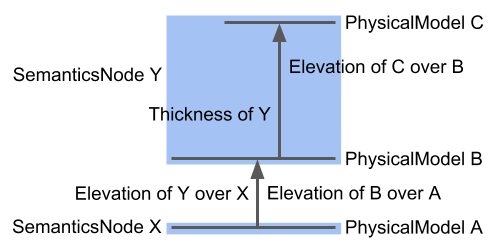
|
||
///
|
||
/// In this example the [RenderObject]s for [PhysicalModel] C and B share one
|
||
/// [SemanticsNode] Y. Given the elevations of those [RenderObject]s, this
|
||
/// [SemanticsNode] has a [thickness] of 10.0 and an elevation of 5.0 over
|
||
/// its parent [SemanticsNode] X.
|
||
/// ```dart
|
||
/// PhysicalModel( // A
|
||
/// color: Colors.amber,
|
||
/// child: Semantics(
|
||
/// explicitChildNodes: true,
|
||
/// child: const PhysicalModel( // B
|
||
/// color: Colors.brown,
|
||
/// elevation: 5.0,
|
||
/// child: PhysicalModel( // C
|
||
/// color: Colors.cyan,
|
||
/// elevation: 10.0,
|
||
/// child: Placeholder(),
|
||
/// ),
|
||
/// ),
|
||
/// ),
|
||
/// )
|
||
/// ```
|
||
/// {@end-tool}
|
||
///
|
||
/// See also:
|
||
///
|
||
/// * [elevation], which describes the elevation of the box defined by
|
||
/// [thickness] and [rect] relative to the parent of this [SemanticsNode].
|
||
double get thickness => _thickness;
|
||
double _thickness = _kEmptyConfig.thickness;
|
||
|
||
/// Provides hint values which override the default hints on supported
|
||
/// platforms.
|
||
SemanticsHintOverrides? get hintOverrides => _hintOverrides;
|
||
SemanticsHintOverrides? _hintOverrides;
|
||
|
||
/// The reading direction for [label], [value], [hint], [increasedValue], and
|
||
/// [decreasedValue].
|
||
TextDirection? get textDirection => _textDirection;
|
||
TextDirection? _textDirection = _kEmptyConfig.textDirection;
|
||
|
||
/// Determines the position of this node among its siblings in the traversal
|
||
/// sort order.
|
||
///
|
||
/// This is used to describe the order in which the semantic node should be
|
||
/// traversed by the accessibility services on the platform (e.g. VoiceOver
|
||
/// on iOS and TalkBack on Android).
|
||
SemanticsSortKey? get sortKey => _sortKey;
|
||
SemanticsSortKey? _sortKey;
|
||
|
||
/// The currently selected text (or the position of the cursor) within [value]
|
||
/// if this node represents a text field.
|
||
TextSelection? get textSelection => _textSelection;
|
||
TextSelection? _textSelection;
|
||
|
||
/// If this node represents a text field, this indicates whether or not it's
|
||
/// a multiline text field.
|
||
bool? get isMultiline => _isMultiline;
|
||
bool? _isMultiline;
|
||
|
||
/// The total number of scrollable children that contribute to semantics.
|
||
///
|
||
/// If the number of children are unknown or unbounded, this value will be
|
||
/// null.
|
||
int? get scrollChildCount => _scrollChildCount;
|
||
int? _scrollChildCount;
|
||
|
||
/// The index of the first visible semantic child of a scroll node.
|
||
int? get scrollIndex => _scrollIndex;
|
||
int? _scrollIndex;
|
||
|
||
/// Indicates the current scrolling position in logical pixels if the node is
|
||
/// scrollable.
|
||
///
|
||
/// The properties [scrollExtentMin] and [scrollExtentMax] indicate the valid
|
||
/// in-range values for this property. The value for [scrollPosition] may
|
||
/// (temporarily) be outside that range, e.g. during an overscroll.
|
||
///
|
||
/// See also:
|
||
///
|
||
/// * [ScrollPosition.pixels], from where this value is usually taken.
|
||
double? get scrollPosition => _scrollPosition;
|
||
double? _scrollPosition;
|
||
|
||
/// Indicates the maximum in-range value for [scrollPosition] if the node is
|
||
/// scrollable.
|
||
///
|
||
/// This value may be infinity if the scroll is unbound.
|
||
///
|
||
/// See also:
|
||
///
|
||
/// * [ScrollPosition.maxScrollExtent], from where this value is usually taken.
|
||
double? get scrollExtentMax => _scrollExtentMax;
|
||
double? _scrollExtentMax;
|
||
|
||
/// Indicates the minimum in-range value for [scrollPosition] if the node is
|
||
/// scrollable.
|
||
///
|
||
/// This value may be infinity if the scroll is unbound.
|
||
///
|
||
/// See also:
|
||
///
|
||
/// * [ScrollPosition.minScrollExtent] from where this value is usually taken.
|
||
double? get scrollExtentMin => _scrollExtentMin;
|
||
double? _scrollExtentMin;
|
||
|
||
/// The id of the platform view, whose semantics nodes will be added as
|
||
/// children to this node.
|
||
///
|
||
/// If this value is non-null, the SemanticsNode must not have any children
|
||
/// as those would be replaced by the semantics nodes of the referenced
|
||
/// platform view.
|
||
///
|
||
/// See also:
|
||
///
|
||
/// * [AndroidView], which is the platform view for Android.
|
||
/// * [UiKitView], which is the platform view for iOS.
|
||
int? get platformViewId => _platformViewId;
|
||
int? _platformViewId;
|
||
|
||
/// The maximum number of characters that can be entered into an editable
|
||
/// text field.
|
||
///
|
||
/// For the purpose of this function a character is defined as one Unicode
|
||
/// scalar value.
|
||
///
|
||
/// This should only be set when [SemanticsFlag.isTextField] is set. Defaults
|
||
/// to null, which means no limit is imposed on the text field.
|
||
int? get maxValueLength => _maxValueLength;
|
||
int? _maxValueLength;
|
||
|
||
/// The current number of characters that have been entered into an editable
|
||
/// text field.
|
||
///
|
||
/// For the purpose of this function a character is defined as one Unicode
|
||
/// scalar value.
|
||
///
|
||
/// This should only be set when [SemanticsFlag.isTextField] is set. Must be
|
||
/// set when [maxValueLength] is set.
|
||
int? get currentValueLength => _currentValueLength;
|
||
int? _currentValueLength;
|
||
|
||
bool _canPerformAction(SemanticsAction action) => _actions.containsKey(action);
|
||
|
||
static final SemanticsConfiguration _kEmptyConfig = SemanticsConfiguration();
|
||
|
||
/// Reconfigures the properties of this object to describe the configuration
|
||
/// provided in the `config` argument and the children listed in the
|
||
/// `childrenInInversePaintOrder` argument.
|
||
///
|
||
/// The arguments may be null; this represents an empty configuration (all
|
||
/// values at their defaults, no children).
|
||
///
|
||
/// No reference is kept to the [SemanticsConfiguration] object, but the child
|
||
/// list is used as-is and should therefore not be changed after this call.
|
||
void updateWith({
|
||
required SemanticsConfiguration? config,
|
||
List<SemanticsNode>? childrenInInversePaintOrder,
|
||
}) {
|
||
config ??= _kEmptyConfig;
|
||
if (_isDifferentFromCurrentSemanticAnnotation(config)) {
|
||
_markDirty();
|
||
}
|
||
|
||
assert(
|
||
config.platformViewId == null || childrenInInversePaintOrder == null || childrenInInversePaintOrder.isEmpty,
|
||
'SemanticsNodes with children must not specify a platformViewId.',
|
||
);
|
||
|
||
final bool mergeAllDescendantsIntoThisNodeValueChanged = _mergeAllDescendantsIntoThisNode != config.isMergingSemanticsOfDescendants;
|
||
|
||
_attributedLabel = config.attributedLabel;
|
||
_attributedValue = config.attributedValue;
|
||
_attributedIncreasedValue = config.attributedIncreasedValue;
|
||
_attributedDecreasedValue = config.attributedDecreasedValue;
|
||
_attributedHint = config.attributedHint;
|
||
_tooltip = config.tooltip;
|
||
_hintOverrides = config.hintOverrides;
|
||
_elevation = config.elevation;
|
||
_thickness = config.thickness;
|
||
_flags = config._flags;
|
||
_textDirection = config.textDirection;
|
||
_sortKey = config.sortKey;
|
||
_actions = Map<SemanticsAction, SemanticsActionHandler>.of(config._actions);
|
||
_customSemanticsActions = Map<CustomSemanticsAction, VoidCallback>.of(config._customSemanticsActions);
|
||
_actionsAsBits = config._actionsAsBits;
|
||
_textSelection = config._textSelection;
|
||
_isMultiline = config.isMultiline;
|
||
_scrollPosition = config._scrollPosition;
|
||
_scrollExtentMax = config._scrollExtentMax;
|
||
_scrollExtentMin = config._scrollExtentMin;
|
||
_mergeAllDescendantsIntoThisNode = config.isMergingSemanticsOfDescendants;
|
||
_scrollChildCount = config.scrollChildCount;
|
||
_scrollIndex = config.scrollIndex;
|
||
indexInParent = config.indexInParent;
|
||
_platformViewId = config._platformViewId;
|
||
_maxValueLength = config._maxValueLength;
|
||
_currentValueLength = config._currentValueLength;
|
||
_areUserActionsBlocked = config.isBlockingUserActions;
|
||
_replaceChildren(childrenInInversePaintOrder ?? const <SemanticsNode>[]);
|
||
|
||
if (mergeAllDescendantsIntoThisNodeValueChanged) {
|
||
_updateChildrenMergeFlags();
|
||
}
|
||
|
||
assert(
|
||
!_canPerformAction(SemanticsAction.increase) || (value == '') == (increasedValue == ''),
|
||
'A SemanticsNode with action "increase" needs to be annotated with either both "value" and "increasedValue" or neither',
|
||
);
|
||
assert(
|
||
!_canPerformAction(SemanticsAction.decrease) || (value == '') == (decreasedValue == ''),
|
||
'A SemanticsNode with action "decrease" needs to be annotated with either both "value" and "decreasedValue" or neither',
|
||
);
|
||
}
|
||
|
||
|
||
/// Returns a summary of the semantics for this node.
|
||
///
|
||
/// If this node has [mergeAllDescendantsIntoThisNode], then the returned data
|
||
/// includes the information from this node's descendants. Otherwise, the
|
||
/// returned data matches the data on this node.
|
||
SemanticsData getSemanticsData() {
|
||
int flags = _flags;
|
||
// Can't use _effectiveActionsAsBits here. The filtering of action bits
|
||
// must be done after the merging the its descendants.
|
||
int actions = _actionsAsBits;
|
||
AttributedString attributedLabel = _attributedLabel;
|
||
AttributedString attributedValue = _attributedValue;
|
||
AttributedString attributedIncreasedValue = _attributedIncreasedValue;
|
||
AttributedString attributedDecreasedValue = _attributedDecreasedValue;
|
||
AttributedString attributedHint = _attributedHint;
|
||
String tooltip = _tooltip;
|
||
TextDirection? textDirection = _textDirection;
|
||
Set<SemanticsTag>? mergedTags = tags == null ? null : Set<SemanticsTag>.of(tags!);
|
||
TextSelection? textSelection = _textSelection;
|
||
int? scrollChildCount = _scrollChildCount;
|
||
int? scrollIndex = _scrollIndex;
|
||
double? scrollPosition = _scrollPosition;
|
||
double? scrollExtentMax = _scrollExtentMax;
|
||
double? scrollExtentMin = _scrollExtentMin;
|
||
int? platformViewId = _platformViewId;
|
||
int? maxValueLength = _maxValueLength;
|
||
int? currentValueLength = _currentValueLength;
|
||
final double elevation = _elevation;
|
||
double thickness = _thickness;
|
||
final Set<int> customSemanticsActionIds = <int>{};
|
||
for (final CustomSemanticsAction action in _customSemanticsActions.keys) {
|
||
customSemanticsActionIds.add(CustomSemanticsAction.getIdentifier(action));
|
||
}
|
||
if (hintOverrides != null) {
|
||
if (hintOverrides!.onTapHint != null) {
|
||
final CustomSemanticsAction action = CustomSemanticsAction.overridingAction(
|
||
hint: hintOverrides!.onTapHint!,
|
||
action: SemanticsAction.tap,
|
||
);
|
||
customSemanticsActionIds.add(CustomSemanticsAction.getIdentifier(action));
|
||
}
|
||
if (hintOverrides!.onLongPressHint != null) {
|
||
final CustomSemanticsAction action = CustomSemanticsAction.overridingAction(
|
||
hint: hintOverrides!.onLongPressHint!,
|
||
action: SemanticsAction.longPress,
|
||
);
|
||
customSemanticsActionIds.add(CustomSemanticsAction.getIdentifier(action));
|
||
}
|
||
}
|
||
|
||
if (mergeAllDescendantsIntoThisNode) {
|
||
_visitDescendants((SemanticsNode node) {
|
||
assert(node.isMergedIntoParent);
|
||
flags |= node._flags;
|
||
actions |= node._effectiveActionsAsBits;
|
||
|
||
textDirection ??= node._textDirection;
|
||
textSelection ??= node._textSelection;
|
||
scrollChildCount ??= node._scrollChildCount;
|
||
scrollIndex ??= node._scrollIndex;
|
||
scrollPosition ??= node._scrollPosition;
|
||
scrollExtentMax ??= node._scrollExtentMax;
|
||
scrollExtentMin ??= node._scrollExtentMin;
|
||
platformViewId ??= node._platformViewId;
|
||
maxValueLength ??= node._maxValueLength;
|
||
currentValueLength ??= node._currentValueLength;
|
||
if (attributedValue.string == '') {
|
||
attributedValue = node._attributedValue;
|
||
}
|
||
if (attributedIncreasedValue.string == '') {
|
||
attributedIncreasedValue = node._attributedIncreasedValue;
|
||
}
|
||
if (attributedDecreasedValue.string == '') {
|
||
attributedDecreasedValue = node._attributedDecreasedValue;
|
||
}
|
||
if (tooltip == '') {
|
||
tooltip = node._tooltip;
|
||
}
|
||
if (node.tags != null) {
|
||
mergedTags ??= <SemanticsTag>{};
|
||
mergedTags!.addAll(node.tags!);
|
||
}
|
||
for (final CustomSemanticsAction action in _customSemanticsActions.keys) {
|
||
customSemanticsActionIds.add(CustomSemanticsAction.getIdentifier(action));
|
||
}
|
||
if (node.hintOverrides != null) {
|
||
if (node.hintOverrides!.onTapHint != null) {
|
||
final CustomSemanticsAction action = CustomSemanticsAction.overridingAction(
|
||
hint: node.hintOverrides!.onTapHint!,
|
||
action: SemanticsAction.tap,
|
||
);
|
||
customSemanticsActionIds.add(CustomSemanticsAction.getIdentifier(action));
|
||
}
|
||
if (node.hintOverrides!.onLongPressHint != null) {
|
||
final CustomSemanticsAction action = CustomSemanticsAction.overridingAction(
|
||
hint: node.hintOverrides!.onLongPressHint!,
|
||
action: SemanticsAction.longPress,
|
||
);
|
||
customSemanticsActionIds.add(CustomSemanticsAction.getIdentifier(action));
|
||
}
|
||
}
|
||
attributedLabel = _concatAttributedString(
|
||
thisAttributedString: attributedLabel,
|
||
thisTextDirection: textDirection,
|
||
otherAttributedString: node._attributedLabel,
|
||
otherTextDirection: node._textDirection,
|
||
);
|
||
attributedHint = _concatAttributedString(
|
||
thisAttributedString: attributedHint,
|
||
thisTextDirection: textDirection,
|
||
otherAttributedString: node._attributedHint,
|
||
otherTextDirection: node._textDirection,
|
||
);
|
||
|
||
thickness = math.max(thickness, node._thickness + node._elevation);
|
||
|
||
return true;
|
||
});
|
||
}
|
||
|
||
return SemanticsData(
|
||
flags: flags,
|
||
actions: _areUserActionsBlocked ? actions & _kUnblockedUserActions : actions,
|
||
attributedLabel: attributedLabel,
|
||
attributedValue: attributedValue,
|
||
attributedIncreasedValue: attributedIncreasedValue,
|
||
attributedDecreasedValue: attributedDecreasedValue,
|
||
attributedHint: attributedHint,
|
||
tooltip: tooltip,
|
||
textDirection: textDirection,
|
||
rect: rect,
|
||
transform: transform,
|
||
elevation: elevation,
|
||
thickness: thickness,
|
||
tags: mergedTags,
|
||
textSelection: textSelection,
|
||
scrollChildCount: scrollChildCount,
|
||
scrollIndex: scrollIndex,
|
||
scrollPosition: scrollPosition,
|
||
scrollExtentMax: scrollExtentMax,
|
||
scrollExtentMin: scrollExtentMin,
|
||
platformViewId: platformViewId,
|
||
maxValueLength: maxValueLength,
|
||
currentValueLength: currentValueLength,
|
||
customSemanticsActionIds: customSemanticsActionIds.toList()..sort(),
|
||
);
|
||
}
|
||
|
||
static Float64List _initIdentityTransform() {
|
||
return Matrix4.identity().storage;
|
||
}
|
||
|
||
static final Int32List _kEmptyChildList = Int32List(0);
|
||
static final Int32List _kEmptyCustomSemanticsActionsList = Int32List(0);
|
||
static final Float64List _kIdentityTransform = _initIdentityTransform();
|
||
|
||
void _addToUpdate(SemanticsUpdateBuilder builder, Set<int> customSemanticsActionIdsUpdate) {
|
||
assert(_dirty);
|
||
final SemanticsData data = getSemanticsData();
|
||
final Int32List childrenInTraversalOrder;
|
||
final Int32List childrenInHitTestOrder;
|
||
if (!hasChildren || mergeAllDescendantsIntoThisNode) {
|
||
childrenInTraversalOrder = _kEmptyChildList;
|
||
childrenInHitTestOrder = _kEmptyChildList;
|
||
} else {
|
||
final int childCount = _children!.length;
|
||
final List<SemanticsNode> sortedChildren = _childrenInTraversalOrder();
|
||
childrenInTraversalOrder = Int32List(childCount);
|
||
for (int i = 0; i < childCount; i += 1) {
|
||
childrenInTraversalOrder[i] = sortedChildren[i].id;
|
||
}
|
||
// _children is sorted in paint order, so we invert it to get the hit test
|
||
// order.
|
||
childrenInHitTestOrder = Int32List(childCount);
|
||
for (int i = childCount - 1; i >= 0; i -= 1) {
|
||
childrenInHitTestOrder[i] = _children![childCount - i - 1].id;
|
||
}
|
||
}
|
||
Int32List? customSemanticsActionIds;
|
||
if (data.customSemanticsActionIds?.isNotEmpty ?? false) {
|
||
customSemanticsActionIds = Int32List(data.customSemanticsActionIds!.length);
|
||
for (int i = 0; i < data.customSemanticsActionIds!.length; i++) {
|
||
customSemanticsActionIds[i] = data.customSemanticsActionIds![i];
|
||
customSemanticsActionIdsUpdate.add(data.customSemanticsActionIds![i]);
|
||
}
|
||
}
|
||
builder.updateNode(
|
||
id: id,
|
||
flags: data.flags,
|
||
actions: data.actions,
|
||
rect: data.rect,
|
||
label: data.attributedLabel.string,
|
||
labelAttributes: data.attributedLabel.attributes,
|
||
value: data.attributedValue.string,
|
||
valueAttributes: data.attributedValue.attributes,
|
||
increasedValue: data.attributedIncreasedValue.string,
|
||
increasedValueAttributes: data.attributedIncreasedValue.attributes,
|
||
decreasedValue: data.attributedDecreasedValue.string,
|
||
decreasedValueAttributes: data.attributedDecreasedValue.attributes,
|
||
hint: data.attributedHint.string,
|
||
hintAttributes: data.attributedHint.attributes,
|
||
tooltip: data.tooltip,
|
||
textDirection: data.textDirection,
|
||
textSelectionBase: data.textSelection != null ? data.textSelection!.baseOffset : -1,
|
||
textSelectionExtent: data.textSelection != null ? data.textSelection!.extentOffset : -1,
|
||
platformViewId: data.platformViewId ?? -1,
|
||
maxValueLength: data.maxValueLength ?? -1,
|
||
currentValueLength: data.currentValueLength ?? -1,
|
||
scrollChildren: data.scrollChildCount ?? 0,
|
||
scrollIndex: data.scrollIndex ?? 0 ,
|
||
scrollPosition: data.scrollPosition ?? double.nan,
|
||
scrollExtentMax: data.scrollExtentMax ?? double.nan,
|
||
scrollExtentMin: data.scrollExtentMin ?? double.nan,
|
||
transform: data.transform?.storage ?? _kIdentityTransform,
|
||
elevation: data.elevation,
|
||
thickness: data.thickness,
|
||
childrenInTraversalOrder: childrenInTraversalOrder,
|
||
childrenInHitTestOrder: childrenInHitTestOrder,
|
||
additionalActions: customSemanticsActionIds ?? _kEmptyCustomSemanticsActionsList,
|
||
);
|
||
_dirty = false;
|
||
}
|
||
|
||
/// Builds a new list made of [_children] sorted in semantic traversal order.
|
||
List<SemanticsNode> _childrenInTraversalOrder() {
|
||
TextDirection? inheritedTextDirection = textDirection;
|
||
SemanticsNode? ancestor = parent;
|
||
while (inheritedTextDirection == null && ancestor != null) {
|
||
inheritedTextDirection = ancestor.textDirection;
|
||
ancestor = ancestor.parent;
|
||
}
|
||
|
||
List<SemanticsNode>? childrenInDefaultOrder;
|
||
if (inheritedTextDirection != null) {
|
||
childrenInDefaultOrder = _childrenInDefaultOrder(_children!, inheritedTextDirection);
|
||
} else {
|
||
// In the absence of text direction default to paint order.
|
||
childrenInDefaultOrder = _children;
|
||
}
|
||
|
||
// List.sort does not guarantee stable sort order. Therefore, children are
|
||
// first partitioned into groups that have compatible sort keys, i.e. keys
|
||
// in the same group can be compared to each other. These groups stay in
|
||
// the same place. Only children within the same group are sorted.
|
||
final List<_TraversalSortNode> everythingSorted = <_TraversalSortNode>[];
|
||
final List<_TraversalSortNode> sortNodes = <_TraversalSortNode>[];
|
||
SemanticsSortKey? lastSortKey;
|
||
for (int position = 0; position < childrenInDefaultOrder!.length; position += 1) {
|
||
final SemanticsNode child = childrenInDefaultOrder[position];
|
||
final SemanticsSortKey? sortKey = child.sortKey;
|
||
lastSortKey = position > 0
|
||
? childrenInDefaultOrder[position - 1].sortKey
|
||
: null;
|
||
final bool isCompatibleWithPreviousSortKey = position == 0 ||
|
||
sortKey.runtimeType == lastSortKey.runtimeType &&
|
||
(sortKey == null || sortKey.name == lastSortKey!.name);
|
||
if (!isCompatibleWithPreviousSortKey && sortNodes.isNotEmpty) {
|
||
// Do not sort groups with null sort keys. List.sort does not guarantee
|
||
// a stable sort order.
|
||
if (lastSortKey != null) {
|
||
sortNodes.sort();
|
||
}
|
||
everythingSorted.addAll(sortNodes);
|
||
sortNodes.clear();
|
||
}
|
||
|
||
sortNodes.add(_TraversalSortNode(
|
||
node: child,
|
||
sortKey: sortKey,
|
||
position: position,
|
||
));
|
||
}
|
||
|
||
// Do not sort groups with null sort keys. List.sort does not guarantee
|
||
// a stable sort order.
|
||
if (lastSortKey != null) {
|
||
sortNodes.sort();
|
||
}
|
||
everythingSorted.addAll(sortNodes);
|
||
|
||
return everythingSorted
|
||
.map<SemanticsNode>((_TraversalSortNode sortNode) => sortNode.node)
|
||
.toList();
|
||
}
|
||
|
||
/// Sends a [SemanticsEvent] associated with this [SemanticsNode].
|
||
///
|
||
/// Semantics events should be sent to inform interested parties (like
|
||
/// the accessibility system of the operating system) about changes to the UI.
|
||
void sendEvent(SemanticsEvent event) {
|
||
if (!attached) {
|
||
return;
|
||
}
|
||
SystemChannels.accessibility.send(event.toMap(nodeId: id));
|
||
}
|
||
|
||
bool _debugIsActionBlocked(SemanticsAction action) {
|
||
bool result = false;
|
||
assert((){
|
||
result = (_effectiveActionsAsBits & action.index) == 0;
|
||
return true;
|
||
}());
|
||
return result;
|
||
}
|
||
|
||
@override
|
||
String toStringShort() => '${objectRuntimeType(this, 'SemanticsNode')}#$id';
|
||
|
||
@override
|
||
void debugFillProperties(DiagnosticPropertiesBuilder properties) {
|
||
super.debugFillProperties(properties);
|
||
bool hideOwner = true;
|
||
if (_dirty) {
|
||
final bool inDirtyNodes = owner != null && owner!._dirtyNodes.contains(this);
|
||
properties.add(FlagProperty('inDirtyNodes', value: inDirtyNodes, ifTrue: 'dirty', ifFalse: 'STALE'));
|
||
hideOwner = inDirtyNodes;
|
||
}
|
||
properties.add(DiagnosticsProperty<SemanticsOwner>('owner', owner, level: hideOwner ? DiagnosticLevel.hidden : DiagnosticLevel.info));
|
||
properties.add(FlagProperty('isMergedIntoParent', value: isMergedIntoParent, ifTrue: 'merged up ⬆️'));
|
||
properties.add(FlagProperty('mergeAllDescendantsIntoThisNode', value: mergeAllDescendantsIntoThisNode, ifTrue: 'merge boundary ⛔️'));
|
||
final Offset? offset = transform != null ? MatrixUtils.getAsTranslation(transform!) : null;
|
||
if (offset != null) {
|
||
properties.add(DiagnosticsProperty<Rect>('rect', rect.shift(offset), showName: false));
|
||
} else {
|
||
final double? scale = transform != null ? MatrixUtils.getAsScale(transform!) : null;
|
||
String? description;
|
||
if (scale != null) {
|
||
description = '$rect scaled by ${scale.toStringAsFixed(1)}x';
|
||
} else if (transform != null && !MatrixUtils.isIdentity(transform!)) {
|
||
final String matrix = transform.toString().split('\n').take(4).map<String>((String line) => line.substring(4)).join('; ');
|
||
description = '$rect with transform [$matrix]';
|
||
}
|
||
properties.add(DiagnosticsProperty<Rect>('rect', rect, description: description, showName: false));
|
||
}
|
||
properties.add(IterableProperty<String>('tags', tags?.map((SemanticsTag tag) => tag.name), defaultValue: null));
|
||
final List<String> actions = _actions.keys.map<String>((SemanticsAction action) => '${action.name}${_debugIsActionBlocked(action) ? '🚫️' : ''}').toList()..sort();
|
||
final List<String?> customSemanticsActions = _customSemanticsActions.keys
|
||
.map<String?>((CustomSemanticsAction action) => action.label)
|
||
.toList();
|
||
properties.add(IterableProperty<String>('actions', actions, ifEmpty: null));
|
||
properties.add(IterableProperty<String?>('customActions', customSemanticsActions, ifEmpty: null));
|
||
final List<String> flags = SemanticsFlag.values.where((SemanticsFlag flag) => hasFlag(flag)).map((SemanticsFlag flag) => flag.name).toList();
|
||
properties.add(IterableProperty<String>('flags', flags, ifEmpty: null));
|
||
properties.add(FlagProperty('isInvisible', value: isInvisible, ifTrue: 'invisible'));
|
||
properties.add(FlagProperty('isHidden', value: hasFlag(SemanticsFlag.isHidden), ifTrue: 'HIDDEN'));
|
||
properties.add(AttributedStringProperty('label', _attributedLabel));
|
||
properties.add(AttributedStringProperty('value', _attributedValue));
|
||
properties.add(AttributedStringProperty('increasedValue', _attributedIncreasedValue));
|
||
properties.add(AttributedStringProperty('decreasedValue', _attributedDecreasedValue));
|
||
properties.add(AttributedStringProperty('hint', _attributedHint));
|
||
properties.add(StringProperty('tooltip', _tooltip, defaultValue: ''));
|
||
properties.add(EnumProperty<TextDirection>('textDirection', _textDirection, defaultValue: null));
|
||
properties.add(DiagnosticsProperty<SemanticsSortKey>('sortKey', sortKey, defaultValue: null));
|
||
if (_textSelection?.isValid ?? false) {
|
||
properties.add(MessageProperty('text selection', '[${_textSelection!.start}, ${_textSelection!.end}]'));
|
||
}
|
||
properties.add(IntProperty('platformViewId', platformViewId, defaultValue: null));
|
||
properties.add(IntProperty('maxValueLength', maxValueLength, defaultValue: null));
|
||
properties.add(IntProperty('currentValueLength', currentValueLength, defaultValue: null));
|
||
properties.add(IntProperty('scrollChildren', scrollChildCount, defaultValue: null));
|
||
properties.add(IntProperty('scrollIndex', scrollIndex, defaultValue: null));
|
||
properties.add(DoubleProperty('scrollExtentMin', scrollExtentMin, defaultValue: null));
|
||
properties.add(DoubleProperty('scrollPosition', scrollPosition, defaultValue: null));
|
||
properties.add(DoubleProperty('scrollExtentMax', scrollExtentMax, defaultValue: null));
|
||
properties.add(DoubleProperty('elevation', elevation, defaultValue: 0.0));
|
||
properties.add(DoubleProperty('thickness', thickness, defaultValue: 0.0));
|
||
}
|
||
|
||
/// Returns a string representation of this node and its descendants.
|
||
///
|
||
/// The order in which the children of the [SemanticsNode] will be printed is
|
||
/// controlled by the [childOrder] parameter.
|
||
@override
|
||
String toStringDeep({
|
||
String prefixLineOne = '',
|
||
String? prefixOtherLines,
|
||
DiagnosticLevel minLevel = DiagnosticLevel.debug,
|
||
DebugSemanticsDumpOrder childOrder = DebugSemanticsDumpOrder.traversalOrder,
|
||
}) {
|
||
return toDiagnosticsNode(childOrder: childOrder).toStringDeep(prefixLineOne: prefixLineOne, prefixOtherLines: prefixOtherLines, minLevel: minLevel);
|
||
}
|
||
|
||
@override
|
||
DiagnosticsNode toDiagnosticsNode({
|
||
String? name,
|
||
DiagnosticsTreeStyle? style = DiagnosticsTreeStyle.sparse,
|
||
DebugSemanticsDumpOrder childOrder = DebugSemanticsDumpOrder.traversalOrder,
|
||
}) {
|
||
return _SemanticsDiagnosticableNode(
|
||
name: name,
|
||
value: this,
|
||
style: style,
|
||
childOrder: childOrder,
|
||
);
|
||
}
|
||
|
||
@override
|
||
List<DiagnosticsNode> debugDescribeChildren({ DebugSemanticsDumpOrder childOrder = DebugSemanticsDumpOrder.inverseHitTest }) {
|
||
return debugListChildrenInOrder(childOrder)
|
||
.map<DiagnosticsNode>((SemanticsNode node) => node.toDiagnosticsNode(childOrder: childOrder))
|
||
.toList();
|
||
}
|
||
|
||
/// Returns the list of direct children of this node in the specified order.
|
||
List<SemanticsNode> debugListChildrenInOrder(DebugSemanticsDumpOrder childOrder) {
|
||
if (_children == null) {
|
||
return const <SemanticsNode>[];
|
||
}
|
||
|
||
switch (childOrder) {
|
||
case DebugSemanticsDumpOrder.inverseHitTest:
|
||
return _children!;
|
||
case DebugSemanticsDumpOrder.traversalOrder:
|
||
return _childrenInTraversalOrder();
|
||
}
|
||
}
|
||
}
|
||
|
||
/// An edge of a box, such as top, bottom, left or right, used to compute
|
||
/// [SemanticsNode]s that overlap vertically or horizontally.
|
||
///
|
||
/// For computing horizontal overlap in an LTR setting we create two [_BoxEdge]
|
||
/// objects for each [SemanticsNode]: one representing the left edge (marked
|
||
/// with [isLeadingEdge] equal to true) and one for the right edge (with [isLeadingEdge]
|
||
/// equal to false). Similarly, for vertical overlap we also create two objects
|
||
/// for each [SemanticsNode], one for the top and one for the bottom edge.
|
||
class _BoxEdge implements Comparable<_BoxEdge> {
|
||
_BoxEdge({
|
||
required this.isLeadingEdge,
|
||
required this.offset,
|
||
required this.node,
|
||
}) : assert(offset.isFinite);
|
||
|
||
/// True if the edge comes before the seconds edge along the traversal
|
||
/// direction, and false otherwise.
|
||
///
|
||
/// This field is never null.
|
||
///
|
||
/// For example, in LTR traversal the left edge's [isLeadingEdge] is set to true,
|
||
/// the right edge's [isLeadingEdge] is set to false. When considering vertical
|
||
/// ordering of boxes, the top edge is the start edge, and the bottom edge is
|
||
/// the end edge.
|
||
final bool isLeadingEdge;
|
||
|
||
/// The offset from the start edge of the parent [SemanticsNode] in the
|
||
/// direction of the traversal.
|
||
final double offset;
|
||
|
||
/// The node whom this edge belongs.
|
||
final SemanticsNode node;
|
||
|
||
@override
|
||
int compareTo(_BoxEdge other) {
|
||
return offset.compareTo(other.offset);
|
||
}
|
||
}
|
||
|
||
/// A group of [nodes] that are disjoint vertically or horizontally from other
|
||
/// nodes that share the same [SemanticsNode] parent.
|
||
///
|
||
/// The [nodes] are sorted among each other separately from other nodes.
|
||
class _SemanticsSortGroup implements Comparable<_SemanticsSortGroup> {
|
||
_SemanticsSortGroup({
|
||
required this.startOffset,
|
||
required this.textDirection,
|
||
});
|
||
|
||
/// The offset from the start edge of the parent [SemanticsNode] in the
|
||
/// direction of the traversal.
|
||
///
|
||
/// This value is equal to the [_BoxEdge.offset] of the first node in the
|
||
/// [nodes] list being considered.
|
||
final double startOffset;
|
||
|
||
final TextDirection textDirection;
|
||
|
||
/// The nodes that are sorted among each other.
|
||
final List<SemanticsNode> nodes = <SemanticsNode>[];
|
||
|
||
@override
|
||
int compareTo(_SemanticsSortGroup other) {
|
||
return startOffset.compareTo(other.startOffset);
|
||
}
|
||
|
||
/// Sorts this group assuming that [nodes] belong to the same vertical group.
|
||
///
|
||
/// This method breaks up this group into horizontal [_SemanticsSortGroup]s
|
||
/// then sorts them using [sortedWithinKnot].
|
||
List<SemanticsNode> sortedWithinVerticalGroup() {
|
||
final List<_BoxEdge> edges = <_BoxEdge>[];
|
||
for (final SemanticsNode child in nodes) {
|
||
// Using a small delta to shrink child rects removes overlapping cases.
|
||
final Rect childRect = child.rect.deflate(0.1);
|
||
edges.add(_BoxEdge(
|
||
isLeadingEdge: true,
|
||
offset: _pointInParentCoordinates(child, childRect.topLeft).dx,
|
||
node: child,
|
||
));
|
||
edges.add(_BoxEdge(
|
||
isLeadingEdge: false,
|
||
offset: _pointInParentCoordinates(child, childRect.bottomRight).dx,
|
||
node: child,
|
||
));
|
||
}
|
||
edges.sort();
|
||
|
||
List<_SemanticsSortGroup> horizontalGroups = <_SemanticsSortGroup>[];
|
||
_SemanticsSortGroup? group;
|
||
int depth = 0;
|
||
for (final _BoxEdge edge in edges) {
|
||
if (edge.isLeadingEdge) {
|
||
depth += 1;
|
||
group ??= _SemanticsSortGroup(
|
||
startOffset: edge.offset,
|
||
textDirection: textDirection,
|
||
);
|
||
group.nodes.add(edge.node);
|
||
} else {
|
||
depth -= 1;
|
||
}
|
||
if (depth == 0) {
|
||
horizontalGroups.add(group!);
|
||
group = null;
|
||
}
|
||
}
|
||
horizontalGroups.sort();
|
||
|
||
if (textDirection == TextDirection.rtl) {
|
||
horizontalGroups = horizontalGroups.reversed.toList();
|
||
}
|
||
|
||
return horizontalGroups
|
||
.expand((_SemanticsSortGroup group) => group.sortedWithinKnot())
|
||
.toList();
|
||
}
|
||
|
||
/// Sorts [nodes] where nodes intersect both vertically and horizontally.
|
||
///
|
||
/// In the special case when [nodes] contains one or less nodes, this method
|
||
/// returns [nodes] unchanged.
|
||
///
|
||
/// This method constructs a graph, where vertices are [SemanticsNode]s and
|
||
/// edges are "traversed before" relation between pairs of nodes. The sort
|
||
/// order is the topological sorting of the graph, with the original order of
|
||
/// [nodes] used as the tie breaker.
|
||
///
|
||
/// Whether a node is traversed before another node is determined by the
|
||
/// vector that connects the two nodes' centers. If the vector "points to the
|
||
/// right or down", defined as the [Offset.direction] being between `-pi/4`
|
||
/// and `3*pi/4`), then the semantics node whose center is at the end of the
|
||
/// vector is said to be traversed after.
|
||
List<SemanticsNode> sortedWithinKnot() {
|
||
if (nodes.length <= 1) {
|
||
// Trivial knot. Nothing to do.
|
||
return nodes;
|
||
}
|
||
final Map<int, SemanticsNode> nodeMap = <int, SemanticsNode>{};
|
||
final Map<int, int> edges = <int, int>{};
|
||
for (final SemanticsNode node in nodes) {
|
||
nodeMap[node.id] = node;
|
||
final Offset center = _pointInParentCoordinates(node, node.rect.center);
|
||
for (final SemanticsNode nextNode in nodes) {
|
||
if (identical(node, nextNode) || edges[nextNode.id] == node.id) {
|
||
// Skip self or when we've already established that the next node
|
||
// points to current node.
|
||
continue;
|
||
}
|
||
|
||
final Offset nextCenter = _pointInParentCoordinates(nextNode, nextNode.rect.center);
|
||
final Offset centerDelta = nextCenter - center;
|
||
// When centers coincide, direction is 0.0.
|
||
final double direction = centerDelta.direction;
|
||
final bool isLtrAndForward = textDirection == TextDirection.ltr &&
|
||
-math.pi / 4 < direction && direction < 3 * math.pi / 4;
|
||
final bool isRtlAndForward = textDirection == TextDirection.rtl &&
|
||
(direction < -3 * math.pi / 4 || direction > 3 * math.pi / 4);
|
||
if (isLtrAndForward || isRtlAndForward) {
|
||
edges[node.id] = nextNode.id;
|
||
}
|
||
}
|
||
}
|
||
|
||
final List<int> sortedIds = <int>[];
|
||
final Set<int> visitedIds = <int>{};
|
||
final List<SemanticsNode> startNodes = nodes.toList()..sort((SemanticsNode a, SemanticsNode b) {
|
||
final Offset aTopLeft = _pointInParentCoordinates(a, a.rect.topLeft);
|
||
final Offset bTopLeft = _pointInParentCoordinates(b, b.rect.topLeft);
|
||
final int verticalDiff = aTopLeft.dy.compareTo(bTopLeft.dy);
|
||
if (verticalDiff != 0) {
|
||
return -verticalDiff;
|
||
}
|
||
return -aTopLeft.dx.compareTo(bTopLeft.dx);
|
||
});
|
||
|
||
void search(int id) {
|
||
if (visitedIds.contains(id)) {
|
||
return;
|
||
}
|
||
visitedIds.add(id);
|
||
if (edges.containsKey(id)) {
|
||
search(edges[id]!);
|
||
}
|
||
sortedIds.add(id);
|
||
}
|
||
|
||
startNodes.map<int>((SemanticsNode node) => node.id).forEach(search);
|
||
return sortedIds.map<SemanticsNode>((int id) => nodeMap[id]!).toList().reversed.toList();
|
||
}
|
||
}
|
||
|
||
/// Converts `point` to the `node`'s parent's coordinate system.
|
||
Offset _pointInParentCoordinates(SemanticsNode node, Offset point) {
|
||
if (node.transform == null) {
|
||
return point;
|
||
}
|
||
final Vector3 vector = Vector3(point.dx, point.dy, 0.0);
|
||
node.transform!.transform3(vector);
|
||
return Offset(vector.x, vector.y);
|
||
}
|
||
|
||
/// Sorts `children` using the default sorting algorithm, and returns them as a
|
||
/// new list.
|
||
///
|
||
/// The algorithm first breaks up children into groups such that no two nodes
|
||
/// from different groups overlap vertically. These groups are sorted vertically
|
||
/// according to their [_SemanticsSortGroup.startOffset].
|
||
///
|
||
/// Within each group, the nodes are sorted using
|
||
/// [_SemanticsSortGroup.sortedWithinVerticalGroup].
|
||
///
|
||
/// For an illustration of the algorithm see http://bit.ly/flutter-default-traversal.
|
||
List<SemanticsNode> _childrenInDefaultOrder(List<SemanticsNode> children, TextDirection textDirection) {
|
||
final List<_BoxEdge> edges = <_BoxEdge>[];
|
||
for (final SemanticsNode child in children) {
|
||
assert(child.rect.isFinite);
|
||
// Using a small delta to shrink child rects removes overlapping cases.
|
||
final Rect childRect = child.rect.deflate(0.1);
|
||
edges.add(_BoxEdge(
|
||
isLeadingEdge: true,
|
||
offset: _pointInParentCoordinates(child, childRect.topLeft).dy,
|
||
node: child,
|
||
));
|
||
edges.add(_BoxEdge(
|
||
isLeadingEdge: false,
|
||
offset: _pointInParentCoordinates(child, childRect.bottomRight).dy,
|
||
node: child,
|
||
));
|
||
}
|
||
edges.sort();
|
||
|
||
final List<_SemanticsSortGroup> verticalGroups = <_SemanticsSortGroup>[];
|
||
_SemanticsSortGroup? group;
|
||
int depth = 0;
|
||
for (final _BoxEdge edge in edges) {
|
||
if (edge.isLeadingEdge) {
|
||
depth += 1;
|
||
group ??= _SemanticsSortGroup(
|
||
startOffset: edge.offset,
|
||
textDirection: textDirection,
|
||
);
|
||
group.nodes.add(edge.node);
|
||
} else {
|
||
depth -= 1;
|
||
}
|
||
if (depth == 0) {
|
||
verticalGroups.add(group!);
|
||
group = null;
|
||
}
|
||
}
|
||
verticalGroups.sort();
|
||
|
||
return verticalGroups
|
||
.expand((_SemanticsSortGroup group) => group.sortedWithinVerticalGroup())
|
||
.toList();
|
||
}
|
||
|
||
/// The implementation of [Comparable] that implements the ordering of
|
||
/// [SemanticsNode]s in the accessibility traversal.
|
||
///
|
||
/// [SemanticsNode]s are sorted prior to sending them to the engine side.
|
||
///
|
||
/// This implementation considers a [node]'s [sortKey] and its position within
|
||
/// the list of its siblings. [sortKey] takes precedence over position.
|
||
class _TraversalSortNode implements Comparable<_TraversalSortNode> {
|
||
_TraversalSortNode({
|
||
required this.node,
|
||
this.sortKey,
|
||
required this.position,
|
||
});
|
||
|
||
/// The node whose position this sort node determines.
|
||
final SemanticsNode node;
|
||
|
||
/// Determines the position of this node among its siblings.
|
||
///
|
||
/// Sort keys take precedence over other attributes, such as
|
||
/// [position].
|
||
final SemanticsSortKey? sortKey;
|
||
|
||
/// Position within the list of siblings as determined by the default sort
|
||
/// order.
|
||
final int position;
|
||
|
||
@override
|
||
int compareTo(_TraversalSortNode other) {
|
||
if (sortKey == null || other.sortKey == null) {
|
||
return position - other.position;
|
||
}
|
||
return sortKey!.compareTo(other.sortKey!);
|
||
}
|
||
}
|
||
|
||
/// Owns [SemanticsNode] objects and notifies listeners of changes to the
|
||
/// render tree semantics.
|
||
///
|
||
/// To listen for semantic updates, call [SemanticsBinding.ensureSemantics] or
|
||
/// [PipelineOwner.ensureSemantics] to obtain a [SemanticsHandle]. This will
|
||
/// create a [SemanticsOwner] if necessary.
|
||
class SemanticsOwner extends ChangeNotifier {
|
||
/// Creates a [SemanticsOwner] that manages zero or more [SemanticsNode] objects.
|
||
SemanticsOwner({
|
||
required this.onSemanticsUpdate,
|
||
});
|
||
|
||
/// The [onSemanticsUpdate] callback is expected to dispatch [SemanticsUpdate]s
|
||
/// to the [FlutterView] that is associated with this [PipelineOwner] and/or
|
||
/// [SemanticsOwner].
|
||
///
|
||
/// A [SemanticsOwner] calls [onSemanticsUpdate] during [sendSemanticsUpdate]
|
||
/// after the [SemanticsUpdate] has been build, but before the [SemanticsOwner]'s
|
||
/// listeners have been notified.
|
||
final SemanticsUpdateCallback onSemanticsUpdate;
|
||
final Set<SemanticsNode> _dirtyNodes = <SemanticsNode>{};
|
||
final Map<int, SemanticsNode> _nodes = <int, SemanticsNode>{};
|
||
final Set<SemanticsNode> _detachedNodes = <SemanticsNode>{};
|
||
|
||
/// The root node of the semantics tree, if any.
|
||
///
|
||
/// If the semantics tree is empty, returns null.
|
||
SemanticsNode? get rootSemanticsNode => _nodes[0];
|
||
|
||
@override
|
||
void dispose() {
|
||
_dirtyNodes.clear();
|
||
_nodes.clear();
|
||
_detachedNodes.clear();
|
||
super.dispose();
|
||
}
|
||
|
||
/// Update the semantics using [onSemanticsUpdate].
|
||
void sendSemanticsUpdate() {
|
||
// Once the tree is up-to-date, verify that every node is visible.
|
||
assert(() {
|
||
final List<SemanticsNode> invisibleNodes = <SemanticsNode>[];
|
||
// Finds the invisible nodes in the tree rooted at `node` and adds them to
|
||
// the invisibleNodes list. If a node is itself invisible, all its
|
||
// descendants will be skipped.
|
||
bool findInvisibleNodes(SemanticsNode node) {
|
||
if (node.rect.isEmpty) {
|
||
invisibleNodes.add(node);
|
||
} else if (!node.mergeAllDescendantsIntoThisNode) {
|
||
node.visitChildren(findInvisibleNodes);
|
||
}
|
||
return true;
|
||
}
|
||
|
||
final SemanticsNode? rootSemanticsNode = this.rootSemanticsNode;
|
||
if (rootSemanticsNode != null) {
|
||
// The root node is allowed to be invisible when it has no children.
|
||
if (rootSemanticsNode.childrenCount > 0 && rootSemanticsNode.rect.isEmpty) {
|
||
invisibleNodes.add(rootSemanticsNode);
|
||
} else if (!rootSemanticsNode.mergeAllDescendantsIntoThisNode) {
|
||
rootSemanticsNode.visitChildren(findInvisibleNodes);
|
||
}
|
||
}
|
||
|
||
if (invisibleNodes.isEmpty) {
|
||
return true;
|
||
}
|
||
|
||
List<DiagnosticsNode> nodeToMessage(SemanticsNode invisibleNode) {
|
||
final SemanticsNode? parent = invisibleNode.parent;
|
||
return<DiagnosticsNode>[
|
||
invisibleNode.toDiagnosticsNode(style: DiagnosticsTreeStyle.errorProperty),
|
||
parent?.toDiagnosticsNode(name: 'which was added as a child of', style: DiagnosticsTreeStyle.errorProperty) ?? ErrorDescription('which was added as the root SemanticsNode'),
|
||
];
|
||
}
|
||
|
||
throw FlutterError.fromParts(<DiagnosticsNode>[
|
||
ErrorSummary('Invisible SemanticsNodes should not be added to the tree.'),
|
||
ErrorDescription('The following invisible SemanticsNodes were added to the tree:'),
|
||
...invisibleNodes.expand(nodeToMessage),
|
||
ErrorHint(
|
||
'An invisible SemanticsNode is one whose rect is not on screen hence not reachable for users, '
|
||
'and its semantic information is not merged into a visible parent.'
|
||
),
|
||
ErrorHint(
|
||
'An invisible SemantiscNode makes the accessibility experience confusing, '
|
||
'as it does not provide any visual indication when the user selects it '
|
||
'via accessibility technologies.'
|
||
),
|
||
ErrorHint(
|
||
'Consider removing the above invisible SemanticsNodes if they were added by your '
|
||
'RenderObject.assembleSemanticsNode implementation, or filing a bug on GitHub:\n'
|
||
' https://github.com/flutter/flutter/issues/new?template=2_bug.yml',
|
||
),
|
||
]);
|
||
}());
|
||
|
||
if (_dirtyNodes.isEmpty) {
|
||
return;
|
||
}
|
||
final Set<int> customSemanticsActionIds = <int>{};
|
||
final List<SemanticsNode> visitedNodes = <SemanticsNode>[];
|
||
while (_dirtyNodes.isNotEmpty) {
|
||
final List<SemanticsNode> localDirtyNodes = _dirtyNodes.where((SemanticsNode node) => !_detachedNodes.contains(node)).toList();
|
||
_dirtyNodes.clear();
|
||
_detachedNodes.clear();
|
||
localDirtyNodes.sort((SemanticsNode a, SemanticsNode b) => a.depth - b.depth);
|
||
visitedNodes.addAll(localDirtyNodes);
|
||
for (final SemanticsNode node in localDirtyNodes) {
|
||
assert(node._dirty);
|
||
assert(node.parent == null || !node.parent!.isPartOfNodeMerging || node.isMergedIntoParent);
|
||
if (node.isPartOfNodeMerging) {
|
||
assert(node.mergeAllDescendantsIntoThisNode || node.parent != null);
|
||
// if we're merged into our parent, make sure our parent is added to the dirty list
|
||
if (node.parent != null && node.parent!.isPartOfNodeMerging) {
|
||
node.parent!._markDirty(); // this can add the node to the dirty list
|
||
node._dirty = false; // We don't want to send update for this node.
|
||
}
|
||
}
|
||
}
|
||
}
|
||
visitedNodes.sort((SemanticsNode a, SemanticsNode b) => a.depth - b.depth);
|
||
final SemanticsUpdateBuilder builder = SemanticsBinding.instance.createSemanticsUpdateBuilder();
|
||
for (final SemanticsNode node in visitedNodes) {
|
||
assert(node.parent?._dirty != true); // could be null (no parent) or false (not dirty)
|
||
// The _serialize() method marks the node as not dirty, and
|
||
// recurses through the tree to do a deep serialization of all
|
||
// contiguous dirty nodes. This means that when we return here,
|
||
// it's quite possible that subsequent nodes are no longer
|
||
// dirty. We skip these here.
|
||
// We also skip any nodes that were reset and subsequently
|
||
// dropped entirely (RenderObject.markNeedsSemanticsUpdate()
|
||
// calls reset() on its SemanticsNode if onlyChanges isn't set,
|
||
// which happens e.g. when the node is no longer contributing
|
||
// semantics).
|
||
if (node._dirty && node.attached) {
|
||
node._addToUpdate(builder, customSemanticsActionIds);
|
||
}
|
||
}
|
||
_dirtyNodes.clear();
|
||
for (final int actionId in customSemanticsActionIds) {
|
||
final CustomSemanticsAction action = CustomSemanticsAction.getAction(actionId)!;
|
||
builder.updateCustomAction(id: actionId, label: action.label, hint: action.hint, overrideId: action.action?.index ?? -1);
|
||
}
|
||
onSemanticsUpdate(builder.build());
|
||
notifyListeners();
|
||
}
|
||
|
||
SemanticsActionHandler? _getSemanticsActionHandlerForId(int id, SemanticsAction action) {
|
||
SemanticsNode? result = _nodes[id];
|
||
if (result != null && result.isPartOfNodeMerging && !result._canPerformAction(action)) {
|
||
result._visitDescendants((SemanticsNode node) {
|
||
if (node._canPerformAction(action)) {
|
||
result = node;
|
||
return false; // found node, abort walk
|
||
}
|
||
return true; // continue walk
|
||
});
|
||
}
|
||
if (result == null || !result!._canPerformAction(action)) {
|
||
return null;
|
||
}
|
||
return result!._actions[action];
|
||
}
|
||
|
||
/// Asks the [SemanticsNode] with the given id to perform the given action.
|
||
///
|
||
/// If the [SemanticsNode] has not indicated that it can perform the action,
|
||
/// this function does nothing.
|
||
///
|
||
/// If the given `action` requires arguments they need to be passed in via
|
||
/// the `args` parameter.
|
||
void performAction(int id, SemanticsAction action, [ Object? args ]) {
|
||
final SemanticsActionHandler? handler = _getSemanticsActionHandlerForId(id, action);
|
||
if (handler != null) {
|
||
handler(args);
|
||
return;
|
||
}
|
||
|
||
// Default actions if no [handler] was provided.
|
||
if (action == SemanticsAction.showOnScreen && _nodes[id]?._showOnScreen != null) {
|
||
_nodes[id]!._showOnScreen!();
|
||
}
|
||
}
|
||
|
||
SemanticsActionHandler? _getSemanticsActionHandlerForPosition(SemanticsNode node, Offset position, SemanticsAction action) {
|
||
if (node.transform != null) {
|
||
final Matrix4 inverse = Matrix4.identity();
|
||
if (inverse.copyInverse(node.transform!) == 0.0) {
|
||
return null;
|
||
}
|
||
position = MatrixUtils.transformPoint(inverse, position);
|
||
}
|
||
if (!node.rect.contains(position)) {
|
||
return null;
|
||
}
|
||
if (node.mergeAllDescendantsIntoThisNode) {
|
||
SemanticsNode? result;
|
||
node._visitDescendants((SemanticsNode child) {
|
||
if (child._canPerformAction(action)) {
|
||
result = child;
|
||
return false;
|
||
}
|
||
return true;
|
||
});
|
||
return result?._actions[action];
|
||
}
|
||
if (node.hasChildren) {
|
||
for (final SemanticsNode child in node._children!.reversed) {
|
||
final SemanticsActionHandler? handler = _getSemanticsActionHandlerForPosition(child, position, action);
|
||
if (handler != null) {
|
||
return handler;
|
||
}
|
||
}
|
||
}
|
||
return node._actions[action];
|
||
}
|
||
|
||
/// Asks the [SemanticsNode] at the given position to perform the given action.
|
||
///
|
||
/// If the [SemanticsNode] has not indicated that it can perform the action,
|
||
/// this function does nothing.
|
||
///
|
||
/// If the given `action` requires arguments they need to be passed in via
|
||
/// the `args` parameter.
|
||
void performActionAt(Offset position, SemanticsAction action, [ Object? args ]) {
|
||
final SemanticsNode? node = rootSemanticsNode;
|
||
if (node == null) {
|
||
return;
|
||
}
|
||
final SemanticsActionHandler? handler = _getSemanticsActionHandlerForPosition(node, position, action);
|
||
if (handler != null) {
|
||
handler(args);
|
||
}
|
||
}
|
||
|
||
@override
|
||
String toString() => describeIdentity(this);
|
||
}
|
||
|
||
/// Describes the semantic information associated with the owning
|
||
/// [RenderObject].
|
||
///
|
||
/// The information provided in the configuration is used to generate the
|
||
/// semantics tree.
|
||
class SemanticsConfiguration {
|
||
|
||
// SEMANTIC BOUNDARY BEHAVIOR
|
||
|
||
/// Whether the [RenderObject] owner of this configuration wants to own its
|
||
/// own [SemanticsNode].
|
||
///
|
||
/// When set to true semantic information associated with the [RenderObject]
|
||
/// owner of this configuration or any of its descendants will not leak into
|
||
/// parents. The [SemanticsNode] generated out of this configuration will
|
||
/// act as a boundary.
|
||
///
|
||
/// Whether descendants of the owning [RenderObject] can add their semantic
|
||
/// information to the [SemanticsNode] introduced by this configuration
|
||
/// is controlled by [explicitChildNodes].
|
||
///
|
||
/// This has to be true if [isMergingSemanticsOfDescendants] is also true.
|
||
bool get isSemanticBoundary => _isSemanticBoundary;
|
||
bool _isSemanticBoundary = false;
|
||
set isSemanticBoundary(bool value) {
|
||
assert(!isMergingSemanticsOfDescendants || value);
|
||
_isSemanticBoundary = value;
|
||
}
|
||
|
||
/// Whether to block pointer related user actions for the rendering subtree.
|
||
///
|
||
/// Setting this to true will prevent users from interacting with the
|
||
/// rendering object produces this semantics configuration and its subtree
|
||
/// through pointer-related [SemanticsAction]s in assistive technologies.
|
||
///
|
||
/// The [SemanticsNode] created from this semantics configuration is still
|
||
/// focusable by assistive technologies. Only pointer-related
|
||
/// [SemanticsAction]s, such as [SemanticsAction.tap] or its friends, are
|
||
/// blocked.
|
||
///
|
||
/// If this semantics configuration is merged into a parent semantics node,
|
||
/// only the [SemanticsAction]s from this rendering object and the rendering
|
||
/// objects in the subtree are blocked.
|
||
bool isBlockingUserActions = false;
|
||
|
||
/// Whether the configuration forces all children of the owning [RenderObject]
|
||
/// that want to contribute semantic information to the semantics tree to do
|
||
/// so in the form of explicit [SemanticsNode]s.
|
||
///
|
||
/// When set to false children of the owning [RenderObject] are allowed to
|
||
/// annotate [SemanticsNode]s of their parent with the semantic information
|
||
/// they want to contribute to the semantic tree.
|
||
/// When set to true the only way for children of the owning [RenderObject]
|
||
/// to contribute semantic information to the semantic tree is to introduce
|
||
/// new explicit [SemanticsNode]s to the tree.
|
||
///
|
||
/// This setting is often used in combination with [isSemanticBoundary] to
|
||
/// create semantic boundaries that are either writable or not for children.
|
||
bool explicitChildNodes = false;
|
||
|
||
/// Whether the owning [RenderObject] makes other [RenderObject]s previously
|
||
/// painted within the same semantic boundary unreachable for accessibility
|
||
/// purposes.
|
||
///
|
||
/// If set to true, the semantic information for all siblings and cousins of
|
||
/// this node, that are earlier in a depth-first pre-order traversal, are
|
||
/// dropped from the semantics tree up until a semantic boundary (as defined
|
||
/// by [isSemanticBoundary]) is reached.
|
||
///
|
||
/// If [isSemanticBoundary] and [isBlockingSemanticsOfPreviouslyPaintedNodes]
|
||
/// is set on the same node, all previously painted siblings and cousins up
|
||
/// until the next ancestor that is a semantic boundary are dropped.
|
||
///
|
||
/// Paint order as established by [RenderObject.visitChildrenForSemantics] is
|
||
/// used to determine if a node is previous to this one.
|
||
bool isBlockingSemanticsOfPreviouslyPaintedNodes = false;
|
||
|
||
// SEMANTIC ANNOTATIONS
|
||
// These will end up on [SemanticsNode]s generated from
|
||
// [SemanticsConfiguration]s.
|
||
|
||
/// Whether this configuration is empty.
|
||
///
|
||
/// An empty configuration doesn't contain any semantic information that it
|
||
/// wants to contribute to the semantics tree.
|
||
bool get hasBeenAnnotated => _hasBeenAnnotated;
|
||
bool _hasBeenAnnotated = false;
|
||
|
||
/// The actions (with associated action handlers) that this configuration
|
||
/// would like to contribute to the semantics tree.
|
||
///
|
||
/// See also:
|
||
///
|
||
/// * [addAction] to add an action.
|
||
final Map<SemanticsAction, SemanticsActionHandler> _actions = <SemanticsAction, SemanticsActionHandler>{};
|
||
|
||
int get _effectiveActionsAsBits => isBlockingUserActions ? _actionsAsBits & _kUnblockedUserActions : _actionsAsBits;
|
||
int _actionsAsBits = 0;
|
||
|
||
/// Adds an `action` to the semantics tree.
|
||
///
|
||
/// The provided `handler` is called to respond to the user triggered
|
||
/// `action`.
|
||
void _addAction(SemanticsAction action, SemanticsActionHandler handler) {
|
||
_actions[action] = handler;
|
||
_actionsAsBits |= action.index;
|
||
_hasBeenAnnotated = true;
|
||
}
|
||
|
||
/// Adds an `action` to the semantics tree, whose `handler` does not expect
|
||
/// any arguments.
|
||
///
|
||
/// The provided `handler` is called to respond to the user triggered
|
||
/// `action`.
|
||
void _addArgumentlessAction(SemanticsAction action, VoidCallback handler) {
|
||
_addAction(action, (Object? args) {
|
||
assert(args == null);
|
||
handler();
|
||
});
|
||
}
|
||
|
||
/// The handler for [SemanticsAction.tap].
|
||
///
|
||
/// This is the semantic equivalent of a user briefly tapping the screen with
|
||
/// the finger without moving it. For example, a button should implement this
|
||
/// action.
|
||
///
|
||
/// VoiceOver users on iOS and TalkBack users on Android can trigger this
|
||
/// action by double-tapping the screen while an element is focused.
|
||
///
|
||
/// On Android prior to Android Oreo a double-tap on the screen while an
|
||
/// element with an [onTap] handler is focused will not call the registered
|
||
/// handler. Instead, Android will simulate a pointer down and up event at the
|
||
/// center of the focused element. Those pointer events will get dispatched
|
||
/// just like a regular tap with TalkBack disabled would: The events will get
|
||
/// processed by any [GestureDetector] listening for gestures in the center of
|
||
/// the focused element. Therefore, to ensure that [onTap] handlers work
|
||
/// properly on Android versions prior to Oreo, a [GestureDetector] with an
|
||
/// onTap handler should always be wrapping an element that defines a
|
||
/// semantic [onTap] handler. By default a [GestureDetector] will register its
|
||
/// own semantic [onTap] handler that follows this principle.
|
||
VoidCallback? get onTap => _onTap;
|
||
VoidCallback? _onTap;
|
||
set onTap(VoidCallback? value) {
|
||
_addArgumentlessAction(SemanticsAction.tap, value!);
|
||
_onTap = value;
|
||
}
|
||
|
||
/// The handler for [SemanticsAction.longPress].
|
||
///
|
||
/// This is the semantic equivalent of a user pressing and holding the screen
|
||
/// with the finger for a few seconds without moving it.
|
||
///
|
||
/// VoiceOver users on iOS and TalkBack users on Android can trigger this
|
||
/// action by double-tapping the screen without lifting the finger after the
|
||
/// second tap.
|
||
VoidCallback? get onLongPress => _onLongPress;
|
||
VoidCallback? _onLongPress;
|
||
set onLongPress(VoidCallback? value) {
|
||
_addArgumentlessAction(SemanticsAction.longPress, value!);
|
||
_onLongPress = value;
|
||
}
|
||
|
||
/// The handler for [SemanticsAction.scrollLeft].
|
||
///
|
||
/// This is the semantic equivalent of a user moving their finger across the
|
||
/// screen from right to left. It should be recognized by controls that are
|
||
/// horizontally scrollable.
|
||
///
|
||
/// VoiceOver users on iOS can trigger this action by swiping left with three
|
||
/// fingers. TalkBack users on Android can trigger this action by swiping
|
||
/// right and then left in one motion path. On Android, [onScrollUp] and
|
||
/// [onScrollLeft] share the same gesture. Therefore, only on of them should
|
||
/// be provided.
|
||
VoidCallback? get onScrollLeft => _onScrollLeft;
|
||
VoidCallback? _onScrollLeft;
|
||
set onScrollLeft(VoidCallback? value) {
|
||
_addArgumentlessAction(SemanticsAction.scrollLeft, value!);
|
||
_onScrollLeft = value;
|
||
}
|
||
|
||
/// The handler for [SemanticsAction.dismiss].
|
||
///
|
||
/// This is a request to dismiss the currently focused node.
|
||
///
|
||
/// TalkBack users on Android can trigger this action in the local context
|
||
/// menu, and VoiceOver users on iOS can trigger this action with a standard
|
||
/// gesture or menu option.
|
||
VoidCallback? get onDismiss => _onDismiss;
|
||
VoidCallback? _onDismiss;
|
||
set onDismiss(VoidCallback? value) {
|
||
_addArgumentlessAction(SemanticsAction.dismiss, value!);
|
||
_onDismiss = value;
|
||
}
|
||
|
||
/// The handler for [SemanticsAction.scrollRight].
|
||
///
|
||
/// This is the semantic equivalent of a user moving their finger across the
|
||
/// screen from left to right. It should be recognized by controls that are
|
||
/// horizontally scrollable.
|
||
///
|
||
/// VoiceOver users on iOS can trigger this action by swiping right with three
|
||
/// fingers. TalkBack users on Android can trigger this action by swiping
|
||
/// left and then right in one motion path. On Android, [onScrollDown] and
|
||
/// [onScrollRight] share the same gesture. Therefore, only on of them should
|
||
/// be provided.
|
||
VoidCallback? get onScrollRight => _onScrollRight;
|
||
VoidCallback? _onScrollRight;
|
||
set onScrollRight(VoidCallback? value) {
|
||
_addArgumentlessAction(SemanticsAction.scrollRight, value!);
|
||
_onScrollRight = value;
|
||
}
|
||
|
||
/// The handler for [SemanticsAction.scrollUp].
|
||
///
|
||
/// This is the semantic equivalent of a user moving their finger across the
|
||
/// screen from bottom to top. It should be recognized by controls that are
|
||
/// vertically scrollable.
|
||
///
|
||
/// VoiceOver users on iOS can trigger this action by swiping up with three
|
||
/// fingers. TalkBack users on Android can trigger this action by swiping
|
||
/// right and then left in one motion path. On Android, [onScrollUp] and
|
||
/// [onScrollLeft] share the same gesture. Therefore, only on of them should
|
||
/// be provided.
|
||
VoidCallback? get onScrollUp => _onScrollUp;
|
||
VoidCallback? _onScrollUp;
|
||
set onScrollUp(VoidCallback? value) {
|
||
_addArgumentlessAction(SemanticsAction.scrollUp, value!);
|
||
_onScrollUp = value;
|
||
}
|
||
|
||
/// The handler for [SemanticsAction.scrollDown].
|
||
///
|
||
/// This is the semantic equivalent of a user moving their finger across the
|
||
/// screen from top to bottom. It should be recognized by controls that are
|
||
/// vertically scrollable.
|
||
///
|
||
/// VoiceOver users on iOS can trigger this action by swiping down with three
|
||
/// fingers. TalkBack users on Android can trigger this action by swiping
|
||
/// left and then right in one motion path. On Android, [onScrollDown] and
|
||
/// [onScrollRight] share the same gesture. Therefore, only on of them should
|
||
/// be provided.
|
||
VoidCallback? get onScrollDown => _onScrollDown;
|
||
VoidCallback? _onScrollDown;
|
||
set onScrollDown(VoidCallback? value) {
|
||
_addArgumentlessAction(SemanticsAction.scrollDown, value!);
|
||
_onScrollDown = value;
|
||
}
|
||
|
||
/// The handler for [SemanticsAction.increase].
|
||
///
|
||
/// This is a request to increase the value represented by the widget. For
|
||
/// example, this action might be recognized by a slider control.
|
||
///
|
||
/// If [this.value] is set, [increasedValue] must also be provided and
|
||
/// [onIncrease] must ensure that [this.value] will be set to
|
||
/// [increasedValue].
|
||
///
|
||
/// VoiceOver users on iOS can trigger this action by swiping up with one
|
||
/// finger. TalkBack users on Android can trigger this action by pressing the
|
||
/// volume up button.
|
||
VoidCallback? get onIncrease => _onIncrease;
|
||
VoidCallback? _onIncrease;
|
||
set onIncrease(VoidCallback? value) {
|
||
_addArgumentlessAction(SemanticsAction.increase, value!);
|
||
_onIncrease = value;
|
||
}
|
||
|
||
/// The handler for [SemanticsAction.decrease].
|
||
///
|
||
/// This is a request to decrease the value represented by the widget. For
|
||
/// example, this action might be recognized by a slider control.
|
||
///
|
||
/// If [this.value] is set, [decreasedValue] must also be provided and
|
||
/// [onDecrease] must ensure that [this.value] will be set to
|
||
/// [decreasedValue].
|
||
///
|
||
/// VoiceOver users on iOS can trigger this action by swiping down with one
|
||
/// finger. TalkBack users on Android can trigger this action by pressing the
|
||
/// volume down button.
|
||
VoidCallback? get onDecrease => _onDecrease;
|
||
VoidCallback? _onDecrease;
|
||
set onDecrease(VoidCallback? value) {
|
||
_addArgumentlessAction(SemanticsAction.decrease, value!);
|
||
_onDecrease = value;
|
||
}
|
||
|
||
/// The handler for [SemanticsAction.copy].
|
||
///
|
||
/// This is a request to copy the current selection to the clipboard.
|
||
///
|
||
/// TalkBack users on Android can trigger this action from the local context
|
||
/// menu of a text field, for example.
|
||
VoidCallback? get onCopy => _onCopy;
|
||
VoidCallback? _onCopy;
|
||
set onCopy(VoidCallback? value) {
|
||
_addArgumentlessAction(SemanticsAction.copy, value!);
|
||
_onCopy = value;
|
||
}
|
||
|
||
/// The handler for [SemanticsAction.cut].
|
||
///
|
||
/// This is a request to cut the current selection and place it in the
|
||
/// clipboard.
|
||
///
|
||
/// TalkBack users on Android can trigger this action from the local context
|
||
/// menu of a text field, for example.
|
||
VoidCallback? get onCut => _onCut;
|
||
VoidCallback? _onCut;
|
||
set onCut(VoidCallback? value) {
|
||
_addArgumentlessAction(SemanticsAction.cut, value!);
|
||
_onCut = value;
|
||
}
|
||
|
||
/// The handler for [SemanticsAction.paste].
|
||
///
|
||
/// This is a request to paste the current content of the clipboard.
|
||
///
|
||
/// TalkBack users on Android can trigger this action from the local context
|
||
/// menu of a text field, for example.
|
||
VoidCallback? get onPaste => _onPaste;
|
||
VoidCallback? _onPaste;
|
||
set onPaste(VoidCallback? value) {
|
||
_addArgumentlessAction(SemanticsAction.paste, value!);
|
||
_onPaste = value;
|
||
}
|
||
|
||
/// The handler for [SemanticsAction.showOnScreen].
|
||
///
|
||
/// A request to fully show the semantics node on screen. For example, this
|
||
/// action might be send to a node in a scrollable list that is partially off
|
||
/// screen to bring it on screen.
|
||
///
|
||
/// For elements in a scrollable list the framework provides a default
|
||
/// implementation for this action and it is not advised to provide a
|
||
/// custom one via this setter.
|
||
VoidCallback? get onShowOnScreen => _onShowOnScreen;
|
||
VoidCallback? _onShowOnScreen;
|
||
set onShowOnScreen(VoidCallback? value) {
|
||
_addArgumentlessAction(SemanticsAction.showOnScreen, value!);
|
||
_onShowOnScreen = value;
|
||
}
|
||
|
||
/// The handler for [SemanticsAction.moveCursorForwardByCharacter].
|
||
///
|
||
/// This handler is invoked when the user wants to move the cursor in a
|
||
/// text field forward by one character.
|
||
///
|
||
/// TalkBack users can trigger this by pressing the volume up key while the
|
||
/// input focus is in a text field.
|
||
MoveCursorHandler? get onMoveCursorForwardByCharacter => _onMoveCursorForwardByCharacter;
|
||
MoveCursorHandler? _onMoveCursorForwardByCharacter;
|
||
set onMoveCursorForwardByCharacter(MoveCursorHandler? value) {
|
||
assert(value != null);
|
||
_addAction(SemanticsAction.moveCursorForwardByCharacter, (Object? args) {
|
||
final bool extendSelection = args! as bool;
|
||
value!(extendSelection);
|
||
});
|
||
_onMoveCursorForwardByCharacter = value;
|
||
}
|
||
|
||
/// The handler for [SemanticsAction.moveCursorBackwardByCharacter].
|
||
///
|
||
/// This handler is invoked when the user wants to move the cursor in a
|
||
/// text field backward by one character.
|
||
///
|
||
/// TalkBack users can trigger this by pressing the volume down key while the
|
||
/// input focus is in a text field.
|
||
MoveCursorHandler? get onMoveCursorBackwardByCharacter => _onMoveCursorBackwardByCharacter;
|
||
MoveCursorHandler? _onMoveCursorBackwardByCharacter;
|
||
set onMoveCursorBackwardByCharacter(MoveCursorHandler? value) {
|
||
assert(value != null);
|
||
_addAction(SemanticsAction.moveCursorBackwardByCharacter, (Object? args) {
|
||
final bool extendSelection = args! as bool;
|
||
value!(extendSelection);
|
||
});
|
||
_onMoveCursorBackwardByCharacter = value;
|
||
}
|
||
|
||
/// The handler for [SemanticsAction.moveCursorForwardByWord].
|
||
///
|
||
/// This handler is invoked when the user wants to move the cursor in a
|
||
/// text field backward by one word.
|
||
///
|
||
/// TalkBack users can trigger this by pressing the volume down key while the
|
||
/// input focus is in a text field.
|
||
MoveCursorHandler? get onMoveCursorForwardByWord => _onMoveCursorForwardByWord;
|
||
MoveCursorHandler? _onMoveCursorForwardByWord;
|
||
set onMoveCursorForwardByWord(MoveCursorHandler? value) {
|
||
assert(value != null);
|
||
_addAction(SemanticsAction.moveCursorForwardByWord, (Object? args) {
|
||
final bool extendSelection = args! as bool;
|
||
value!(extendSelection);
|
||
});
|
||
_onMoveCursorForwardByCharacter = value;
|
||
}
|
||
|
||
/// The handler for [SemanticsAction.moveCursorBackwardByWord].
|
||
///
|
||
/// This handler is invoked when the user wants to move the cursor in a
|
||
/// text field backward by one word.
|
||
///
|
||
/// TalkBack users can trigger this by pressing the volume down key while the
|
||
/// input focus is in a text field.
|
||
MoveCursorHandler? get onMoveCursorBackwardByWord => _onMoveCursorBackwardByWord;
|
||
MoveCursorHandler? _onMoveCursorBackwardByWord;
|
||
set onMoveCursorBackwardByWord(MoveCursorHandler? value) {
|
||
assert(value != null);
|
||
_addAction(SemanticsAction.moveCursorBackwardByWord, (Object? args) {
|
||
final bool extendSelection = args! as bool;
|
||
value!(extendSelection);
|
||
});
|
||
_onMoveCursorBackwardByCharacter = value;
|
||
}
|
||
|
||
/// The handler for [SemanticsAction.setSelection].
|
||
///
|
||
/// This handler is invoked when the user either wants to change the currently
|
||
/// selected text in a text field or change the position of the cursor.
|
||
///
|
||
/// TalkBack users can trigger this handler by selecting "Move cursor to
|
||
/// beginning/end" or "Select all" from the local context menu.
|
||
SetSelectionHandler? get onSetSelection => _onSetSelection;
|
||
SetSelectionHandler? _onSetSelection;
|
||
set onSetSelection(SetSelectionHandler? value) {
|
||
assert(value != null);
|
||
_addAction(SemanticsAction.setSelection, (Object? args) {
|
||
assert(args != null && args is Map);
|
||
final Map<String, int> selection = (args! as Map<dynamic, dynamic>).cast<String, int>();
|
||
assert(selection['base'] != null && selection['extent'] != null);
|
||
value!(TextSelection(
|
||
baseOffset: selection['base']!,
|
||
extentOffset: selection['extent']!,
|
||
));
|
||
});
|
||
_onSetSelection = value;
|
||
}
|
||
|
||
/// The handler for [SemanticsAction.setText].
|
||
///
|
||
/// This handler is invoked when the user wants to replace the current text in
|
||
/// the text field with a new text.
|
||
///
|
||
/// Voice access users can trigger this handler by speaking "type <text>" to
|
||
/// their Android devices.
|
||
SetTextHandler? get onSetText => _onSetText;
|
||
SetTextHandler? _onSetText;
|
||
set onSetText(SetTextHandler? value) {
|
||
assert(value != null);
|
||
_addAction(SemanticsAction.setText, (Object? args) {
|
||
assert(args != null && args is String);
|
||
final String text = args! as String;
|
||
value!(text);
|
||
});
|
||
_onSetText = value;
|
||
}
|
||
|
||
/// The handler for [SemanticsAction.didGainAccessibilityFocus].
|
||
///
|
||
/// This handler is invoked when the node annotated with this handler gains
|
||
/// the accessibility focus. The accessibility focus is the
|
||
/// green (on Android with TalkBack) or black (on iOS with VoiceOver)
|
||
/// rectangle shown on screen to indicate what element an accessibility
|
||
/// user is currently interacting with.
|
||
///
|
||
/// The accessibility focus is different from the input focus. The input focus
|
||
/// is usually held by the element that currently responds to keyboard inputs.
|
||
/// Accessibility focus and input focus can be held by two different nodes!
|
||
///
|
||
/// See also:
|
||
///
|
||
/// * [onDidLoseAccessibilityFocus], which is invoked when the accessibility
|
||
/// focus is removed from the node.
|
||
/// * [FocusNode], [FocusScope], [FocusManager], which manage the input focus.
|
||
VoidCallback? get onDidGainAccessibilityFocus => _onDidGainAccessibilityFocus;
|
||
VoidCallback? _onDidGainAccessibilityFocus;
|
||
set onDidGainAccessibilityFocus(VoidCallback? value) {
|
||
_addArgumentlessAction(SemanticsAction.didGainAccessibilityFocus, value!);
|
||
_onDidGainAccessibilityFocus = value;
|
||
}
|
||
|
||
/// The handler for [SemanticsAction.didLoseAccessibilityFocus].
|
||
///
|
||
/// This handler is invoked when the node annotated with this handler
|
||
/// loses the accessibility focus. The accessibility focus is
|
||
/// the green (on Android with TalkBack) or black (on iOS with VoiceOver)
|
||
/// rectangle shown on screen to indicate what element an accessibility
|
||
/// user is currently interacting with.
|
||
///
|
||
/// The accessibility focus is different from the input focus. The input focus
|
||
/// is usually held by the element that currently responds to keyboard inputs.
|
||
/// Accessibility focus and input focus can be held by two different nodes!
|
||
///
|
||
/// See also:
|
||
///
|
||
/// * [onDidGainAccessibilityFocus], which is invoked when the node gains
|
||
/// accessibility focus.
|
||
/// * [FocusNode], [FocusScope], [FocusManager], which manage the input focus.
|
||
VoidCallback? get onDidLoseAccessibilityFocus => _onDidLoseAccessibilityFocus;
|
||
VoidCallback? _onDidLoseAccessibilityFocus;
|
||
set onDidLoseAccessibilityFocus(VoidCallback? value) {
|
||
_addArgumentlessAction(SemanticsAction.didLoseAccessibilityFocus, value!);
|
||
_onDidLoseAccessibilityFocus = value;
|
||
}
|
||
|
||
/// A delegate that decides how to handle [SemanticsConfiguration]s produced
|
||
/// in the widget subtree.
|
||
///
|
||
/// The [SemanticsConfiguration]s are produced by rendering objects in the
|
||
/// subtree and want to merge up to their parent. This delegate can decide
|
||
/// which of these should be merged together to form sibling SemanticsNodes and
|
||
/// which of them should be merged upwards into the parent SemanticsNode.
|
||
///
|
||
/// The input list of [SemanticsConfiguration]s can be empty if the rendering
|
||
/// object of this semantics configuration is a leaf node or child rendering
|
||
/// objects do not contribute to the semantics.
|
||
ChildSemanticsConfigurationsDelegate? get childConfigurationsDelegate => _childConfigurationsDelegate;
|
||
ChildSemanticsConfigurationsDelegate? _childConfigurationsDelegate;
|
||
set childConfigurationsDelegate(ChildSemanticsConfigurationsDelegate? value) {
|
||
assert(value != null);
|
||
_childConfigurationsDelegate = value;
|
||
// Setting the childConfigsDelegate does not annotate any meaningful
|
||
// semantics information of the config.
|
||
}
|
||
|
||
/// Returns the action handler registered for [action] or null if none was
|
||
/// registered.
|
||
SemanticsActionHandler? getActionHandler(SemanticsAction action) => _actions[action];
|
||
|
||
/// Determines the position of this node among its siblings in the traversal
|
||
/// sort order.
|
||
///
|
||
/// This is used to describe the order in which the semantic node should be
|
||
/// traversed by the accessibility services on the platform (e.g. VoiceOver
|
||
/// on iOS and TalkBack on Android).
|
||
///
|
||
/// Whether this sort key has an effect on the [SemanticsNode] sort order is
|
||
/// subject to how this configuration is used. For example, the [absorb]
|
||
/// method may decide to not use this key when it combines multiple
|
||
/// [SemanticsConfiguration] objects.
|
||
SemanticsSortKey? get sortKey => _sortKey;
|
||
SemanticsSortKey? _sortKey;
|
||
set sortKey(SemanticsSortKey? value) {
|
||
assert(value != null);
|
||
_sortKey = value;
|
||
_hasBeenAnnotated = true;
|
||
}
|
||
|
||
/// The index of this node within the parent's list of semantic children.
|
||
///
|
||
/// This includes all semantic nodes, not just those currently in the
|
||
/// child list. For example, if a scrollable has five children but the first
|
||
/// two are not visible (and thus not included in the list of children), then
|
||
/// the index of the last node will still be 4.
|
||
int? get indexInParent => _indexInParent;
|
||
int? _indexInParent;
|
||
set indexInParent(int? value) {
|
||
_indexInParent = value;
|
||
_hasBeenAnnotated = true;
|
||
}
|
||
|
||
/// The total number of scrollable children that contribute to semantics.
|
||
///
|
||
/// If the number of children are unknown or unbounded, this value will be
|
||
/// null.
|
||
int? get scrollChildCount => _scrollChildCount;
|
||
int? _scrollChildCount;
|
||
set scrollChildCount(int? value) {
|
||
if (value == scrollChildCount) {
|
||
return;
|
||
}
|
||
_scrollChildCount = value;
|
||
_hasBeenAnnotated = true;
|
||
}
|
||
|
||
/// The index of the first visible scrollable child that contributes to
|
||
/// semantics.
|
||
int? get scrollIndex => _scrollIndex;
|
||
int? _scrollIndex;
|
||
set scrollIndex(int? value) {
|
||
if (value == scrollIndex) {
|
||
return;
|
||
}
|
||
_scrollIndex = value;
|
||
_hasBeenAnnotated = true;
|
||
}
|
||
|
||
/// The id of the platform view, whose semantics nodes will be added as
|
||
/// children to this node.
|
||
int? get platformViewId => _platformViewId;
|
||
int? _platformViewId;
|
||
set platformViewId(int? value) {
|
||
if (value == platformViewId) {
|
||
return;
|
||
}
|
||
_platformViewId = value;
|
||
_hasBeenAnnotated = true;
|
||
}
|
||
|
||
/// The maximum number of characters that can be entered into an editable
|
||
/// text field.
|
||
///
|
||
/// For the purpose of this function a character is defined as one Unicode
|
||
/// scalar value.
|
||
///
|
||
/// This should only be set when [isTextField] is true. Defaults to null,
|
||
/// which means no limit is imposed on the text field.
|
||
int? get maxValueLength => _maxValueLength;
|
||
int? _maxValueLength;
|
||
set maxValueLength(int? value) {
|
||
if (value == maxValueLength) {
|
||
return;
|
||
}
|
||
_maxValueLength = value;
|
||
_hasBeenAnnotated = true;
|
||
}
|
||
|
||
/// The current number of characters that have been entered into an editable
|
||
/// text field.
|
||
///
|
||
/// For the purpose of this function a character is defined as one Unicode
|
||
/// scalar value.
|
||
///
|
||
/// This should only be set when [isTextField] is true. Must be set when
|
||
/// [maxValueLength] is set.
|
||
int? get currentValueLength => _currentValueLength;
|
||
int? _currentValueLength;
|
||
set currentValueLength(int? value) {
|
||
if (value == currentValueLength) {
|
||
return;
|
||
}
|
||
_currentValueLength = value;
|
||
_hasBeenAnnotated = true;
|
||
}
|
||
|
||
/// Whether the semantic information provided by the owning [RenderObject] and
|
||
/// all of its descendants should be treated as one logical entity.
|
||
///
|
||
/// If set to true, the descendants of the owning [RenderObject]'s
|
||
/// [SemanticsNode] will merge their semantic information into the
|
||
/// [SemanticsNode] representing the owning [RenderObject].
|
||
///
|
||
/// Setting this to true requires that [isSemanticBoundary] is also true.
|
||
bool get isMergingSemanticsOfDescendants => _isMergingSemanticsOfDescendants;
|
||
bool _isMergingSemanticsOfDescendants = false;
|
||
set isMergingSemanticsOfDescendants(bool value) {
|
||
assert(isSemanticBoundary);
|
||
_isMergingSemanticsOfDescendants = value;
|
||
_hasBeenAnnotated = true;
|
||
}
|
||
|
||
/// The handlers for each supported [CustomSemanticsAction].
|
||
///
|
||
/// Whenever a custom accessibility action is added to a node, the action
|
||
/// [SemanticsAction.customAction] is automatically added. A handler is
|
||
/// created which uses the passed argument to lookup the custom action
|
||
/// handler from this map and invoke it, if present.
|
||
Map<CustomSemanticsAction, VoidCallback> get customSemanticsActions => _customSemanticsActions;
|
||
Map<CustomSemanticsAction, VoidCallback> _customSemanticsActions = <CustomSemanticsAction, VoidCallback>{};
|
||
set customSemanticsActions(Map<CustomSemanticsAction, VoidCallback> value) {
|
||
_hasBeenAnnotated = true;
|
||
_actionsAsBits |= SemanticsAction.customAction.index;
|
||
_customSemanticsActions = value;
|
||
_actions[SemanticsAction.customAction] = _onCustomSemanticsAction;
|
||
}
|
||
|
||
void _onCustomSemanticsAction(Object? args) {
|
||
final CustomSemanticsAction? action = CustomSemanticsAction.getAction(args! as int);
|
||
if (action == null) {
|
||
return;
|
||
}
|
||
final VoidCallback? callback = _customSemanticsActions[action];
|
||
if (callback != null) {
|
||
callback();
|
||
}
|
||
}
|
||
|
||
/// A textual description of the owning [RenderObject].
|
||
///
|
||
/// Setting this attribute will override the [attributedLabel].
|
||
///
|
||
/// The reading direction is given by [textDirection].
|
||
///
|
||
/// See also:
|
||
///
|
||
/// * [attributedLabel], which is the [AttributedString] of this property.
|
||
String get label => _attributedLabel.string;
|
||
set label(String label) {
|
||
_attributedLabel = AttributedString(label);
|
||
_hasBeenAnnotated = true;
|
||
}
|
||
|
||
/// A textual description of the owning [RenderObject] in [AttributedString]
|
||
/// format.
|
||
///
|
||
/// On iOS this is used for the `accessibilityAttributedLabel` property
|
||
/// defined in the `UIAccessibility` Protocol. On Android it is concatenated
|
||
/// together with [attributedValue] and [attributedHint] in the following
|
||
/// order: [attributedValue], [attributedLabel], [attributedHint]. The
|
||
/// concatenated value is then used as the `Text` description.
|
||
///
|
||
/// The reading direction is given by [textDirection].
|
||
///
|
||
/// See also:
|
||
///
|
||
/// * [label], which is the raw text of this property.
|
||
AttributedString get attributedLabel => _attributedLabel;
|
||
AttributedString _attributedLabel = AttributedString('');
|
||
set attributedLabel(AttributedString attributedLabel) {
|
||
_attributedLabel = attributedLabel;
|
||
_hasBeenAnnotated = true;
|
||
}
|
||
|
||
/// A textual description for the current value of the owning [RenderObject].
|
||
///
|
||
/// Setting this attribute will override the [attributedValue].
|
||
///
|
||
/// The reading direction is given by [textDirection].
|
||
///
|
||
/// See also:
|
||
///
|
||
/// * [attributedValue], which is the [AttributedString] of this property.
|
||
/// * [increasedValue] and [attributedIncreasedValue], which describe what
|
||
/// [value] will be after performing [SemanticsAction.increase].
|
||
/// * [decreasedValue] and [attributedDecreasedValue], which describe what
|
||
/// [value] will be after performing [SemanticsAction.decrease].
|
||
String get value => _attributedValue.string;
|
||
set value(String value) {
|
||
_attributedValue = AttributedString(value);
|
||
_hasBeenAnnotated = true;
|
||
}
|
||
|
||
/// A textual description for the current value of the owning [RenderObject]
|
||
/// in [AttributedString] format.
|
||
///
|
||
/// On iOS this is used for the `accessibilityAttributedValue` property
|
||
/// defined in the `UIAccessibility` Protocol. On Android it is concatenated
|
||
/// together with [attributedLabel] and [attributedHint] in the following
|
||
/// order: [attributedValue], [attributedLabel], [attributedHint]. The
|
||
/// concatenated value is then used as the `Text` description.
|
||
///
|
||
/// The reading direction is given by [textDirection].
|
||
///
|
||
/// See also:
|
||
///
|
||
/// * [value], which is the raw text of this property.
|
||
/// * [attributedIncreasedValue], which describes what [value] will be after
|
||
/// performing [SemanticsAction.increase].
|
||
/// * [attributedDecreasedValue], which describes what [value] will be after
|
||
/// performing [SemanticsAction.decrease].
|
||
AttributedString get attributedValue => _attributedValue;
|
||
AttributedString _attributedValue = AttributedString('');
|
||
set attributedValue(AttributedString attributedValue) {
|
||
_attributedValue = attributedValue;
|
||
_hasBeenAnnotated = true;
|
||
}
|
||
|
||
/// The value that [value] will have after performing a
|
||
/// [SemanticsAction.increase] action.
|
||
///
|
||
/// Setting this attribute will override the [attributedIncreasedValue].
|
||
///
|
||
/// One of the [attributedIncreasedValue] or [increasedValue] must be set if
|
||
/// a handler for [SemanticsAction.increase] is provided and one of the
|
||
/// [value] or [attributedValue] is set.
|
||
///
|
||
/// The reading direction is given by [textDirection].
|
||
///
|
||
/// See also:
|
||
///
|
||
/// * [attributedIncreasedValue], which is the [AttributedString] of this property.
|
||
String get increasedValue => _attributedIncreasedValue.string;
|
||
set increasedValue(String increasedValue) {
|
||
_attributedIncreasedValue = AttributedString(increasedValue);
|
||
_hasBeenAnnotated = true;
|
||
}
|
||
|
||
/// The value that [value] will have after performing a
|
||
/// [SemanticsAction.increase] action in [AttributedString] format.
|
||
///
|
||
/// One of the [attributedIncreasedValue] or [increasedValue] must be set if
|
||
/// a handler for [SemanticsAction.increase] is provided and one of the
|
||
/// [value] or [attributedValue] is set.
|
||
///
|
||
/// The reading direction is given by [textDirection].
|
||
///
|
||
/// See also:
|
||
///
|
||
/// * [increasedValue], which is the raw text of this property.
|
||
AttributedString get attributedIncreasedValue => _attributedIncreasedValue;
|
||
AttributedString _attributedIncreasedValue = AttributedString('');
|
||
set attributedIncreasedValue(AttributedString attributedIncreasedValue) {
|
||
_attributedIncreasedValue = attributedIncreasedValue;
|
||
_hasBeenAnnotated = true;
|
||
}
|
||
|
||
/// The value that [value] will have after performing a
|
||
/// [SemanticsAction.decrease] action.
|
||
///
|
||
/// Setting this attribute will override the [attributedDecreasedValue].
|
||
///
|
||
/// One of the [attributedDecreasedValue] or [decreasedValue] must be set if
|
||
/// a handler for [SemanticsAction.decrease] is provided and one of the
|
||
/// [value] or [attributedValue] is set.
|
||
///
|
||
/// The reading direction is given by [textDirection].
|
||
///
|
||
/// * [attributedDecreasedValue], which is the [AttributedString] of this property.
|
||
String get decreasedValue => _attributedDecreasedValue.string;
|
||
set decreasedValue(String decreasedValue) {
|
||
_attributedDecreasedValue = AttributedString(decreasedValue);
|
||
_hasBeenAnnotated = true;
|
||
}
|
||
|
||
/// The value that [value] will have after performing a
|
||
/// [SemanticsAction.decrease] action in [AttributedString] format.
|
||
///
|
||
/// One of the [attributedDecreasedValue] or [decreasedValue] must be set if
|
||
/// a handler for [SemanticsAction.decrease] is provided and one of the
|
||
/// [value] or [attributedValue] is set.
|
||
///
|
||
/// The reading direction is given by [textDirection].
|
||
///
|
||
/// See also:
|
||
///
|
||
/// * [decreasedValue], which is the raw text of this property.
|
||
AttributedString get attributedDecreasedValue => _attributedDecreasedValue;
|
||
AttributedString _attributedDecreasedValue = AttributedString('');
|
||
set attributedDecreasedValue(AttributedString attributedDecreasedValue) {
|
||
_attributedDecreasedValue = attributedDecreasedValue;
|
||
_hasBeenAnnotated = true;
|
||
}
|
||
|
||
/// A brief description of the result of performing an action on this node.
|
||
///
|
||
/// Setting this attribute will override the [attributedHint].
|
||
///
|
||
/// The reading direction is given by [textDirection].
|
||
///
|
||
/// See also:
|
||
///
|
||
/// * [attributedHint], which is the [AttributedString] of this property.
|
||
String get hint => _attributedHint.string;
|
||
set hint(String hint) {
|
||
_attributedHint = AttributedString(hint);
|
||
_hasBeenAnnotated = true;
|
||
}
|
||
|
||
/// A brief description of the result of performing an action on this node in
|
||
/// [AttributedString] format.
|
||
///
|
||
/// On iOS this is used for the `accessibilityAttributedHint` property
|
||
/// defined in the `UIAccessibility` Protocol. On Android it is concatenated
|
||
/// together with [attributedLabel] and [attributedValue] in the following
|
||
/// order: [attributedValue], [attributedLabel], [attributedHint]. The
|
||
/// concatenated value is then used as the `Text` description.
|
||
///
|
||
/// The reading direction is given by [textDirection].
|
||
///
|
||
/// See also:
|
||
///
|
||
/// * [hint], which is the raw text of this property.
|
||
AttributedString get attributedHint => _attributedHint;
|
||
AttributedString _attributedHint = AttributedString('');
|
||
set attributedHint(AttributedString attributedHint) {
|
||
_attributedHint = attributedHint;
|
||
_hasBeenAnnotated = true;
|
||
}
|
||
|
||
/// A textual description of the widget's tooltip.
|
||
///
|
||
/// The reading direction is given by [textDirection].
|
||
String get tooltip => _tooltip;
|
||
String _tooltip = '';
|
||
set tooltip(String tooltip) {
|
||
_tooltip = tooltip;
|
||
_hasBeenAnnotated = true;
|
||
}
|
||
|
||
/// Provides hint values which override the default hints on supported
|
||
/// platforms.
|
||
SemanticsHintOverrides? get hintOverrides => _hintOverrides;
|
||
SemanticsHintOverrides? _hintOverrides;
|
||
set hintOverrides(SemanticsHintOverrides? value) {
|
||
if (value == null) {
|
||
return;
|
||
}
|
||
_hintOverrides = value;
|
||
_hasBeenAnnotated = true;
|
||
}
|
||
|
||
/// The elevation in z-direction at which the owning [RenderObject] is
|
||
/// located relative to its parent.
|
||
double get elevation => _elevation;
|
||
double _elevation = 0.0;
|
||
set elevation(double value) {
|
||
assert(value >= 0.0);
|
||
if (value == _elevation) {
|
||
return;
|
||
}
|
||
_elevation = value;
|
||
_hasBeenAnnotated = true;
|
||
}
|
||
|
||
/// The extend that the owning [RenderObject] occupies in z-direction starting
|
||
/// at [elevation].
|
||
///
|
||
/// It's extremely rare to set this value directly. Instead, it is calculated
|
||
/// implicitly when other [SemanticsConfiguration]s are merged into this one
|
||
/// via [absorb].
|
||
double get thickness => _thickness;
|
||
double _thickness = 0.0;
|
||
set thickness(double value) {
|
||
assert(value >= 0.0);
|
||
if (value == _thickness) {
|
||
return;
|
||
}
|
||
_thickness = value;
|
||
_hasBeenAnnotated = true;
|
||
}
|
||
|
||
/// Whether the semantics node is the root of a subtree for which values
|
||
/// should be announced.
|
||
///
|
||
/// See also:
|
||
///
|
||
/// * [SemanticsFlag.scopesRoute], for a full description of route scoping.
|
||
bool get scopesRoute => _hasFlag(SemanticsFlag.scopesRoute);
|
||
set scopesRoute(bool value) {
|
||
_setFlag(SemanticsFlag.scopesRoute, value);
|
||
}
|
||
|
||
/// Whether the semantics node contains the label of a route.
|
||
///
|
||
/// See also:
|
||
///
|
||
/// * [SemanticsFlag.namesRoute], for a full description of route naming.
|
||
bool get namesRoute => _hasFlag(SemanticsFlag.namesRoute);
|
||
set namesRoute(bool value) {
|
||
_setFlag(SemanticsFlag.namesRoute, value);
|
||
}
|
||
|
||
/// Whether the semantics node represents an image.
|
||
bool get isImage => _hasFlag(SemanticsFlag.isImage);
|
||
set isImage(bool value) {
|
||
_setFlag(SemanticsFlag.isImage, value);
|
||
}
|
||
|
||
/// Whether the semantics node is a live region.
|
||
///
|
||
/// A live region indicates that updates to semantics node are important.
|
||
/// Platforms may use this information to make polite announcements to the
|
||
/// user to inform them of updates to this node.
|
||
///
|
||
/// An example of a live region is a [SnackBar] widget. On Android and iOS,
|
||
/// live region causes a polite announcement to be generated automatically,
|
||
/// even if the widget does not have accessibility focus. This announcement
|
||
/// may not be spoken if the OS accessibility services are already
|
||
/// announcing something else, such as reading the label of a focused widget
|
||
/// or providing a system announcement.
|
||
///
|
||
/// See also:
|
||
///
|
||
/// * [SemanticsFlag.isLiveRegion], the semantics flag that this setting controls.
|
||
bool get liveRegion => _hasFlag(SemanticsFlag.isLiveRegion);
|
||
set liveRegion(bool value) {
|
||
_setFlag(SemanticsFlag.isLiveRegion, value);
|
||
}
|
||
|
||
/// The reading direction for the text in [label], [value], [hint],
|
||
/// [increasedValue], and [decreasedValue].
|
||
TextDirection? get textDirection => _textDirection;
|
||
TextDirection? _textDirection;
|
||
set textDirection(TextDirection? textDirection) {
|
||
_textDirection = textDirection;
|
||
_hasBeenAnnotated = true;
|
||
}
|
||
|
||
/// Whether the owning [RenderObject] is selected (true) or not (false).
|
||
///
|
||
/// This is different from having accessibility focus. The element that is
|
||
/// accessibility focused may or may not be selected; e.g. a [ListTile] can have
|
||
/// accessibility focus but have its [ListTile.selected] property set to false,
|
||
/// in which case it will not be flagged as selected.
|
||
bool get isSelected => _hasFlag(SemanticsFlag.isSelected);
|
||
set isSelected(bool value) {
|
||
_setFlag(SemanticsFlag.isSelected, value);
|
||
}
|
||
|
||
/// If this node has Boolean state that can be controlled by the user, whether
|
||
/// that state is expanded or collapsed, corresponding to true and false, respectively.
|
||
///
|
||
/// Do not call the setter for this field if the owning [RenderObject] doesn't
|
||
/// have expanded/collapsed state that can be controlled by the user.
|
||
///
|
||
/// The getter returns null if the owning [RenderObject] does not have
|
||
/// expanded/collapsed state.
|
||
bool? get isExpanded => _hasFlag(SemanticsFlag.hasExpandedState) ? _hasFlag(SemanticsFlag.isExpanded) : null;
|
||
set isExpanded(bool? value) {
|
||
_setFlag(SemanticsFlag.hasExpandedState, true);
|
||
_setFlag(SemanticsFlag.isExpanded, value!);
|
||
}
|
||
|
||
/// Whether the owning [RenderObject] is currently enabled.
|
||
///
|
||
/// A disabled object does not respond to user interactions. Only objects that
|
||
/// usually respond to user interactions, but which currently do not (like a
|
||
/// disabled button) should be marked as disabled.
|
||
///
|
||
/// The setter should not be called for objects (like static text) that never
|
||
/// respond to user interactions.
|
||
///
|
||
/// The getter will return null if the owning [RenderObject] doesn't support
|
||
/// the concept of being enabled/disabled.
|
||
///
|
||
/// This property does not control whether semantics are enabled. If you wish to
|
||
/// disable semantics for a particular widget, you should use an [ExcludeSemantics]
|
||
/// widget.
|
||
bool? get isEnabled => _hasFlag(SemanticsFlag.hasEnabledState) ? _hasFlag(SemanticsFlag.isEnabled) : null;
|
||
set isEnabled(bool? value) {
|
||
_setFlag(SemanticsFlag.hasEnabledState, true);
|
||
_setFlag(SemanticsFlag.isEnabled, value!);
|
||
}
|
||
|
||
/// If this node has Boolean state that can be controlled by the user, whether
|
||
/// that state is checked or unchecked, corresponding to true and false,
|
||
/// respectively.
|
||
///
|
||
/// Do not call the setter for this field if the owning [RenderObject] doesn't
|
||
/// have checked/unchecked state that can be controlled by the user.
|
||
///
|
||
/// The getter returns null if the owning [RenderObject] does not have
|
||
/// checked/unchecked state.
|
||
bool? get isChecked => _hasFlag(SemanticsFlag.hasCheckedState) ? _hasFlag(SemanticsFlag.isChecked) : null;
|
||
set isChecked(bool? value) {
|
||
assert(value != true || isCheckStateMixed != true);
|
||
_setFlag(SemanticsFlag.hasCheckedState, true);
|
||
_setFlag(SemanticsFlag.isChecked, value!);
|
||
}
|
||
|
||
/// If this node has tristate that can be controlled by the user, whether
|
||
/// that state is in its mixed state.
|
||
///
|
||
/// Do not call the setter for this field if the owning [RenderObject] doesn't
|
||
/// have checked/unchecked state that can be controlled by the user.
|
||
///
|
||
/// The getter returns null if the owning [RenderObject] does not have
|
||
/// mixed checked state.
|
||
bool? get isCheckStateMixed => _hasFlag(SemanticsFlag.hasCheckedState) ? _hasFlag(SemanticsFlag.isCheckStateMixed) : null;
|
||
set isCheckStateMixed(bool? value) {
|
||
assert(value != true || isChecked != true);
|
||
_setFlag(SemanticsFlag.hasCheckedState, true);
|
||
_setFlag(SemanticsFlag.isCheckStateMixed, value!);
|
||
}
|
||
|
||
/// If this node has Boolean state that can be controlled by the user, whether
|
||
/// that state is on or off, corresponding to true and false, respectively.
|
||
///
|
||
/// Do not call the setter for this field if the owning [RenderObject] doesn't
|
||
/// have on/off state that can be controlled by the user.
|
||
///
|
||
/// The getter returns null if the owning [RenderObject] does not have
|
||
/// on/off state.
|
||
bool? get isToggled => _hasFlag(SemanticsFlag.hasToggledState) ? _hasFlag(SemanticsFlag.isToggled) : null;
|
||
set isToggled(bool? value) {
|
||
_setFlag(SemanticsFlag.hasToggledState, true);
|
||
_setFlag(SemanticsFlag.isToggled, value!);
|
||
}
|
||
|
||
/// Whether the owning RenderObject corresponds to UI that allows the user to
|
||
/// pick one of several mutually exclusive options.
|
||
///
|
||
/// For example, a [Radio] button is in a mutually exclusive group because
|
||
/// only one radio button in that group can be marked as [isChecked].
|
||
bool get isInMutuallyExclusiveGroup => _hasFlag(SemanticsFlag.isInMutuallyExclusiveGroup);
|
||
set isInMutuallyExclusiveGroup(bool value) {
|
||
_setFlag(SemanticsFlag.isInMutuallyExclusiveGroup, value);
|
||
}
|
||
|
||
/// Whether the owning [RenderObject] can hold the input focus.
|
||
bool get isFocusable => _hasFlag(SemanticsFlag.isFocusable);
|
||
set isFocusable(bool value) {
|
||
_setFlag(SemanticsFlag.isFocusable, value);
|
||
}
|
||
|
||
/// Whether the owning [RenderObject] currently holds the input focus.
|
||
bool get isFocused => _hasFlag(SemanticsFlag.isFocused);
|
||
set isFocused(bool value) {
|
||
_setFlag(SemanticsFlag.isFocused, value);
|
||
}
|
||
|
||
/// Whether the owning [RenderObject] is a button (true) or not (false).
|
||
bool get isButton => _hasFlag(SemanticsFlag.isButton);
|
||
set isButton(bool value) {
|
||
_setFlag(SemanticsFlag.isButton, value);
|
||
}
|
||
|
||
/// Whether the owning [RenderObject] is a link (true) or not (false).
|
||
bool get isLink => _hasFlag(SemanticsFlag.isLink);
|
||
set isLink(bool value) {
|
||
_setFlag(SemanticsFlag.isLink, value);
|
||
}
|
||
|
||
/// Whether the owning [RenderObject] is a header (true) or not (false).
|
||
bool get isHeader => _hasFlag(SemanticsFlag.isHeader);
|
||
set isHeader(bool value) {
|
||
_setFlag(SemanticsFlag.isHeader, value);
|
||
}
|
||
|
||
/// Whether the owning [RenderObject] is a slider (true) or not (false).
|
||
bool get isSlider => _hasFlag(SemanticsFlag.isSlider);
|
||
set isSlider(bool value) {
|
||
_setFlag(SemanticsFlag.isSlider, value);
|
||
}
|
||
|
||
/// Whether the owning [RenderObject] is a keyboard key (true) or not
|
||
//(false).
|
||
bool get isKeyboardKey => _hasFlag(SemanticsFlag.isKeyboardKey);
|
||
set isKeyboardKey(bool value) {
|
||
_setFlag(SemanticsFlag.isKeyboardKey, value);
|
||
}
|
||
|
||
/// Whether the owning [RenderObject] is considered hidden.
|
||
///
|
||
/// Hidden elements are currently not visible on screen. They may be covered
|
||
/// by other elements or positioned outside of the visible area of a viewport.
|
||
///
|
||
/// Hidden elements cannot gain accessibility focus though regular touch. The
|
||
/// only way they can be focused is by moving the focus to them via linear
|
||
/// navigation.
|
||
///
|
||
/// Platforms are free to completely ignore hidden elements and new platforms
|
||
/// are encouraged to do so.
|
||
///
|
||
/// Instead of marking an element as hidden it should usually be excluded from
|
||
/// the semantics tree altogether. Hidden elements are only included in the
|
||
/// semantics tree to work around platform limitations and they are mainly
|
||
/// used to implement accessibility scrolling on iOS.
|
||
bool get isHidden => _hasFlag(SemanticsFlag.isHidden);
|
||
set isHidden(bool value) {
|
||
_setFlag(SemanticsFlag.isHidden, value);
|
||
}
|
||
|
||
/// Whether the owning [RenderObject] is a text field.
|
||
bool get isTextField => _hasFlag(SemanticsFlag.isTextField);
|
||
set isTextField(bool value) {
|
||
_setFlag(SemanticsFlag.isTextField, value);
|
||
}
|
||
|
||
/// Whether the owning [RenderObject] is read only.
|
||
///
|
||
/// Only applicable when [isTextField] is true.
|
||
bool get isReadOnly => _hasFlag(SemanticsFlag.isReadOnly);
|
||
set isReadOnly(bool value) {
|
||
_setFlag(SemanticsFlag.isReadOnly, value);
|
||
}
|
||
|
||
/// Whether [this.value] should be obscured.
|
||
///
|
||
/// This option is usually set in combination with [isTextField] to indicate
|
||
/// that the text field contains a password (or other sensitive information).
|
||
/// Doing so instructs screen readers to not read out [this.value].
|
||
bool get isObscured => _hasFlag(SemanticsFlag.isObscured);
|
||
set isObscured(bool value) {
|
||
_setFlag(SemanticsFlag.isObscured, value);
|
||
}
|
||
|
||
/// Whether the text field is multiline.
|
||
///
|
||
/// This option is usually set in combination with [isTextField] to indicate
|
||
/// that the text field is configured to be multiline.
|
||
bool get isMultiline => _hasFlag(SemanticsFlag.isMultiline);
|
||
set isMultiline(bool value) {
|
||
_setFlag(SemanticsFlag.isMultiline, value);
|
||
}
|
||
|
||
/// Whether the platform can scroll the semantics node when the user attempts
|
||
/// to move focus to an offscreen child.
|
||
///
|
||
/// For example, a [ListView] widget has implicit scrolling so that users can
|
||
/// easily move to the next visible set of children. A [TabBar] widget does
|
||
/// not have implicit scrolling, so that users can navigate into the tab
|
||
/// body when reaching the end of the tab bar.
|
||
bool get hasImplicitScrolling => _hasFlag(SemanticsFlag.hasImplicitScrolling);
|
||
set hasImplicitScrolling(bool value) {
|
||
_setFlag(SemanticsFlag.hasImplicitScrolling, value);
|
||
}
|
||
|
||
/// The currently selected text (or the position of the cursor) within
|
||
/// [this.value] if this node represents a text field.
|
||
TextSelection? get textSelection => _textSelection;
|
||
TextSelection? _textSelection;
|
||
set textSelection(TextSelection? value) {
|
||
assert(value != null);
|
||
_textSelection = value;
|
||
_hasBeenAnnotated = true;
|
||
}
|
||
|
||
/// Indicates the current scrolling position in logical pixels if the node is
|
||
/// scrollable.
|
||
///
|
||
/// The properties [scrollExtentMin] and [scrollExtentMax] indicate the valid
|
||
/// in-range values for this property. The value for [scrollPosition] may
|
||
/// (temporarily) be outside that range, e.g. during an overscroll.
|
||
///
|
||
/// See also:
|
||
///
|
||
/// * [ScrollPosition.pixels], from where this value is usually taken.
|
||
double? get scrollPosition => _scrollPosition;
|
||
double? _scrollPosition;
|
||
set scrollPosition(double? value) {
|
||
assert(value != null);
|
||
_scrollPosition = value;
|
||
_hasBeenAnnotated = true;
|
||
}
|
||
|
||
/// Indicates the maximum in-range value for [scrollPosition] if the node is
|
||
/// scrollable.
|
||
///
|
||
/// This value may be infinity if the scroll is unbound.
|
||
///
|
||
/// See also:
|
||
///
|
||
/// * [ScrollPosition.maxScrollExtent], from where this value is usually taken.
|
||
double? get scrollExtentMax => _scrollExtentMax;
|
||
double? _scrollExtentMax;
|
||
set scrollExtentMax(double? value) {
|
||
assert(value != null);
|
||
_scrollExtentMax = value;
|
||
_hasBeenAnnotated = true;
|
||
}
|
||
|
||
/// Indicates the minimum in-range value for [scrollPosition] if the node is
|
||
/// scrollable.
|
||
///
|
||
/// This value may be infinity if the scroll is unbound.
|
||
///
|
||
/// See also:
|
||
///
|
||
/// * [ScrollPosition.minScrollExtent], from where this value is usually taken.
|
||
double? get scrollExtentMin => _scrollExtentMin;
|
||
double? _scrollExtentMin;
|
||
set scrollExtentMin(double? value) {
|
||
assert(value != null);
|
||
_scrollExtentMin = value;
|
||
_hasBeenAnnotated = true;
|
||
}
|
||
|
||
// TAGS
|
||
|
||
/// The set of tags that this configuration wants to add to all child
|
||
/// [SemanticsNode]s.
|
||
///
|
||
/// See also:
|
||
///
|
||
/// * [addTagForChildren] to add a tag and for more information about their
|
||
/// usage.
|
||
Iterable<SemanticsTag>? get tagsForChildren => _tagsForChildren;
|
||
|
||
/// Whether this configuration will tag the child semantics nodes with a
|
||
/// given [SemanticsTag].
|
||
bool tagsChildrenWith(SemanticsTag tag) => _tagsForChildren?.contains(tag) ?? false;
|
||
|
||
Set<SemanticsTag>? _tagsForChildren;
|
||
|
||
/// Specifies a [SemanticsTag] that this configuration wants to apply to all
|
||
/// child [SemanticsNode]s.
|
||
///
|
||
/// The tag is added to all [SemanticsNode] that pass through the
|
||
/// [RenderObject] owning this configuration while looking to be attached to a
|
||
/// parent [SemanticsNode].
|
||
///
|
||
/// Tags are used to communicate to a parent [SemanticsNode] that a child
|
||
/// [SemanticsNode] was passed through a particular [RenderObject]. The parent
|
||
/// can use this information to determine the shape of the semantics tree.
|
||
///
|
||
/// See also:
|
||
///
|
||
/// * [RenderViewport.excludeFromScrolling] for an example of
|
||
/// how tags are used.
|
||
void addTagForChildren(SemanticsTag tag) {
|
||
_tagsForChildren ??= <SemanticsTag>{};
|
||
_tagsForChildren!.add(tag);
|
||
}
|
||
|
||
// INTERNAL FLAG MANAGEMENT
|
||
|
||
int _flags = 0;
|
||
void _setFlag(SemanticsFlag flag, bool value) {
|
||
if (value) {
|
||
_flags |= flag.index;
|
||
} else {
|
||
_flags &= ~flag.index;
|
||
}
|
||
_hasBeenAnnotated = true;
|
||
}
|
||
|
||
bool _hasFlag(SemanticsFlag flag) => (_flags & flag.index) != 0;
|
||
|
||
// CONFIGURATION COMBINATION LOGIC
|
||
|
||
/// Whether this configuration is compatible with the provided `other`
|
||
/// configuration.
|
||
///
|
||
/// Two configurations are said to be compatible if they can be added to the
|
||
/// same [SemanticsNode] without losing any semantics information.
|
||
bool isCompatibleWith(SemanticsConfiguration? other) {
|
||
if (other == null || !other.hasBeenAnnotated || !hasBeenAnnotated) {
|
||
return true;
|
||
}
|
||
if (_actionsAsBits & other._actionsAsBits != 0) {
|
||
return false;
|
||
}
|
||
if ((_flags & other._flags) != 0) {
|
||
return false;
|
||
}
|
||
if (_platformViewId != null && other._platformViewId != null) {
|
||
return false;
|
||
}
|
||
if (_maxValueLength != null && other._maxValueLength != null) {
|
||
return false;
|
||
}
|
||
if (_currentValueLength != null && other._currentValueLength != null) {
|
||
return false;
|
||
}
|
||
if (_attributedValue.string.isNotEmpty && other._attributedValue.string.isNotEmpty) {
|
||
return false;
|
||
}
|
||
return true;
|
||
}
|
||
|
||
/// Absorb the semantic information from `child` into this configuration.
|
||
///
|
||
/// This adds the semantic information of both configurations and saves the
|
||
/// result in this configuration.
|
||
///
|
||
/// The [RenderObject] owning the `child` configuration must be a descendant
|
||
/// of the [RenderObject] that owns this configuration.
|
||
///
|
||
/// Only configurations that have [explicitChildNodes] set to false can
|
||
/// absorb other configurations and it is recommended to only absorb compatible
|
||
/// configurations as determined by [isCompatibleWith].
|
||
void absorb(SemanticsConfiguration child) {
|
||
assert(!explicitChildNodes);
|
||
|
||
if (!child.hasBeenAnnotated) {
|
||
return;
|
||
}
|
||
if (child.isBlockingUserActions) {
|
||
child._actions.forEach((SemanticsAction key, SemanticsActionHandler value) {
|
||
if (_kUnblockedUserActions & key.index > 0) {
|
||
_actions[key] = value;
|
||
}
|
||
});
|
||
} else {
|
||
_actions.addAll(child._actions);
|
||
}
|
||
_actionsAsBits |= child._effectiveActionsAsBits;
|
||
_customSemanticsActions.addAll(child._customSemanticsActions);
|
||
_flags |= child._flags;
|
||
_textSelection ??= child._textSelection;
|
||
_scrollPosition ??= child._scrollPosition;
|
||
_scrollExtentMax ??= child._scrollExtentMax;
|
||
_scrollExtentMin ??= child._scrollExtentMin;
|
||
_hintOverrides ??= child._hintOverrides;
|
||
_indexInParent ??= child.indexInParent;
|
||
_scrollIndex ??= child._scrollIndex;
|
||
_scrollChildCount ??= child._scrollChildCount;
|
||
_platformViewId ??= child._platformViewId;
|
||
_maxValueLength ??= child._maxValueLength;
|
||
_currentValueLength ??= child._currentValueLength;
|
||
|
||
textDirection ??= child.textDirection;
|
||
_sortKey ??= child._sortKey;
|
||
_attributedLabel = _concatAttributedString(
|
||
thisAttributedString: _attributedLabel,
|
||
thisTextDirection: textDirection,
|
||
otherAttributedString: child._attributedLabel,
|
||
otherTextDirection: child.textDirection,
|
||
);
|
||
if (_attributedValue.string == '') {
|
||
_attributedValue = child._attributedValue;
|
||
}
|
||
if (_attributedIncreasedValue.string == '') {
|
||
_attributedIncreasedValue = child._attributedIncreasedValue;
|
||
}
|
||
if (_attributedDecreasedValue.string == '') {
|
||
_attributedDecreasedValue = child._attributedDecreasedValue;
|
||
}
|
||
_attributedHint = _concatAttributedString(
|
||
thisAttributedString: _attributedHint,
|
||
thisTextDirection: textDirection,
|
||
otherAttributedString: child._attributedHint,
|
||
otherTextDirection: child.textDirection,
|
||
);
|
||
if (_tooltip == '') {
|
||
_tooltip = child._tooltip;
|
||
}
|
||
|
||
_thickness = math.max(_thickness, child._thickness + child._elevation);
|
||
|
||
_hasBeenAnnotated = _hasBeenAnnotated || child._hasBeenAnnotated;
|
||
}
|
||
|
||
/// Returns an exact copy of this configuration.
|
||
SemanticsConfiguration copy() {
|
||
return SemanticsConfiguration()
|
||
.._isSemanticBoundary = _isSemanticBoundary
|
||
..explicitChildNodes = explicitChildNodes
|
||
..isBlockingSemanticsOfPreviouslyPaintedNodes = isBlockingSemanticsOfPreviouslyPaintedNodes
|
||
.._hasBeenAnnotated = _hasBeenAnnotated
|
||
.._isMergingSemanticsOfDescendants = _isMergingSemanticsOfDescendants
|
||
.._textDirection = _textDirection
|
||
.._sortKey = _sortKey
|
||
.._attributedLabel = _attributedLabel
|
||
.._attributedIncreasedValue = _attributedIncreasedValue
|
||
.._attributedValue = _attributedValue
|
||
.._attributedDecreasedValue = _attributedDecreasedValue
|
||
.._attributedHint = _attributedHint
|
||
.._hintOverrides = _hintOverrides
|
||
.._tooltip = _tooltip
|
||
.._elevation = _elevation
|
||
.._thickness = _thickness
|
||
.._flags = _flags
|
||
.._tagsForChildren = _tagsForChildren
|
||
.._textSelection = _textSelection
|
||
.._scrollPosition = _scrollPosition
|
||
.._scrollExtentMax = _scrollExtentMax
|
||
.._scrollExtentMin = _scrollExtentMin
|
||
.._actionsAsBits = _actionsAsBits
|
||
.._indexInParent = indexInParent
|
||
.._scrollIndex = _scrollIndex
|
||
.._scrollChildCount = _scrollChildCount
|
||
.._platformViewId = _platformViewId
|
||
.._maxValueLength = _maxValueLength
|
||
.._currentValueLength = _currentValueLength
|
||
.._actions.addAll(_actions)
|
||
.._customSemanticsActions.addAll(_customSemanticsActions)
|
||
..isBlockingUserActions = isBlockingUserActions;
|
||
}
|
||
}
|
||
|
||
/// Used by [debugDumpSemanticsTree] to specify the order in which child nodes
|
||
/// are printed.
|
||
enum DebugSemanticsDumpOrder {
|
||
/// Print nodes in inverse hit test order.
|
||
///
|
||
/// In inverse hit test order, the last child of a [SemanticsNode] will be
|
||
/// asked first if it wants to respond to a user's interaction, followed by
|
||
/// the second last, etc. until a taker is found.
|
||
inverseHitTest,
|
||
|
||
/// Print nodes in semantic traversal order.
|
||
///
|
||
/// This is the order in which a user would navigate the UI using the "next"
|
||
/// and "previous" gestures.
|
||
traversalOrder,
|
||
}
|
||
|
||
AttributedString _concatAttributedString({
|
||
required AttributedString thisAttributedString,
|
||
required AttributedString otherAttributedString,
|
||
required TextDirection? thisTextDirection,
|
||
required TextDirection? otherTextDirection,
|
||
}) {
|
||
if (otherAttributedString.string.isEmpty) {
|
||
return thisAttributedString;
|
||
}
|
||
if (thisTextDirection != otherTextDirection && otherTextDirection != null) {
|
||
switch (otherTextDirection) {
|
||
case TextDirection.rtl:
|
||
otherAttributedString = AttributedString(Unicode.RLE) + otherAttributedString + AttributedString(Unicode.PDF);
|
||
case TextDirection.ltr:
|
||
otherAttributedString = AttributedString(Unicode.LRE) + otherAttributedString + AttributedString(Unicode.PDF);
|
||
}
|
||
}
|
||
if (thisAttributedString.string.isEmpty) {
|
||
return otherAttributedString;
|
||
}
|
||
|
||
return thisAttributedString + AttributedString('\n') + otherAttributedString;
|
||
}
|
||
|
||
/// Base class for all sort keys for [SemanticsProperties.sortKey] accessibility
|
||
/// traversal order sorting.
|
||
///
|
||
/// Sort keys are sorted by [name], then by the comparison that the subclass
|
||
/// implements. If [SemanticsProperties.sortKey] is specified, sort keys within
|
||
/// the same semantic group must all be of the same type.
|
||
///
|
||
/// Keys with no [name] are compared to other keys with no [name], and will
|
||
/// be traversed before those with a [name].
|
||
///
|
||
/// If no sort key is applied to a semantics node, then it will be ordered using
|
||
/// a platform dependent default algorithm.
|
||
///
|
||
/// See also:
|
||
///
|
||
/// * [OrdinalSortKey] for a sort key that sorts using an ordinal.
|
||
abstract class SemanticsSortKey with Diagnosticable implements Comparable<SemanticsSortKey> {
|
||
/// Abstract const constructor. This constructor enables subclasses to provide
|
||
/// const constructors so that they can be used in const expressions.
|
||
const SemanticsSortKey({this.name});
|
||
|
||
/// An optional name that will group this sort key with other sort keys of the
|
||
/// same [name].
|
||
///
|
||
/// Sort keys must have the same `runtimeType` when compared.
|
||
///
|
||
/// Keys with no [name] are compared to other keys with no [name], and will
|
||
/// be traversed before those with a [name].
|
||
final String? name;
|
||
|
||
@override
|
||
int compareTo(SemanticsSortKey other) {
|
||
// Sort by name first and then subclass ordering.
|
||
assert(runtimeType == other.runtimeType, 'Semantics sort keys can only be compared to other sort keys of the same type.');
|
||
|
||
// Defer to the subclass implementation for ordering only if the names are
|
||
// identical (or both null).
|
||
if (name == other.name) {
|
||
return doCompare(other);
|
||
}
|
||
|
||
// Keys that don't have a name are sorted together and come before those with
|
||
// a name.
|
||
if (name == null && other.name != null) {
|
||
return -1;
|
||
} else if (name != null && other.name == null) {
|
||
return 1;
|
||
}
|
||
|
||
return name!.compareTo(other.name!);
|
||
}
|
||
|
||
/// The implementation of [compareTo].
|
||
///
|
||
/// The argument is guaranteed to be of the same type as this object and have
|
||
/// the same [name].
|
||
///
|
||
/// The method should return a negative number if this object comes earlier in
|
||
/// the sort order than the argument; and a positive number if it comes later
|
||
/// in the sort order. Returning zero causes the system to use default sort
|
||
/// order.
|
||
@protected
|
||
int doCompare(covariant SemanticsSortKey other);
|
||
|
||
@override
|
||
void debugFillProperties(DiagnosticPropertiesBuilder properties) {
|
||
super.debugFillProperties(properties);
|
||
properties.add(StringProperty('name', name, defaultValue: null));
|
||
}
|
||
}
|
||
|
||
/// A [SemanticsSortKey] that sorts based on the `double` value it is
|
||
/// given.
|
||
///
|
||
/// The [OrdinalSortKey] compares itself with other [OrdinalSortKey]s
|
||
/// to sort based on the order it is given.
|
||
///
|
||
/// [OrdinalSortKey]s are sorted by the optional [name], then by their [order].
|
||
/// If [SemanticsProperties.sortKey] is a [OrdinalSortKey], then all the other
|
||
/// specified sort keys in the same semantics group must also be
|
||
/// [OrdinalSortKey]s.
|
||
///
|
||
/// Keys with no [name] are compared to other keys with no [name], and will
|
||
/// be traversed before those with a [name].
|
||
///
|
||
/// The ordinal value [order] is typically a whole number, though it can be
|
||
/// fractional, e.g. in order to fit between two other consecutive whole
|
||
/// numbers. The value must be finite (it cannot be [double.nan],
|
||
/// [double.infinity], or [double.negativeInfinity]).
|
||
class OrdinalSortKey extends SemanticsSortKey {
|
||
/// Creates a const semantics sort key that uses a [double] as its key value.
|
||
///
|
||
/// The [order] must be a finite number.
|
||
const OrdinalSortKey(
|
||
this.order, {
|
||
super.name,
|
||
}) : assert(order > double.negativeInfinity),
|
||
assert(order < double.infinity);
|
||
|
||
/// Determines the placement of this key in a sequence of keys that defines
|
||
/// the order in which this node is traversed by the platform's accessibility
|
||
/// services.
|
||
///
|
||
/// Lower values will be traversed first. Keys with the same [name] will be
|
||
/// grouped together and sorted by name first, and then sorted by [order].
|
||
final double order;
|
||
|
||
@override
|
||
int doCompare(OrdinalSortKey other) {
|
||
if (other.order == order) {
|
||
return 0;
|
||
}
|
||
return order.compareTo(other.order);
|
||
}
|
||
|
||
@override
|
||
void debugFillProperties(DiagnosticPropertiesBuilder properties) {
|
||
super.debugFillProperties(properties);
|
||
properties.add(DoubleProperty('order', order, defaultValue: null));
|
||
}
|
||
}
|