mirror of
https://github.com/flutter/flutter.git
synced 2026-02-20 02:29:02 +08:00

1109 lines
41 KiB
Dart
1109 lines
41 KiB
Dart
// Copyright 2014 The Flutter Authors. All rights reserved.
|
|
// Use of this source code is governed by a BSD-style license that can be
|
|
// found in the LICENSE file.
|
|
|
|
import 'dart:ui' as ui;
|
|
|
|
import 'package:flutter/cupertino.dart';
|
|
import 'package:flutter/foundation.dart';
|
|
import 'package:flutter/services.dart';
|
|
|
|
import 'arc.dart';
|
|
import 'colors.dart';
|
|
import 'floating_action_button.dart';
|
|
import 'icons.dart';
|
|
import 'material_localizations.dart';
|
|
import 'page.dart';
|
|
import 'scaffold.dart' show ScaffoldMessenger, ScaffoldMessengerState;
|
|
import 'scrollbar.dart';
|
|
import 'theme.dart';
|
|
import 'tooltip.dart';
|
|
|
|
// Examples can assume:
|
|
// typedef GlobalWidgetsLocalizations = DefaultWidgetsLocalizations;
|
|
// typedef GlobalMaterialLocalizations = DefaultMaterialLocalizations;
|
|
|
|
/// [MaterialApp] uses this [TextStyle] as its [DefaultTextStyle] to encourage
|
|
/// developers to be intentional about their [DefaultTextStyle].
|
|
///
|
|
/// In Material Design, most [Text] widgets are contained in [Material] widgets,
|
|
/// which sets a specific [DefaultTextStyle]. If you're seeing text that uses
|
|
/// this text style, consider putting your text in a [Material] widget (or
|
|
/// another widget that sets a [DefaultTextStyle]).
|
|
const TextStyle _errorTextStyle = TextStyle(
|
|
color: Color(0xD0FF0000),
|
|
fontFamily: 'monospace',
|
|
fontSize: 48.0,
|
|
fontWeight: FontWeight.w900,
|
|
decoration: TextDecoration.underline,
|
|
decorationColor: Color(0xFFFFFF00),
|
|
decorationStyle: TextDecorationStyle.double,
|
|
debugLabel: 'fallback style; consider putting your text in a Material',
|
|
);
|
|
|
|
/// Describes which theme will be used by [MaterialApp].
|
|
enum ThemeMode {
|
|
/// Use either the light or dark theme based on what the user has selected in
|
|
/// the system settings.
|
|
system,
|
|
|
|
/// Always use the light mode regardless of system preference.
|
|
light,
|
|
|
|
/// Always use the dark mode (if available) regardless of system preference.
|
|
dark,
|
|
}
|
|
|
|
/// An application that uses Material Design.
|
|
///
|
|
/// A convenience widget that wraps a number of widgets that are commonly
|
|
/// required for Material Design applications. It builds upon a [WidgetsApp] by
|
|
/// adding material-design specific functionality, such as [AnimatedTheme] and
|
|
/// [GridPaper].
|
|
///
|
|
/// [MaterialApp] configures its [WidgetsApp.textStyle] with an ugly red/yellow
|
|
/// text style that's intended to warn the developer that their app hasn't defined
|
|
/// a default text style. Typically the app's [Scaffold] builds a [Material] widget
|
|
/// whose default [Material.textStyle] defines the text style for the entire scaffold.
|
|
///
|
|
/// The [MaterialApp] configures the top-level [Navigator] to search for routes
|
|
/// in the following order:
|
|
///
|
|
/// 1. For the `/` route, the [home] property, if non-null, is used.
|
|
///
|
|
/// 2. Otherwise, the [routes] table is used, if it has an entry for the route.
|
|
///
|
|
/// 3. Otherwise, [onGenerateRoute] is called, if provided. It should return a
|
|
/// non-null value for any _valid_ route not handled by [home] and [routes].
|
|
///
|
|
/// 4. Finally if all else fails [onUnknownRoute] is called.
|
|
///
|
|
/// If a [Navigator] is created, at least one of these options must handle the
|
|
/// `/` route, since it is used when an invalid [initialRoute] is specified on
|
|
/// startup (e.g. by another application launching this one with an intent on
|
|
/// Android; see [dart:ui.PlatformDispatcher.defaultRouteName]).
|
|
///
|
|
/// This widget also configures the observer of the top-level [Navigator] (if
|
|
/// any) to perform [Hero] animations.
|
|
///
|
|
/// {@template flutter.material.MaterialApp.defaultSelectionStyle}
|
|
/// The [MaterialApp] automatically creates a [DefaultSelectionStyle]. It uses
|
|
/// the colors in the [ThemeData.textSelectionTheme] if they are not null;
|
|
/// otherwise, the [MaterialApp] sets [DefaultSelectionStyle.selectionColor] to
|
|
/// [ColorScheme.primary] with 0.4 opacity and
|
|
/// [DefaultSelectionStyle.cursorColor] to [ColorScheme.primary].
|
|
/// {@endtemplate}
|
|
///
|
|
/// If [home], [routes], [onGenerateRoute], and [onUnknownRoute] are all null,
|
|
/// and [builder] is not null, then no [Navigator] is created.
|
|
///
|
|
/// {@tool snippet}
|
|
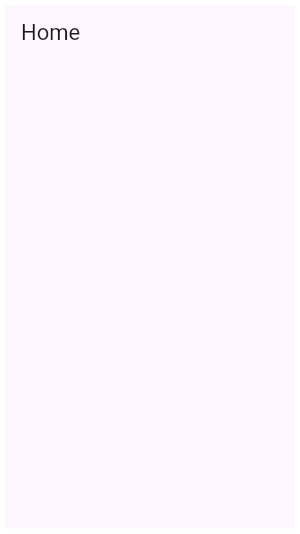
/// This example shows how to create a [MaterialApp] that disables the "debug"
|
|
/// banner with a [home] route that will be displayed when the app is launched.
|
|
///
|
|
/// 
|
|
///
|
|
/// ```dart
|
|
/// MaterialApp(
|
|
/// home: Scaffold(
|
|
/// appBar: AppBar(
|
|
/// title: const Text('Home'),
|
|
/// ),
|
|
/// ),
|
|
/// debugShowCheckedModeBanner: false,
|
|
/// )
|
|
/// ```
|
|
/// {@end-tool}
|
|
///
|
|
/// {@tool snippet}
|
|
/// This example shows how to create a [MaterialApp] that uses the [routes]
|
|
/// `Map` to define the "home" route and an "about" route.
|
|
///
|
|
/// ```dart
|
|
/// MaterialApp(
|
|
/// routes: <String, WidgetBuilder>{
|
|
/// '/': (BuildContext context) {
|
|
/// return Scaffold(
|
|
/// appBar: AppBar(
|
|
/// title: const Text('Home Route'),
|
|
/// ),
|
|
/// );
|
|
/// },
|
|
/// '/about': (BuildContext context) {
|
|
/// return Scaffold(
|
|
/// appBar: AppBar(
|
|
/// title: const Text('About Route'),
|
|
/// ),
|
|
/// );
|
|
/// }
|
|
/// },
|
|
/// )
|
|
/// ```
|
|
/// {@end-tool}
|
|
///
|
|
/// {@tool snippet}
|
|
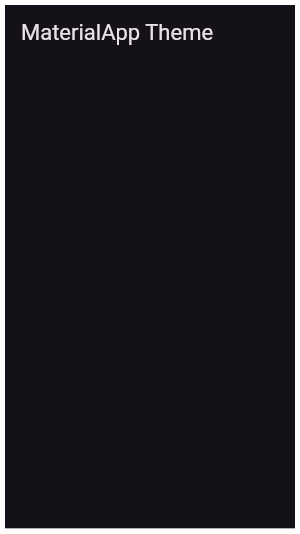
/// This example shows how to create a [MaterialApp] that defines a [theme] that
|
|
/// will be used for material widgets in the app.
|
|
///
|
|
/// 
|
|
///
|
|
/// ```dart
|
|
/// MaterialApp(
|
|
/// theme: ThemeData(
|
|
/// brightness: Brightness.dark,
|
|
/// primaryColor: Colors.blueGrey
|
|
/// ),
|
|
/// home: Scaffold(
|
|
/// appBar: AppBar(
|
|
/// title: const Text('MaterialApp Theme'),
|
|
/// ),
|
|
/// ),
|
|
/// )
|
|
/// ```
|
|
/// {@end-tool}
|
|
///
|
|
/// ## Troubleshooting
|
|
///
|
|
/// ### Why is my app's text red with yellow underlines?
|
|
///
|
|
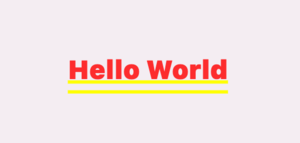
/// [Text] widgets that lack a [Material] ancestor will be rendered with an ugly
|
|
/// red/yellow text style.
|
|
///
|
|
/// 
|
|
///
|
|
/// The typical fix is to give the widget a [Scaffold] ancestor. The [Scaffold] creates
|
|
/// a [Material] widget that defines its default text style.
|
|
///
|
|
/// ```dart
|
|
/// const MaterialApp(
|
|
/// title: 'Material App',
|
|
/// home: Scaffold(
|
|
/// body: Center(
|
|
/// child: Text('Hello World'),
|
|
/// ),
|
|
/// ),
|
|
/// )
|
|
/// ```
|
|
///
|
|
/// See also:
|
|
///
|
|
/// * [Scaffold], which provides standard app elements like an [AppBar] and a [Drawer].
|
|
/// * [Navigator], which is used to manage the app's stack of pages.
|
|
/// * [MaterialPageRoute], which defines an app page that transitions in a material-specific way.
|
|
/// * [WidgetsApp], which defines the basic app elements but does not depend on the material library.
|
|
/// * The Flutter Internationalization Tutorial,
|
|
/// <https://flutter.dev/tutorials/internationalization/>.
|
|
class MaterialApp extends StatefulWidget {
|
|
/// Creates a MaterialApp.
|
|
///
|
|
/// At least one of [home], [routes], [onGenerateRoute], or [builder] must be
|
|
/// non-null. If only [routes] is given, it must include an entry for the
|
|
/// [Navigator.defaultRouteName] (`/`), since that is the route used when the
|
|
/// application is launched with an intent that specifies an otherwise
|
|
/// unsupported route.
|
|
///
|
|
/// This class creates an instance of [WidgetsApp].
|
|
const MaterialApp({
|
|
super.key,
|
|
this.navigatorKey,
|
|
this.scaffoldMessengerKey,
|
|
this.home,
|
|
Map<String, WidgetBuilder> this.routes = const <String, WidgetBuilder>{},
|
|
this.initialRoute,
|
|
this.onGenerateRoute,
|
|
this.onGenerateInitialRoutes,
|
|
this.onUnknownRoute,
|
|
this.onNavigationNotification,
|
|
List<NavigatorObserver> this.navigatorObservers = const <NavigatorObserver>[],
|
|
this.builder,
|
|
this.title = '',
|
|
this.onGenerateTitle,
|
|
this.color,
|
|
this.theme,
|
|
this.darkTheme,
|
|
this.highContrastTheme,
|
|
this.highContrastDarkTheme,
|
|
this.themeMode = ThemeMode.system,
|
|
this.themeAnimationDuration = kThemeAnimationDuration,
|
|
this.themeAnimationCurve = Curves.linear,
|
|
this.locale,
|
|
this.localizationsDelegates,
|
|
this.localeListResolutionCallback,
|
|
this.localeResolutionCallback,
|
|
this.supportedLocales = const <Locale>[Locale('en', 'US')],
|
|
this.debugShowMaterialGrid = false,
|
|
this.showPerformanceOverlay = false,
|
|
this.checkerboardRasterCacheImages = false,
|
|
this.checkerboardOffscreenLayers = false,
|
|
this.showSemanticsDebugger = false,
|
|
this.debugShowCheckedModeBanner = true,
|
|
this.shortcuts,
|
|
this.actions,
|
|
this.restorationScopeId,
|
|
this.scrollBehavior,
|
|
@Deprecated(
|
|
'Remove this parameter as it is now ignored. '
|
|
'MaterialApp never introduces its own MediaQuery; the View widget takes care of that. '
|
|
'This feature was deprecated after v3.7.0-29.0.pre.'
|
|
)
|
|
this.useInheritedMediaQuery = false,
|
|
this.themeAnimationStyle,
|
|
}) : routeInformationProvider = null,
|
|
routeInformationParser = null,
|
|
routerDelegate = null,
|
|
backButtonDispatcher = null,
|
|
routerConfig = null;
|
|
|
|
/// Creates a [MaterialApp] that uses the [Router] instead of a [Navigator].
|
|
///
|
|
/// {@macro flutter.widgets.WidgetsApp.router}
|
|
const MaterialApp.router({
|
|
super.key,
|
|
this.scaffoldMessengerKey,
|
|
this.routeInformationProvider,
|
|
this.routeInformationParser,
|
|
this.routerDelegate,
|
|
this.routerConfig,
|
|
this.backButtonDispatcher,
|
|
this.builder,
|
|
this.title = '',
|
|
this.onGenerateTitle,
|
|
this.onNavigationNotification,
|
|
this.color,
|
|
this.theme,
|
|
this.darkTheme,
|
|
this.highContrastTheme,
|
|
this.highContrastDarkTheme,
|
|
this.themeMode = ThemeMode.system,
|
|
this.themeAnimationDuration = kThemeAnimationDuration,
|
|
this.themeAnimationCurve = Curves.linear,
|
|
this.locale,
|
|
this.localizationsDelegates,
|
|
this.localeListResolutionCallback,
|
|
this.localeResolutionCallback,
|
|
this.supportedLocales = const <Locale>[Locale('en', 'US')],
|
|
this.debugShowMaterialGrid = false,
|
|
this.showPerformanceOverlay = false,
|
|
this.checkerboardRasterCacheImages = false,
|
|
this.checkerboardOffscreenLayers = false,
|
|
this.showSemanticsDebugger = false,
|
|
this.debugShowCheckedModeBanner = true,
|
|
this.shortcuts,
|
|
this.actions,
|
|
this.restorationScopeId,
|
|
this.scrollBehavior,
|
|
@Deprecated(
|
|
'Remove this parameter as it is now ignored. '
|
|
'MaterialApp never introduces its own MediaQuery; the View widget takes care of that. '
|
|
'This feature was deprecated after v3.7.0-29.0.pre.'
|
|
)
|
|
this.useInheritedMediaQuery = false,
|
|
this.themeAnimationStyle,
|
|
}) : assert(routerDelegate != null || routerConfig != null),
|
|
navigatorObservers = null,
|
|
navigatorKey = null,
|
|
onGenerateRoute = null,
|
|
home = null,
|
|
onGenerateInitialRoutes = null,
|
|
onUnknownRoute = null,
|
|
routes = null,
|
|
initialRoute = null;
|
|
|
|
/// {@macro flutter.widgets.widgetsApp.navigatorKey}
|
|
final GlobalKey<NavigatorState>? navigatorKey;
|
|
|
|
/// A key to use when building the [ScaffoldMessenger].
|
|
///
|
|
/// If a [scaffoldMessengerKey] is specified, the [ScaffoldMessenger] can be
|
|
/// directly manipulated without first obtaining it from a [BuildContext] via
|
|
/// [ScaffoldMessenger.of]: from the [scaffoldMessengerKey], use the
|
|
/// [GlobalKey.currentState] getter.
|
|
final GlobalKey<ScaffoldMessengerState>? scaffoldMessengerKey;
|
|
|
|
/// {@macro flutter.widgets.widgetsApp.home}
|
|
final Widget? home;
|
|
|
|
/// The application's top-level routing table.
|
|
///
|
|
/// When a named route is pushed with [Navigator.pushNamed], the route name is
|
|
/// looked up in this map. If the name is present, the associated
|
|
/// [widgets.WidgetBuilder] is used to construct a [MaterialPageRoute] that
|
|
/// performs an appropriate transition, including [Hero] animations, to the
|
|
/// new route.
|
|
///
|
|
/// {@macro flutter.widgets.widgetsApp.routes}
|
|
final Map<String, WidgetBuilder>? routes;
|
|
|
|
/// {@macro flutter.widgets.widgetsApp.initialRoute}
|
|
final String? initialRoute;
|
|
|
|
/// {@macro flutter.widgets.widgetsApp.onGenerateRoute}
|
|
final RouteFactory? onGenerateRoute;
|
|
|
|
/// {@macro flutter.widgets.widgetsApp.onGenerateInitialRoutes}
|
|
final InitialRouteListFactory? onGenerateInitialRoutes;
|
|
|
|
/// {@macro flutter.widgets.widgetsApp.onUnknownRoute}
|
|
final RouteFactory? onUnknownRoute;
|
|
|
|
/// {@macro flutter.widgets.widgetsApp.onNavigationNotification}
|
|
final NotificationListenerCallback<NavigationNotification>? onNavigationNotification;
|
|
|
|
/// {@macro flutter.widgets.widgetsApp.navigatorObservers}
|
|
final List<NavigatorObserver>? navigatorObservers;
|
|
|
|
/// {@macro flutter.widgets.widgetsApp.routeInformationProvider}
|
|
final RouteInformationProvider? routeInformationProvider;
|
|
|
|
/// {@macro flutter.widgets.widgetsApp.routeInformationParser}
|
|
final RouteInformationParser<Object>? routeInformationParser;
|
|
|
|
/// {@macro flutter.widgets.widgetsApp.routerDelegate}
|
|
final RouterDelegate<Object>? routerDelegate;
|
|
|
|
/// {@macro flutter.widgets.widgetsApp.backButtonDispatcher}
|
|
final BackButtonDispatcher? backButtonDispatcher;
|
|
|
|
/// {@macro flutter.widgets.widgetsApp.routerConfig}
|
|
final RouterConfig<Object>? routerConfig;
|
|
|
|
/// {@macro flutter.widgets.widgetsApp.builder}
|
|
///
|
|
/// Material specific features such as [showDialog] and [showMenu], and widgets
|
|
/// such as [Tooltip], [PopupMenuButton], also require a [Navigator] to properly
|
|
/// function.
|
|
final TransitionBuilder? builder;
|
|
|
|
/// {@macro flutter.widgets.widgetsApp.title}
|
|
///
|
|
/// This value is passed unmodified to [WidgetsApp.title].
|
|
final String title;
|
|
|
|
/// {@macro flutter.widgets.widgetsApp.onGenerateTitle}
|
|
///
|
|
/// This value is passed unmodified to [WidgetsApp.onGenerateTitle].
|
|
final GenerateAppTitle? onGenerateTitle;
|
|
|
|
/// Default visual properties, like colors fonts and shapes, for this app's
|
|
/// material widgets.
|
|
///
|
|
/// A second [darkTheme] [ThemeData] value, which is used to provide a dark
|
|
/// version of the user interface can also be specified. [themeMode] will
|
|
/// control which theme will be used if a [darkTheme] is provided.
|
|
///
|
|
/// The default value of this property is the value of [ThemeData.light()].
|
|
///
|
|
/// See also:
|
|
///
|
|
/// * [themeMode], which controls which theme to use.
|
|
/// * [MediaQueryData.platformBrightness], which indicates the platform's
|
|
/// desired brightness and is used to automatically toggle between [theme]
|
|
/// and [darkTheme] in [MaterialApp].
|
|
/// * [ThemeData.brightness], which indicates the [Brightness] of a theme's
|
|
/// colors.
|
|
final ThemeData? theme;
|
|
|
|
/// The [ThemeData] to use when a 'dark mode' is requested by the system.
|
|
///
|
|
/// Some host platforms allow the users to select a system-wide 'dark mode',
|
|
/// or the application may want to offer the user the ability to choose a
|
|
/// dark theme just for this application. This is theme that will be used for
|
|
/// such cases. [themeMode] will control which theme will be used.
|
|
///
|
|
/// This theme should have a [ThemeData.brightness] set to [Brightness.dark].
|
|
///
|
|
/// Uses [theme] instead when null. Defaults to the value of
|
|
/// [ThemeData.light()] when both [darkTheme] and [theme] are null.
|
|
///
|
|
/// See also:
|
|
///
|
|
/// * [themeMode], which controls which theme to use.
|
|
/// * [MediaQueryData.platformBrightness], which indicates the platform's
|
|
/// desired brightness and is used to automatically toggle between [theme]
|
|
/// and [darkTheme] in [MaterialApp].
|
|
/// * [ThemeData.brightness], which is typically set to the value of
|
|
/// [MediaQueryData.platformBrightness].
|
|
final ThemeData? darkTheme;
|
|
|
|
/// The [ThemeData] to use when 'high contrast' is requested by the system.
|
|
///
|
|
/// Some host platforms (for example, iOS) allow the users to increase
|
|
/// contrast through an accessibility setting.
|
|
///
|
|
/// Uses [theme] instead when null.
|
|
///
|
|
/// See also:
|
|
///
|
|
/// * [MediaQueryData.highContrast], which indicates the platform's
|
|
/// desire to increase contrast.
|
|
final ThemeData? highContrastTheme;
|
|
|
|
/// The [ThemeData] to use when a 'dark mode' and 'high contrast' is requested
|
|
/// by the system.
|
|
///
|
|
/// Some host platforms (for example, iOS) allow the users to increase
|
|
/// contrast through an accessibility setting.
|
|
///
|
|
/// This theme should have a [ThemeData.brightness] set to [Brightness.dark].
|
|
///
|
|
/// Uses [darkTheme] instead when null.
|
|
///
|
|
/// See also:
|
|
///
|
|
/// * [MediaQueryData.highContrast], which indicates the platform's
|
|
/// desire to increase contrast.
|
|
final ThemeData? highContrastDarkTheme;
|
|
|
|
/// Determines which theme will be used by the application if both [theme]
|
|
/// and [darkTheme] are provided.
|
|
///
|
|
/// If set to [ThemeMode.system], the choice of which theme to use will
|
|
/// be based on the user's system preferences. If the [MediaQuery.platformBrightnessOf]
|
|
/// is [Brightness.light], [theme] will be used. If it is [Brightness.dark],
|
|
/// [darkTheme] will be used (unless it is null, in which case [theme]
|
|
/// will be used.
|
|
///
|
|
/// If set to [ThemeMode.light] the [theme] will always be used,
|
|
/// regardless of the user's system preference.
|
|
///
|
|
/// If set to [ThemeMode.dark] the [darkTheme] will be used
|
|
/// regardless of the user's system preference. If [darkTheme] is null
|
|
/// then it will fallback to using [theme].
|
|
///
|
|
/// The default value is [ThemeMode.system].
|
|
///
|
|
/// See also:
|
|
///
|
|
/// * [theme], which is used when a light mode is selected.
|
|
/// * [darkTheme], which is used when a dark mode is selected.
|
|
/// * [ThemeData.brightness], which indicates to various parts of the
|
|
/// system what kind of theme is being used.
|
|
final ThemeMode? themeMode;
|
|
|
|
/// The duration of animated theme changes.
|
|
///
|
|
/// When the theme changes (either by the [theme], [darkTheme] or [themeMode]
|
|
/// parameters changing) it is animated to the new theme over time.
|
|
/// The [themeAnimationDuration] determines how long this animation takes.
|
|
///
|
|
/// To have the theme change immediately, you can set this to [Duration.zero].
|
|
///
|
|
/// The default is [kThemeAnimationDuration].
|
|
///
|
|
/// See also:
|
|
/// [themeAnimationCurve], which defines the curve used for the animation.
|
|
final Duration themeAnimationDuration;
|
|
|
|
/// The curve to apply when animating theme changes.
|
|
///
|
|
/// The default is [Curves.linear].
|
|
///
|
|
/// This is ignored if [themeAnimationDuration] is [Duration.zero].
|
|
///
|
|
/// See also:
|
|
/// [themeAnimationDuration], which defines how long the animation is.
|
|
final Curve themeAnimationCurve;
|
|
|
|
/// {@macro flutter.widgets.widgetsApp.color}
|
|
final Color? color;
|
|
|
|
/// {@macro flutter.widgets.widgetsApp.locale}
|
|
final Locale? locale;
|
|
|
|
/// {@macro flutter.widgets.widgetsApp.localizationsDelegates}
|
|
///
|
|
/// Internationalized apps that require translations for one of the locales
|
|
/// listed in [GlobalMaterialLocalizations] should specify this parameter
|
|
/// and list the [supportedLocales] that the application can handle.
|
|
///
|
|
/// ```dart
|
|
/// // The GlobalMaterialLocalizations and GlobalWidgetsLocalizations
|
|
/// // classes require the following import:
|
|
/// // import 'package:flutter_localizations/flutter_localizations.dart';
|
|
///
|
|
/// const MaterialApp(
|
|
/// localizationsDelegates: <LocalizationsDelegate<Object>>[
|
|
/// // ... app-specific localization delegate(s) here
|
|
/// GlobalMaterialLocalizations.delegate,
|
|
/// GlobalWidgetsLocalizations.delegate,
|
|
/// ],
|
|
/// supportedLocales: <Locale>[
|
|
/// Locale('en', 'US'), // English
|
|
/// Locale('he', 'IL'), // Hebrew
|
|
/// // ... other locales the app supports
|
|
/// ],
|
|
/// // ...
|
|
/// )
|
|
/// ```
|
|
///
|
|
/// ## Adding localizations for a new locale
|
|
///
|
|
/// The information that follows applies to the unusual case of an app
|
|
/// adding translations for a language not already supported by
|
|
/// [GlobalMaterialLocalizations].
|
|
///
|
|
/// Delegates that produce [WidgetsLocalizations] and [MaterialLocalizations]
|
|
/// are included automatically. Apps can provide their own versions of these
|
|
/// localizations by creating implementations of
|
|
/// [LocalizationsDelegate<WidgetsLocalizations>] or
|
|
/// [LocalizationsDelegate<MaterialLocalizations>] whose load methods return
|
|
/// custom versions of [WidgetsLocalizations] or [MaterialLocalizations].
|
|
///
|
|
/// For example: to add support to [MaterialLocalizations] for a locale it
|
|
/// doesn't already support, say `const Locale('foo', 'BR')`, one first
|
|
/// creates a subclass of [MaterialLocalizations] that provides the
|
|
/// translations:
|
|
///
|
|
/// ```dart
|
|
/// class FooLocalizations extends MaterialLocalizations {
|
|
/// FooLocalizations();
|
|
/// @override
|
|
/// String get okButtonLabel => 'foo';
|
|
/// // ...
|
|
/// // lots of other getters and methods to override!
|
|
/// }
|
|
/// ```
|
|
///
|
|
/// One must then create a [LocalizationsDelegate] subclass that can provide
|
|
/// an instance of the [MaterialLocalizations] subclass. In this case, this is
|
|
/// essentially just a method that constructs a `FooLocalizations` object. A
|
|
/// [SynchronousFuture] is used here because no asynchronous work takes place
|
|
/// upon "loading" the localizations object.
|
|
///
|
|
/// ```dart
|
|
/// // continuing from previous example...
|
|
/// class FooLocalizationsDelegate extends LocalizationsDelegate<MaterialLocalizations> {
|
|
/// const FooLocalizationsDelegate();
|
|
/// @override
|
|
/// bool isSupported(Locale locale) {
|
|
/// return locale == const Locale('foo', 'BR');
|
|
/// }
|
|
/// @override
|
|
/// Future<FooLocalizations> load(Locale locale) {
|
|
/// assert(locale == const Locale('foo', 'BR'));
|
|
/// return SynchronousFuture<FooLocalizations>(FooLocalizations());
|
|
/// }
|
|
/// @override
|
|
/// bool shouldReload(FooLocalizationsDelegate old) => false;
|
|
/// }
|
|
/// ```
|
|
///
|
|
/// Constructing a [MaterialApp] with a `FooLocalizationsDelegate` overrides
|
|
/// the automatically included delegate for [MaterialLocalizations] because
|
|
/// only the first delegate of each [LocalizationsDelegate.type] is used and
|
|
/// the automatically included delegates are added to the end of the app's
|
|
/// [localizationsDelegates] list.
|
|
///
|
|
/// ```dart
|
|
/// // continuing from previous example...
|
|
/// const MaterialApp(
|
|
/// localizationsDelegates: <LocalizationsDelegate<Object>>[
|
|
/// FooLocalizationsDelegate(),
|
|
/// ],
|
|
/// // ...
|
|
/// )
|
|
/// ```
|
|
/// See also:
|
|
///
|
|
/// * [supportedLocales], which must be specified along with
|
|
/// [localizationsDelegates].
|
|
/// * [GlobalMaterialLocalizations], a [localizationsDelegates] value
|
|
/// which provides material localizations for many languages.
|
|
/// * The Flutter Internationalization Tutorial,
|
|
/// <https://flutter.dev/tutorials/internationalization/>.
|
|
final Iterable<LocalizationsDelegate<dynamic>>? localizationsDelegates;
|
|
|
|
/// {@macro flutter.widgets.widgetsApp.localeListResolutionCallback}
|
|
///
|
|
/// This callback is passed along to the [WidgetsApp] built by this widget.
|
|
final LocaleListResolutionCallback? localeListResolutionCallback;
|
|
|
|
/// {@macro flutter.widgets.LocaleResolutionCallback}
|
|
///
|
|
/// This callback is passed along to the [WidgetsApp] built by this widget.
|
|
final LocaleResolutionCallback? localeResolutionCallback;
|
|
|
|
/// {@macro flutter.widgets.widgetsApp.supportedLocales}
|
|
///
|
|
/// It is passed along unmodified to the [WidgetsApp] built by this widget.
|
|
///
|
|
/// See also:
|
|
///
|
|
/// * [localizationsDelegates], which must be specified for localized
|
|
/// applications.
|
|
/// * [GlobalMaterialLocalizations], a [localizationsDelegates] value
|
|
/// which provides material localizations for many languages.
|
|
/// * The Flutter Internationalization Tutorial,
|
|
/// <https://flutter.dev/tutorials/internationalization/>.
|
|
final Iterable<Locale> supportedLocales;
|
|
|
|
/// Turns on a performance overlay.
|
|
///
|
|
/// See also:
|
|
///
|
|
/// * <https://flutter.dev/debugging/#performance-overlay>
|
|
final bool showPerformanceOverlay;
|
|
|
|
/// Turns on checkerboarding of raster cache images.
|
|
final bool checkerboardRasterCacheImages;
|
|
|
|
/// Turns on checkerboarding of layers rendered to offscreen bitmaps.
|
|
final bool checkerboardOffscreenLayers;
|
|
|
|
/// Turns on an overlay that shows the accessibility information
|
|
/// reported by the framework.
|
|
final bool showSemanticsDebugger;
|
|
|
|
/// {@macro flutter.widgets.widgetsApp.debugShowCheckedModeBanner}
|
|
final bool debugShowCheckedModeBanner;
|
|
|
|
/// {@macro flutter.widgets.widgetsApp.shortcuts}
|
|
/// {@tool snippet}
|
|
/// This example shows how to add a single shortcut for
|
|
/// [LogicalKeyboardKey.select] to the default shortcuts without needing to
|
|
/// add your own [Shortcuts] widget.
|
|
///
|
|
/// Alternatively, you could insert a [Shortcuts] widget with just the mapping
|
|
/// you want to add between the [WidgetsApp] and its child and get the same
|
|
/// effect.
|
|
///
|
|
/// ```dart
|
|
/// Widget build(BuildContext context) {
|
|
/// return WidgetsApp(
|
|
/// shortcuts: <ShortcutActivator, Intent>{
|
|
/// ... WidgetsApp.defaultShortcuts,
|
|
/// const SingleActivator(LogicalKeyboardKey.select): const ActivateIntent(),
|
|
/// },
|
|
/// color: const Color(0xFFFF0000),
|
|
/// builder: (BuildContext context, Widget? child) {
|
|
/// return const Placeholder();
|
|
/// },
|
|
/// );
|
|
/// }
|
|
/// ```
|
|
/// {@end-tool}
|
|
/// {@macro flutter.widgets.widgetsApp.shortcuts.seeAlso}
|
|
final Map<ShortcutActivator, Intent>? shortcuts;
|
|
|
|
/// {@macro flutter.widgets.widgetsApp.actions}
|
|
/// {@tool snippet}
|
|
/// This example shows how to add a single action handling an
|
|
/// [ActivateAction] to the default actions without needing to
|
|
/// add your own [Actions] widget.
|
|
///
|
|
/// Alternatively, you could insert a [Actions] widget with just the mapping
|
|
/// you want to add between the [WidgetsApp] and its child and get the same
|
|
/// effect.
|
|
///
|
|
/// ```dart
|
|
/// Widget build(BuildContext context) {
|
|
/// return WidgetsApp(
|
|
/// actions: <Type, Action<Intent>>{
|
|
/// ... WidgetsApp.defaultActions,
|
|
/// ActivateAction: CallbackAction<Intent>(
|
|
/// onInvoke: (Intent intent) {
|
|
/// // Do something here...
|
|
/// return null;
|
|
/// },
|
|
/// ),
|
|
/// },
|
|
/// color: const Color(0xFFFF0000),
|
|
/// builder: (BuildContext context, Widget? child) {
|
|
/// return const Placeholder();
|
|
/// },
|
|
/// );
|
|
/// }
|
|
/// ```
|
|
/// {@end-tool}
|
|
/// {@macro flutter.widgets.widgetsApp.actions.seeAlso}
|
|
final Map<Type, Action<Intent>>? actions;
|
|
|
|
/// {@macro flutter.widgets.widgetsApp.restorationScopeId}
|
|
final String? restorationScopeId;
|
|
|
|
/// {@template flutter.material.materialApp.scrollBehavior}
|
|
/// The default [ScrollBehavior] for the application.
|
|
///
|
|
/// [ScrollBehavior]s describe how [Scrollable] widgets behave. Providing
|
|
/// a [ScrollBehavior] can set the default [ScrollPhysics] across
|
|
/// an application, and manage [Scrollable] decorations like [Scrollbar]s and
|
|
/// [GlowingOverscrollIndicator]s.
|
|
/// {@endtemplate}
|
|
///
|
|
/// When null, defaults to [MaterialScrollBehavior].
|
|
///
|
|
/// See also:
|
|
///
|
|
/// * [ScrollConfiguration], which controls how [Scrollable] widgets behave
|
|
/// in a subtree.
|
|
final ScrollBehavior? scrollBehavior;
|
|
|
|
/// Turns on a [GridPaper] overlay that paints a baseline grid
|
|
/// Material apps.
|
|
///
|
|
/// Only available in debug mode.
|
|
///
|
|
/// See also:
|
|
///
|
|
/// * <https://material.io/design/layout/spacing-methods.html>
|
|
final bool debugShowMaterialGrid;
|
|
|
|
/// {@macro flutter.widgets.widgetsApp.useInheritedMediaQuery}
|
|
@Deprecated(
|
|
'This setting is now ignored. '
|
|
'MaterialApp never introduces its own MediaQuery; the View widget takes care of that. '
|
|
'This feature was deprecated after v3.7.0-29.0.pre.'
|
|
)
|
|
final bool useInheritedMediaQuery;
|
|
|
|
/// Used to override the theme animation curve and duration.
|
|
///
|
|
/// If [AnimationStyle.duration] is provided, it will be used to override
|
|
/// the theme animation duration in the underlying [AnimatedTheme] widget.
|
|
/// If it is null, then [themeAnimationDuration] will be used. Otherwise,
|
|
/// defaults to 200ms.
|
|
///
|
|
/// If [AnimationStyle.curve] is provided, it will be used to override
|
|
/// the theme animation curve in the underlying [AnimatedTheme] widget.
|
|
/// If it is null, then [themeAnimationCurve] will be used. Otherwise,
|
|
/// defaults to [Curves.linear].
|
|
///
|
|
/// To disable the theme animation, use [AnimationStyle.noAnimation].
|
|
///
|
|
/// {@tool dartpad}
|
|
/// This sample showcases how to override the theme animation curve and
|
|
/// duration in the [MaterialApp] widget using [AnimationStyle].
|
|
///
|
|
/// ** See code in examples/api/lib/material/app/app.0.dart **
|
|
/// {@end-tool}
|
|
final AnimationStyle? themeAnimationStyle;
|
|
|
|
@override
|
|
State<MaterialApp> createState() => _MaterialAppState();
|
|
|
|
/// The [HeroController] used for Material page transitions.
|
|
///
|
|
/// Used by the [MaterialApp].
|
|
static HeroController createMaterialHeroController() {
|
|
return HeroController(
|
|
createRectTween: (Rect? begin, Rect? end) {
|
|
return MaterialRectArcTween(begin: begin, end: end);
|
|
},
|
|
);
|
|
}
|
|
}
|
|
|
|
/// Describes how [Scrollable] widgets behave for [MaterialApp]s.
|
|
///
|
|
/// {@macro flutter.widgets.scrollBehavior}
|
|
///
|
|
/// Setting a [MaterialScrollBehavior] will apply a
|
|
/// [GlowingOverscrollIndicator] to [Scrollable] descendants when executing on
|
|
/// [TargetPlatform.android] and [TargetPlatform.fuchsia].
|
|
///
|
|
/// When using the desktop platform, if the [Scrollable] widget scrolls in the
|
|
/// [Axis.vertical], a [Scrollbar] is applied.
|
|
///
|
|
/// If the scroll direction is [Axis.horizontal] scroll views are less
|
|
/// discoverable, so consider adding a Scrollbar in these cases, either directly
|
|
/// or through the [buildScrollbar] method.
|
|
///
|
|
/// [ThemeData.useMaterial3] specifies the
|
|
/// overscroll indicator that is used on [TargetPlatform.android], which
|
|
/// defaults to true, resulting in a [StretchingOverscrollIndicator]. Setting
|
|
/// [ThemeData.useMaterial3] to false will instead use a
|
|
/// [GlowingOverscrollIndicator].
|
|
///
|
|
/// See also:
|
|
///
|
|
/// * [ScrollBehavior], the default scrolling behavior extended by this class.
|
|
class MaterialScrollBehavior extends ScrollBehavior {
|
|
/// Creates a MaterialScrollBehavior that decorates [Scrollable]s with
|
|
/// [StretchingOverscrollIndicator]s and [Scrollbar]s based on the current
|
|
/// platform and provided [ScrollableDetails].
|
|
///
|
|
/// [ThemeData.useMaterial3] specifies the
|
|
/// overscroll indicator that is used on [TargetPlatform.android], which
|
|
/// defaults to true, resulting in a [StretchingOverscrollIndicator]. Setting
|
|
/// [ThemeData.useMaterial3] to false will instead use a
|
|
/// [GlowingOverscrollIndicator].
|
|
const MaterialScrollBehavior();
|
|
|
|
@override
|
|
TargetPlatform getPlatform(BuildContext context) => Theme.of(context).platform;
|
|
|
|
@override
|
|
Widget buildScrollbar(BuildContext context, Widget child, ScrollableDetails details) {
|
|
// When modifying this function, consider modifying the implementation in
|
|
// the base class ScrollBehavior as well.
|
|
switch (axisDirectionToAxis(details.direction)) {
|
|
case Axis.horizontal:
|
|
return child;
|
|
case Axis.vertical:
|
|
switch (getPlatform(context)) {
|
|
case TargetPlatform.linux:
|
|
case TargetPlatform.macOS:
|
|
case TargetPlatform.windows:
|
|
assert(details.controller != null);
|
|
return Scrollbar(
|
|
controller: details.controller,
|
|
child: child,
|
|
);
|
|
case TargetPlatform.android:
|
|
case TargetPlatform.fuchsia:
|
|
case TargetPlatform.iOS:
|
|
return child;
|
|
}
|
|
}
|
|
}
|
|
|
|
@override
|
|
Widget buildOverscrollIndicator(BuildContext context, Widget child, ScrollableDetails details) {
|
|
// When modifying this function, consider modifying the implementation in
|
|
// the base class ScrollBehavior as well.
|
|
final AndroidOverscrollIndicator indicator = Theme.of(context).useMaterial3
|
|
? AndroidOverscrollIndicator.stretch
|
|
: AndroidOverscrollIndicator.glow;
|
|
switch (getPlatform(context)) {
|
|
case TargetPlatform.iOS:
|
|
case TargetPlatform.linux:
|
|
case TargetPlatform.macOS:
|
|
case TargetPlatform.windows:
|
|
return child;
|
|
case TargetPlatform.android:
|
|
switch (indicator) {
|
|
case AndroidOverscrollIndicator.stretch:
|
|
return StretchingOverscrollIndicator(
|
|
axisDirection: details.direction,
|
|
clipBehavior: details.clipBehavior ?? Clip.hardEdge,
|
|
child: child,
|
|
);
|
|
case AndroidOverscrollIndicator.glow:
|
|
break;
|
|
}
|
|
case TargetPlatform.fuchsia:
|
|
break;
|
|
}
|
|
return GlowingOverscrollIndicator(
|
|
axisDirection: details.direction,
|
|
color: Theme.of(context).colorScheme.secondary,
|
|
child: child,
|
|
);
|
|
}
|
|
}
|
|
|
|
class _MaterialAppState extends State<MaterialApp> {
|
|
late HeroController _heroController;
|
|
|
|
bool get _usesRouter => widget.routerDelegate != null || widget.routerConfig != null;
|
|
|
|
@override
|
|
void initState() {
|
|
super.initState();
|
|
_heroController = MaterialApp.createMaterialHeroController();
|
|
}
|
|
|
|
@override
|
|
void dispose() {
|
|
_heroController.dispose();
|
|
super.dispose();
|
|
}
|
|
|
|
// Combine the Localizations for Material with the ones contributed
|
|
// by the localizationsDelegates parameter, if any. Only the first delegate
|
|
// of a particular LocalizationsDelegate.type is loaded so the
|
|
// localizationsDelegate parameter can be used to override
|
|
// _MaterialLocalizationsDelegate.
|
|
Iterable<LocalizationsDelegate<dynamic>> get _localizationsDelegates {
|
|
return <LocalizationsDelegate<dynamic>>[
|
|
if (widget.localizationsDelegates != null)
|
|
...widget.localizationsDelegates!,
|
|
DefaultMaterialLocalizations.delegate,
|
|
DefaultCupertinoLocalizations.delegate,
|
|
];
|
|
}
|
|
|
|
Widget _inspectorSelectButtonBuilder(BuildContext context, VoidCallback onPressed) {
|
|
return FloatingActionButton(
|
|
onPressed: onPressed,
|
|
mini: true,
|
|
child: const Icon(Icons.search),
|
|
);
|
|
}
|
|
|
|
ThemeData _themeBuilder(BuildContext context) {
|
|
ThemeData? theme;
|
|
// Resolve which theme to use based on brightness and high contrast.
|
|
final ThemeMode mode = widget.themeMode ?? ThemeMode.system;
|
|
final Brightness platformBrightness = MediaQuery.platformBrightnessOf(context);
|
|
final bool useDarkTheme = mode == ThemeMode.dark
|
|
|| (mode == ThemeMode.system && platformBrightness == ui.Brightness.dark);
|
|
final bool highContrast = MediaQuery.highContrastOf(context);
|
|
if (useDarkTheme && highContrast && widget.highContrastDarkTheme != null) {
|
|
theme = widget.highContrastDarkTheme;
|
|
} else if (useDarkTheme && widget.darkTheme != null) {
|
|
theme = widget.darkTheme;
|
|
} else if (highContrast && widget.highContrastTheme != null) {
|
|
theme = widget.highContrastTheme;
|
|
}
|
|
theme ??= widget.theme ?? ThemeData.light();
|
|
return theme;
|
|
}
|
|
|
|
Widget _materialBuilder(BuildContext context, Widget? child) {
|
|
final ThemeData theme = _themeBuilder(context);
|
|
final Color effectiveSelectionColor = theme.textSelectionTheme.selectionColor ?? theme.colorScheme.primary.withOpacity(0.40);
|
|
final Color effectiveCursorColor = theme.textSelectionTheme.cursorColor ?? theme.colorScheme.primary;
|
|
|
|
Widget childWidget = child ?? const SizedBox.shrink();
|
|
|
|
if (widget.themeAnimationStyle != AnimationStyle.noAnimation) {
|
|
if (widget.builder != null) {
|
|
childWidget = Builder(
|
|
builder: (BuildContext context) {
|
|
// Why are we surrounding a builder with a builder?
|
|
//
|
|
// The widget.builder may contain code that invokes
|
|
// Theme.of(), which should return the theme we selected
|
|
// above in AnimatedTheme. However, if we invoke
|
|
// widget.builder() directly as the child of AnimatedTheme
|
|
// then there is no Context separating them, and the
|
|
// widget.builder() will not find the theme. Therefore, we
|
|
// surround widget.builder with yet another builder so that
|
|
// a context separates them and Theme.of() correctly
|
|
// resolves to the theme we passed to AnimatedTheme.
|
|
return widget.builder!(context, child);
|
|
},
|
|
);
|
|
}
|
|
childWidget = AnimatedTheme(
|
|
data: theme,
|
|
duration: widget.themeAnimationStyle?.duration ?? widget.themeAnimationDuration,
|
|
curve: widget.themeAnimationStyle?.curve ?? widget.themeAnimationCurve,
|
|
child: childWidget,
|
|
);
|
|
} else {
|
|
childWidget = Theme(
|
|
data: theme,
|
|
child: childWidget,
|
|
);
|
|
}
|
|
|
|
return ScaffoldMessenger(
|
|
key: widget.scaffoldMessengerKey,
|
|
child: DefaultSelectionStyle(
|
|
selectionColor: effectiveSelectionColor,
|
|
cursorColor: effectiveCursorColor,
|
|
child: childWidget,
|
|
),
|
|
);
|
|
}
|
|
|
|
Widget _buildWidgetApp(BuildContext context) {
|
|
// The color property is always pulled from the light theme, even if dark
|
|
// mode is activated. This was done to simplify the technical details
|
|
// of switching themes and it was deemed acceptable because this color
|
|
// property is only used on old Android OSes to color the app bar in
|
|
// Android's switcher UI.
|
|
//
|
|
// blue is the primary color of the default theme.
|
|
final Color materialColor = widget.color ?? widget.theme?.primaryColor ?? Colors.blue;
|
|
if (_usesRouter) {
|
|
return WidgetsApp.router(
|
|
key: GlobalObjectKey(this),
|
|
routeInformationProvider: widget.routeInformationProvider,
|
|
routeInformationParser: widget.routeInformationParser,
|
|
routerDelegate: widget.routerDelegate,
|
|
routerConfig: widget.routerConfig,
|
|
backButtonDispatcher: widget.backButtonDispatcher,
|
|
onNavigationNotification: widget.onNavigationNotification,
|
|
builder: _materialBuilder,
|
|
title: widget.title,
|
|
onGenerateTitle: widget.onGenerateTitle,
|
|
textStyle: _errorTextStyle,
|
|
color: materialColor,
|
|
locale: widget.locale,
|
|
localizationsDelegates: _localizationsDelegates,
|
|
localeResolutionCallback: widget.localeResolutionCallback,
|
|
localeListResolutionCallback: widget.localeListResolutionCallback,
|
|
supportedLocales: widget.supportedLocales,
|
|
showPerformanceOverlay: widget.showPerformanceOverlay,
|
|
showSemanticsDebugger: widget.showSemanticsDebugger,
|
|
debugShowCheckedModeBanner: widget.debugShowCheckedModeBanner,
|
|
inspectorSelectButtonBuilder: _inspectorSelectButtonBuilder,
|
|
shortcuts: widget.shortcuts,
|
|
actions: widget.actions,
|
|
restorationScopeId: widget.restorationScopeId,
|
|
);
|
|
}
|
|
|
|
return WidgetsApp(
|
|
key: GlobalObjectKey(this),
|
|
navigatorKey: widget.navigatorKey,
|
|
navigatorObservers: widget.navigatorObservers!,
|
|
pageRouteBuilder: <T>(RouteSettings settings, WidgetBuilder builder) {
|
|
return MaterialPageRoute<T>(settings: settings, builder: builder);
|
|
},
|
|
home: widget.home,
|
|
routes: widget.routes!,
|
|
initialRoute: widget.initialRoute,
|
|
onGenerateRoute: widget.onGenerateRoute,
|
|
onGenerateInitialRoutes: widget.onGenerateInitialRoutes,
|
|
onUnknownRoute: widget.onUnknownRoute,
|
|
onNavigationNotification: widget.onNavigationNotification,
|
|
builder: _materialBuilder,
|
|
title: widget.title,
|
|
onGenerateTitle: widget.onGenerateTitle,
|
|
textStyle: _errorTextStyle,
|
|
color: materialColor,
|
|
locale: widget.locale,
|
|
localizationsDelegates: _localizationsDelegates,
|
|
localeResolutionCallback: widget.localeResolutionCallback,
|
|
localeListResolutionCallback: widget.localeListResolutionCallback,
|
|
supportedLocales: widget.supportedLocales,
|
|
showPerformanceOverlay: widget.showPerformanceOverlay,
|
|
showSemanticsDebugger: widget.showSemanticsDebugger,
|
|
debugShowCheckedModeBanner: widget.debugShowCheckedModeBanner,
|
|
inspectorSelectButtonBuilder: _inspectorSelectButtonBuilder,
|
|
shortcuts: widget.shortcuts,
|
|
actions: widget.actions,
|
|
restorationScopeId: widget.restorationScopeId,
|
|
);
|
|
}
|
|
|
|
@override
|
|
Widget build(BuildContext context) {
|
|
Widget result = _buildWidgetApp(context);
|
|
result = Focus(
|
|
canRequestFocus: false,
|
|
onKeyEvent: (FocusNode node, KeyEvent event) {
|
|
if ((event is! KeyDownEvent && event is! KeyRepeatEvent) ||
|
|
event.logicalKey != LogicalKeyboardKey.escape) {
|
|
return KeyEventResult.ignored;
|
|
}
|
|
return Tooltip.dismissAllToolTips() ? KeyEventResult.handled : KeyEventResult.ignored;
|
|
},
|
|
child: result,
|
|
);
|
|
assert(() {
|
|
if (widget.debugShowMaterialGrid) {
|
|
result = GridPaper(
|
|
color: const Color(0xE0F9BBE0),
|
|
interval: 8.0,
|
|
subdivisions: 1,
|
|
child: result,
|
|
);
|
|
}
|
|
return true;
|
|
}());
|
|
|
|
return ScrollConfiguration(
|
|
behavior: widget.scrollBehavior ?? const MaterialScrollBehavior(),
|
|
child: HeroControllerScope(
|
|
controller: _heroController,
|
|
child: result,
|
|
),
|
|
);
|
|
}
|
|
}
|