 6e246ac854
This PR is making the `CupertinoNavigationBar` and `CupertinoSliverNavigationBar` appear transparent as long as the content is not scrolled under them, so they look like standard iOS apps nav bars.

https://github.com/flutter/flutter/assets/423393/eee2700b-2a91-4577-922c-6163d47cb357

https://github.com/flutter/flutter/assets/423393/3847f2b5-0dac-4d5e-aa6f-03c1d2893e30

<details>
  <summary>Demo app code</summary>

  ```dart
import 'package:flutter/cupertino.dart';

/// Flutter code sample for [CupertinoTabScaffold].

void main() => runApp(const TabScaffoldApp());

class TabScaffoldApp extends StatefulWidget {
  const TabScaffoldApp({super.key});

  @override
  State<TabScaffoldApp> createState() => _TabScaffoldAppState();
}

class _TabScaffoldAppState extends State<TabScaffoldApp> {
  Brightness _brightness = Brightness.light;

  @override
  Widget build(BuildContext context) {
    return CupertinoApp(
      theme: CupertinoThemeData(brightness: _brightness),
      home: TabScaffoldExample(
          brightness: _brightness, onBrightnessToggle: _toggleBrightness),
    );
  }

  void _toggleBrightness() {
    setState(() {
      _brightness =
          _brightness == Brightness.light ? Brightness.dark : Brightness.light;
    });
  }
}

class TabScaffoldExample extends StatefulWidget {
  const TabScaffoldExample(
      {required this.brightness, required this.onBrightnessToggle, super.key});

  final VoidCallback onBrightnessToggle;
  final Brightness brightness;

  @override
  State<TabScaffoldExample> createState() => _TabScaffoldExampleState();
}

class _TabScaffoldExampleState extends State<TabScaffoldExample> {
  @override
  Widget build(BuildContext context) {
    return CupertinoTabScaffold(
      tabBar: CupertinoTabBar(
        items: const <BottomNavigationBarItem>[
          BottomNavigationBarItem(
            icon: Icon(CupertinoIcons.home),
            label: 'Home',
          ),
          BottomNavigationBarItem(
            icon: Icon(CupertinoIcons.search_circle_fill),
            label: 'Explore',
          ),
          BottomNavigationBarItem(
            icon: Icon(CupertinoIcons.person_fill),
            label: 'Profile',
          ),
          BottomNavigationBarItem(
            icon: Icon(CupertinoIcons.settings_solid),
            label: 'Settings',
          ),
        ],
      ),
      tabBuilder: (BuildContext context, int index) {
        return CupertinoTabView(
          builder: (BuildContext context) {
            return CupertinoPageScaffold(
              backgroundColor: index == 3
                  ? CupertinoColors.secondarySystemBackground
                      .resolveFrom(context)
                  : null,
              child: CustomScrollView(
                slivers: [
                  CupertinoSliverNavigationBar(
                    largeTitle: Text('Tab $index'),
                    initiallyTransparent: index != 2,
                    trailing: CupertinoButton(
                      padding: EdgeInsets.zero,
                      onPressed: widget.onBrightnessToggle,
                      child: Icon(
                        widget.brightness == Brightness.light
                            ? CupertinoIcons.moon_stars
                            : CupertinoIcons.sun_max,
                      ),
                    ),
                  ),
                  SliverSafeArea(
                    top: false,
                    sliver: SliverList.list(
                      children: [
                        CupertinoButton(
                          child: const Text('Next page'),
                          onPressed: () {
                            Navigator.of(context).push(
                              CupertinoPageRoute<void>(
                                builder: (BuildContext context) {
                                  return CupertinoPageScaffold(
                                    navigationBar: CupertinoNavigationBar(
                                      middle: Text('Inner page of tab $index'),
                                    ),
                                    child: ListView(
                                      children: [
                                        Center(
                                          child: CupertinoButton(
                                            child: const Text('Back'),
                                            onPressed: () {
                                              Navigator.of(context).pop();
                                            },
                                          ),
                                        ),
                                        if (index == 0) const _LongList(),
                                        const SizedBox(height: 20),
                                      ],
                                    ),
                                  );
                                },
                              ),
                            );
                          },
                        ),
                        if (index == 1) const _LongList(),
                        const SizedBox(height: 20),
                      ],
                    ),
                  ),
                ],
              ),
            );
          },
        );
      },
    );
  }
}

class _LongList extends StatelessWidget {
  const _LongList();

  @override
  Widget build(BuildContext context) {
    return Column(
      children: [
        for (int i = 0; i < 50; i++) ...[
          CupertinoListTile(
            leading: const Icon(CupertinoIcons.book),
            title: Text('Bookstore item $i'),
          ),
        ],
      ],
    );
  }
}
  ```
</details>

This is the continuation of https://github.com/flutter/flutter/pull/142439.

I tried to keep the simplest API possible, so it's only introducing a new `automaticBackgroundVisibility` boolean parameter.

In the implementation I had to use the `CupertinoPageScaffold` background color to make it look transparent instead of a 0 opacity, because of issues with route transitions.

I used an `InheritedWidget` so the nav bar is always getting the right background color from the parent scaffold, whether it is overridden or not. It would probably be better to make the inherited widget private but we'd need to move all the nav bar code to the same file as the scaffold, so for now I've just hidden it from the export. Let me know if it is okay to do that.

This PR is not dealing with the bottom tab bar, because the same [straightforward approach](dde8ec6dc7) doesn't work here. The problem is that the scroll notification is sent only when the scroll view is created or updated, so it doesn't work if one pushes a screen and navigates back.

Issues:
- #78607
- #60411





Flutter is Google's SDK for crafting beautiful, fast user experiences for mobile, web, and desktop from a single codebase. Flutter works with existing code, is used by developers and organizations around the world, and is free and open source.
Documentation
For announcements about new releases, follow the flutter-announce@googlegroups.com mailing list. Our documentation also tracks breaking changes across releases.
Terms of service
The Flutter tool may occasionally download resources from Google servers. By downloading or using the Flutter SDK, you agree to the Google Terms of Service: https://policies.google.com/terms
For example, when installed from GitHub (as opposed to from a prepackaged
archive), the Flutter tool will download the Dart SDK from Google servers
immediately when first run, as it is used to execute the flutter tool itself.
This will also occur when Flutter is upgraded (e.g. by running the flutter upgrade command).
About Flutter
We think Flutter will help you create beautiful, fast apps, with a productive, extensible and open development model, whether you're targeting iOS or Android, web, Windows, macOS, Linux or embedding it as the UI toolkit for a platform of your choice.
Beautiful user experiences
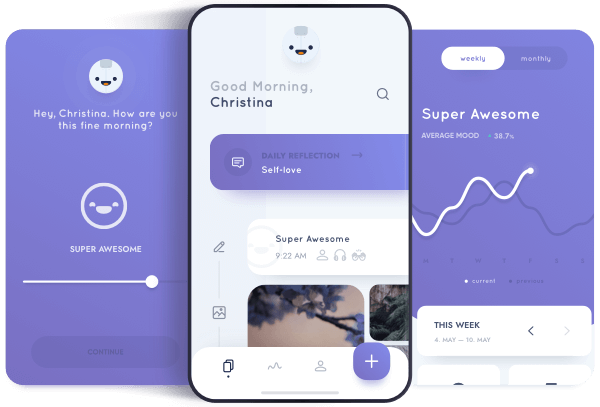
We want to enable designers to deliver their full creative vision without being forced to water it down due to limitations of the underlying framework. Flutter's layered architecture gives you control over every pixel on the screen and its powerful compositing capabilities let you overlay and animate graphics, video, text, and controls without limitation. Flutter includes a full set of widgets that deliver pixel-perfect experiences whether you're building for iOS (Cupertino) or other platforms (Material), along with support for customizing or creating entirely new visual components.
Fast results
Flutter is fast. It's powered by hardware-accelerated 2D graphics libraries like Skia (that underpins Chrome and Android) and Impeller. We architected Flutter to support glitch-free, jank-free graphics at the native speed of your device.
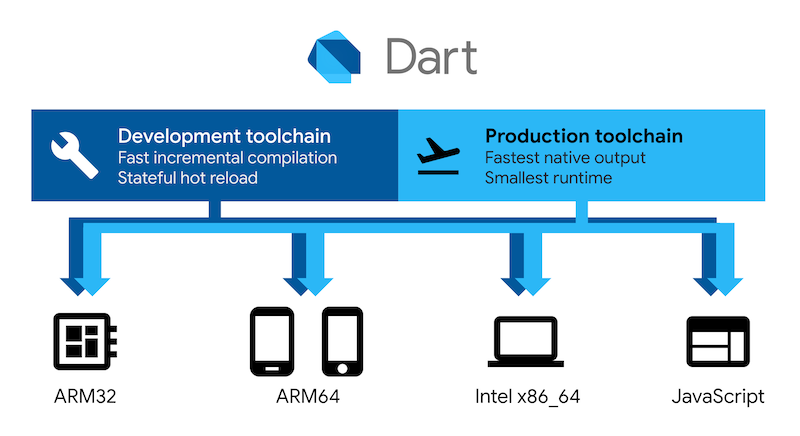
Flutter code is powered by the world-class Dart platform, which enables compilation to 32-bit and 64-bit ARM machine code for iOS and Android, JavaScript and WebAssembly for the web, as well as Intel x64 and ARM for desktop devices.
Productive development
Flutter offers stateful hot reload, allowing you to make changes to your code and see the results instantly without restarting your app or losing its state.

Extensible and open model
Flutter works with any development tool (or none at all), and also includes editor plug-ins for both Visual Studio Code and IntelliJ / Android Studio. Flutter provides tens of thousands of packages to speed your development, regardless of your target platform. And accessing other native code is easy, with support for both FFI (on Android, on iOS, on macOS, and on Windows) as well as platform-specific APIs.
Flutter is a fully open-source project, and we welcome contributions. Information on how to get started can be found in our contributor guide.