mirror of
https://github.com/flutter/flutter.git
synced 2026-02-20 02:29:02 +08:00
 f60e54b24c
This change fixes issues with screen order comparison logic when rects are encompassed within each other. This was causing issues when trying to select text that includes inline `WidgetSpan`s inside of a `SelectionArea`.

* Adds `boundingBoxes` to `Selectable` for a more precise hit testing region.

Fixes #132821
Fixes updating selection edge by word boundary when widget spans are involved.
Fixes crash when sending select word selection event to an unselectable element.
790 lines
27 KiB
Dart
790 lines
27 KiB
Dart
// Copyright 2014 The Flutter Authors. All rights reserved.
|
|
// Use of this source code is governed by a BSD-style license that can be
|
|
// found in the LICENSE file.
|
|
|
|
import 'package:flutter/foundation.dart';
|
|
import 'package:vector_math/vector_math_64.dart';
|
|
|
|
import 'layer.dart';
|
|
import 'object.dart';
|
|
|
|
/// The result after handling a [SelectionEvent].
|
|
///
|
|
/// [SelectionEvent]s are sent from [SelectionRegistrar] to be handled by
|
|
/// [SelectionHandler.dispatchSelectionEvent]. The subclasses of
|
|
/// [SelectionHandler] or [Selectable] must return appropriate
|
|
/// [SelectionResult]s after handling the events.
|
|
///
|
|
/// This is used by the [SelectionContainer] to determine how a selection
|
|
/// expands across its [Selectable] children.
|
|
enum SelectionResult {
|
|
/// There is nothing left to select forward in this [Selectable], and further
|
|
/// selection should extend to the next [Selectable] in screen order.
|
|
///
|
|
/// {@template flutter.rendering.selection.SelectionResult.footNote}
|
|
/// This is used after subclasses [SelectionHandler] or [Selectable] handled
|
|
/// [SelectionEdgeUpdateEvent].
|
|
/// {@endtemplate}
|
|
next,
|
|
/// Selection does not reach this [Selectable] and is located before it in
|
|
/// screen order.
|
|
///
|
|
/// {@macro flutter.rendering.selection.SelectionResult.footNote}
|
|
previous,
|
|
/// Selection ends in this [Selectable].
|
|
///
|
|
/// Part of the [Selectable] may or may not be selected, but there is still
|
|
/// content to select forward or backward.
|
|
///
|
|
/// {@macro flutter.rendering.selection.SelectionResult.footNote}
|
|
end,
|
|
/// The result can't be determined in this frame.
|
|
///
|
|
/// This is typically used when the subtree is scrolling to reveal more
|
|
/// content.
|
|
///
|
|
/// {@macro flutter.rendering.selection.SelectionResult.footNote}
|
|
// See `_SelectableRegionState._triggerSelectionEndEdgeUpdate` for how this
|
|
// result affects the selection.
|
|
pending,
|
|
/// There is no result for the selection event.
|
|
///
|
|
/// This is used when a selection result is not applicable, e.g.
|
|
/// [SelectAllSelectionEvent], [ClearSelectionEvent], and
|
|
/// [SelectWordSelectionEvent].
|
|
none,
|
|
}
|
|
|
|
/// The abstract interface to handle [SelectionEvent]s.
|
|
///
|
|
/// This interface is extended by [Selectable] and [SelectionContainerDelegate]
|
|
/// and is typically not used directly.
|
|
///
|
|
/// {@template flutter.rendering.SelectionHandler}
|
|
/// This class returns a [SelectionGeometry] as its [value], and is responsible
|
|
/// to notify its listener when its selection geometry has changed as the result
|
|
/// of receiving selection events.
|
|
/// {@endtemplate}
|
|
abstract class SelectionHandler implements ValueListenable<SelectionGeometry> {
|
|
/// Marks this handler to be responsible for pushing [LeaderLayer]s for the
|
|
/// selection handles.
|
|
///
|
|
/// This handler is responsible for pushing the leader layers with the
|
|
/// given layer links if they are not null. It is possible that only one layer
|
|
/// is non-null if this handler is only responsible for pushing one layer
|
|
/// link.
|
|
///
|
|
/// The `startHandle` needs to be placed at the visual location of selection
|
|
/// start, the `endHandle` needs to be placed at the visual location of selection
|
|
/// end. Typically, the visual locations should be the same as
|
|
/// [SelectionGeometry.startSelectionPoint] and
|
|
/// [SelectionGeometry.endSelectionPoint].
|
|
void pushHandleLayers(LayerLink? startHandle, LayerLink? endHandle);
|
|
|
|
/// Gets the selected content in this object.
|
|
///
|
|
/// Return `null` if nothing is selected.
|
|
SelectedContent? getSelectedContent();
|
|
|
|
/// Handles the [SelectionEvent] sent to this object.
|
|
///
|
|
/// The subclasses need to update their selections or delegate the
|
|
/// [SelectionEvent]s to their subtrees.
|
|
///
|
|
/// The `event`s are subclasses of [SelectionEvent]. Check
|
|
/// [SelectionEvent.type] to determine what kinds of event are dispatched to
|
|
/// this handler and handle them accordingly.
|
|
///
|
|
/// See also:
|
|
/// * [SelectionEventType], which contains all of the possible types.
|
|
SelectionResult dispatchSelectionEvent(SelectionEvent event);
|
|
}
|
|
|
|
/// The selected content in a [Selectable] or [SelectionHandler].
|
|
// TODO(chunhtai): Add more support for rich content.
|
|
// https://github.com/flutter/flutter/issues/104206.
|
|
class SelectedContent {
|
|
/// Creates a selected content object.
|
|
///
|
|
/// Only supports plain text.
|
|
const SelectedContent({required this.plainText});
|
|
|
|
/// The selected content in plain text format.
|
|
final String plainText;
|
|
}
|
|
|
|
/// A mixin that can be selected by users when under a [SelectionArea] widget.
|
|
///
|
|
/// This object receives selection events and the [value] must reflect the
|
|
/// current selection in this [Selectable]. The object must also notify its
|
|
/// listener if the [value] ever changes.
|
|
///
|
|
/// This object is responsible for drawing the selection highlight.
|
|
///
|
|
/// In order to receive the selection event, the mixer needs to register
|
|
/// itself to [SelectionRegistrar]s. Use
|
|
/// [SelectionContainer.maybeOf] to get the selection registrar, and
|
|
/// mix the [SelectionRegistrant] to subscribe to the [SelectionRegistrar]
|
|
/// automatically.
|
|
///
|
|
/// This mixin is typically mixed by [RenderObject]s. The [RenderObject.paint]
|
|
/// methods are responsible to push the [LayerLink]s provided to
|
|
/// [pushHandleLayers].
|
|
///
|
|
/// {@macro flutter.rendering.SelectionHandler}
|
|
///
|
|
/// See also:
|
|
/// * [SelectionArea], which provides an overview of selection system.
|
|
mixin Selectable implements SelectionHandler {
|
|
/// {@macro flutter.rendering.RenderObject.getTransformTo}
|
|
Matrix4 getTransformTo(RenderObject? ancestor);
|
|
|
|
/// The size of this [Selectable].
|
|
Size get size;
|
|
|
|
/// A list of [Rect]s that represent the bounding box of this [Selectable]
|
|
/// in local coordinates.
|
|
List<Rect> get boundingBoxes;
|
|
|
|
/// Disposes resources held by the mixer.
|
|
void dispose();
|
|
}
|
|
|
|
/// A mixin to auto-register the mixer to the [registrar].
|
|
///
|
|
/// To use this mixin, the mixer needs to set the [registrar] to the
|
|
/// [SelectionRegistrar] it wants to register to.
|
|
///
|
|
/// This mixin only registers the mixer with the [registrar] if the
|
|
/// [SelectionGeometry.hasContent] returned by the mixer is true.
|
|
mixin SelectionRegistrant on Selectable {
|
|
/// The [SelectionRegistrar] the mixer will be or is registered to.
|
|
///
|
|
/// This [Selectable] only registers the mixer if the
|
|
/// [SelectionGeometry.hasContent] returned by the [Selectable] is true.
|
|
SelectionRegistrar? get registrar => _registrar;
|
|
SelectionRegistrar? _registrar;
|
|
set registrar(SelectionRegistrar? value) {
|
|
if (value == _registrar) {
|
|
return;
|
|
}
|
|
if (value == null) {
|
|
// When registrar goes from non-null to null;
|
|
removeListener(_updateSelectionRegistrarSubscription);
|
|
} else if (_registrar == null) {
|
|
// When registrar goes from null to non-null;
|
|
addListener(_updateSelectionRegistrarSubscription);
|
|
}
|
|
_removeSelectionRegistrarSubscription();
|
|
_registrar = value;
|
|
_updateSelectionRegistrarSubscription();
|
|
}
|
|
|
|
@override
|
|
void dispose() {
|
|
_removeSelectionRegistrarSubscription();
|
|
super.dispose();
|
|
}
|
|
|
|
bool _subscribedToSelectionRegistrar = false;
|
|
void _updateSelectionRegistrarSubscription() {
|
|
if (_registrar == null) {
|
|
_subscribedToSelectionRegistrar = false;
|
|
return;
|
|
}
|
|
if (_subscribedToSelectionRegistrar && !value.hasContent) {
|
|
_registrar!.remove(this);
|
|
_subscribedToSelectionRegistrar = false;
|
|
} else if (!_subscribedToSelectionRegistrar && value.hasContent) {
|
|
_registrar!.add(this);
|
|
_subscribedToSelectionRegistrar = true;
|
|
}
|
|
}
|
|
|
|
void _removeSelectionRegistrarSubscription() {
|
|
if (_subscribedToSelectionRegistrar) {
|
|
_registrar!.remove(this);
|
|
_subscribedToSelectionRegistrar = false;
|
|
}
|
|
}
|
|
}
|
|
|
|
/// A utility class that provides useful methods for handling selection events.
|
|
abstract final class SelectionUtils {
|
|
/// Determines [SelectionResult] purely based on the target rectangle.
|
|
///
|
|
/// This method returns [SelectionResult.end] if the `point` is inside the
|
|
/// `targetRect`. Returns [SelectionResult.previous] if the `point` is
|
|
/// considered to be lower than `targetRect` in screen order. Returns
|
|
/// [SelectionResult.next] if the point is considered to be higher than
|
|
/// `targetRect` in screen order.
|
|
static SelectionResult getResultBasedOnRect(Rect targetRect, Offset point) {
|
|
if (targetRect.contains(point)) {
|
|
return SelectionResult.end;
|
|
}
|
|
if (point.dy < targetRect.top) {
|
|
return SelectionResult.previous;
|
|
}
|
|
if (point.dy > targetRect.bottom) {
|
|
return SelectionResult.next;
|
|
}
|
|
return point.dx >= targetRect.right
|
|
? SelectionResult.next
|
|
: SelectionResult.previous;
|
|
}
|
|
|
|
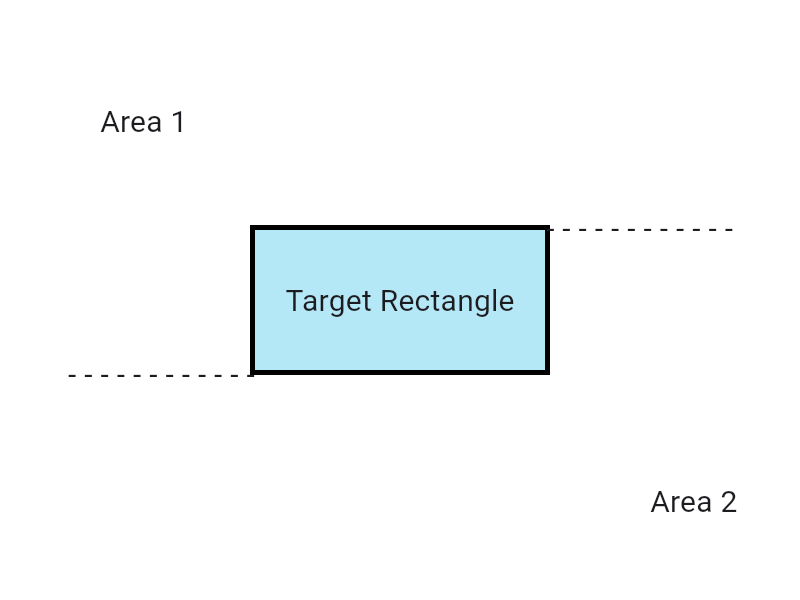
/// Adjusts the dragging offset based on the target rect.
|
|
///
|
|
/// This method moves the offsets to be within the target rect in case they are
|
|
/// outside the rect.
|
|
///
|
|
/// This is used in the case where a drag happens outside of the rectangle
|
|
/// of a [Selectable].
|
|
///
|
|
/// The logic works as the following:
|
|
/// 
|
|
///
|
|
/// For points inside the rect:
|
|
/// Their effective locations are unchanged.
|
|
///
|
|
/// For points in Area 1:
|
|
/// Move them to top-left of the rect if text direction is ltr, or top-right
|
|
/// if rtl.
|
|
///
|
|
/// For points in Area 2:
|
|
/// Move them to bottom-right of the rect if text direction is ltr, or
|
|
/// bottom-left if rtl.
|
|
static Offset adjustDragOffset(Rect targetRect, Offset point, {TextDirection direction = TextDirection.ltr}) {
|
|
if (targetRect.contains(point)) {
|
|
return point;
|
|
}
|
|
if (point.dy <= targetRect.top ||
|
|
point.dy <= targetRect.bottom && point.dx <= targetRect.left) {
|
|
// Area 1
|
|
return direction == TextDirection.ltr ? targetRect.topLeft : targetRect.topRight;
|
|
} else {
|
|
// Area 2
|
|
return direction == TextDirection.ltr ? targetRect.bottomRight : targetRect.bottomLeft;
|
|
}
|
|
}
|
|
}
|
|
|
|
/// The type of a [SelectionEvent].
|
|
///
|
|
/// Used by [SelectionEvent.type] to distinguish different types of events.
|
|
enum SelectionEventType {
|
|
/// An event to update the selection start edge.
|
|
///
|
|
/// Used by [SelectionEdgeUpdateEvent].
|
|
startEdgeUpdate,
|
|
|
|
/// An event to update the selection end edge.
|
|
///
|
|
/// Used by [SelectionEdgeUpdateEvent].
|
|
endEdgeUpdate,
|
|
|
|
/// An event to clear the current selection.
|
|
///
|
|
/// Used by [ClearSelectionEvent].
|
|
clear,
|
|
|
|
/// An event to select all the available content.
|
|
///
|
|
/// Used by [SelectAllSelectionEvent].
|
|
selectAll,
|
|
|
|
/// An event to select a word at the location
|
|
/// [SelectWordSelectionEvent.globalPosition].
|
|
///
|
|
/// Used by [SelectWordSelectionEvent].
|
|
selectWord,
|
|
|
|
/// An event that extends the selection by a specific [TextGranularity].
|
|
granularlyExtendSelection,
|
|
|
|
/// An event that extends the selection in a specific direction.
|
|
directionallyExtendSelection,
|
|
}
|
|
|
|
/// The unit of how selection handles move in text.
|
|
///
|
|
/// The [GranularlyExtendSelectionEvent] uses this enum to describe how
|
|
/// [Selectable] should extend its selection.
|
|
enum TextGranularity {
|
|
/// Treats each character as an atomic unit when moving the selection handles.
|
|
character,
|
|
|
|
/// Treats word as an atomic unit when moving the selection handles.
|
|
word,
|
|
|
|
/// Treats each line break as an atomic unit when moving the selection handles.
|
|
line,
|
|
|
|
/// Treats the entire document as an atomic unit when moving the selection handles.
|
|
document,
|
|
}
|
|
|
|
/// An abstract base class for selection events.
|
|
///
|
|
/// This should not be directly used. To handle a selection event, it should
|
|
/// be downcast to a specific subclass. One can use [type] to look up which
|
|
/// subclasses to downcast to.
|
|
///
|
|
/// See also:
|
|
/// * [SelectAllSelectionEvent], for events to select all contents.
|
|
/// * [ClearSelectionEvent], for events to clear selections.
|
|
/// * [SelectWordSelectionEvent], for events to select words at the locations.
|
|
/// * [SelectionEdgeUpdateEvent], for events to update selection edges.
|
|
/// * [SelectionEventType], for determining the subclass types.
|
|
abstract class SelectionEvent {
|
|
const SelectionEvent._(this.type);
|
|
|
|
/// The type of this selection event.
|
|
final SelectionEventType type;
|
|
}
|
|
|
|
/// Selects all selectable contents.
|
|
///
|
|
/// This event can be sent as the result of keyboard select-all, i.e.
|
|
/// ctrl + A, or cmd + A in macOS.
|
|
class SelectAllSelectionEvent extends SelectionEvent {
|
|
/// Creates a select all selection event.
|
|
const SelectAllSelectionEvent(): super._(SelectionEventType.selectAll);
|
|
}
|
|
|
|
/// Clears the selection from the [Selectable] and removes any existing
|
|
/// highlight as if there is no selection at all.
|
|
class ClearSelectionEvent extends SelectionEvent {
|
|
/// Create a clear selection event.
|
|
const ClearSelectionEvent(): super._(SelectionEventType.clear);
|
|
}
|
|
|
|
/// Selects the whole word at the location.
|
|
///
|
|
/// This event can be sent as the result of mobile long press selection.
|
|
class SelectWordSelectionEvent extends SelectionEvent {
|
|
/// Creates a select word event at the [globalPosition].
|
|
const SelectWordSelectionEvent({required this.globalPosition}): super._(SelectionEventType.selectWord);
|
|
|
|
/// The position in global coordinates to select word at.
|
|
final Offset globalPosition;
|
|
}
|
|
|
|
/// Updates a selection edge.
|
|
///
|
|
/// An active selection contains two edges, start and end. Use the [type] to
|
|
/// determine which edge this event applies to. If the [type] is
|
|
/// [SelectionEventType.startEdgeUpdate], the event updates start edge. If the
|
|
/// [type] is [SelectionEventType.endEdgeUpdate], the event updates end edge.
|
|
///
|
|
/// The [globalPosition] contains the new offset of the edge.
|
|
///
|
|
/// The [granularity] contains the granularity that the selection edge should move by.
|
|
/// Only [TextGranularity.character] and [TextGranularity.word] are currently supported.
|
|
///
|
|
/// This event is dispatched when the framework detects [TapDragStartDetails] in
|
|
/// [SelectionArea]'s gesture recognizers for mouse devices, or the selection
|
|
/// handles have been dragged to new locations.
|
|
class SelectionEdgeUpdateEvent extends SelectionEvent {
|
|
/// Creates a selection start edge update event.
|
|
///
|
|
/// The [globalPosition] contains the location of the selection start edge.
|
|
///
|
|
/// The [granularity] contains the granularity which the selection edge should move by.
|
|
/// This value defaults to [TextGranularity.character].
|
|
const SelectionEdgeUpdateEvent.forStart({
|
|
required this.globalPosition,
|
|
TextGranularity? granularity
|
|
}) : granularity = granularity ?? TextGranularity.character, super._(SelectionEventType.startEdgeUpdate);
|
|
|
|
/// Creates a selection end edge update event.
|
|
///
|
|
/// The [globalPosition] contains the new location of the selection end edge.
|
|
///
|
|
/// The [granularity] contains the granularity which the selection edge should move by.
|
|
/// This value defaults to [TextGranularity.character].
|
|
const SelectionEdgeUpdateEvent.forEnd({
|
|
required this.globalPosition,
|
|
TextGranularity? granularity
|
|
}) : granularity = granularity ?? TextGranularity.character, super._(SelectionEventType.endEdgeUpdate);
|
|
|
|
/// The new location of the selection edge.
|
|
final Offset globalPosition;
|
|
|
|
/// The granularity for which the selection moves.
|
|
///
|
|
/// Only [TextGranularity.character] and [TextGranularity.word] are currently supported.
|
|
///
|
|
/// Defaults to [TextGranularity.character].
|
|
final TextGranularity granularity;
|
|
}
|
|
|
|
/// Extends the start or end of the selection by a given [TextGranularity].
|
|
///
|
|
/// To handle this event, move the associated selection edge, as dictated by
|
|
/// [isEnd], according to the [granularity].
|
|
class GranularlyExtendSelectionEvent extends SelectionEvent {
|
|
/// Creates a [GranularlyExtendSelectionEvent].
|
|
const GranularlyExtendSelectionEvent({
|
|
required this.forward,
|
|
required this.isEnd,
|
|
required this.granularity,
|
|
}) : super._(SelectionEventType.granularlyExtendSelection);
|
|
|
|
/// Whether to extend the selection forward.
|
|
final bool forward;
|
|
|
|
/// Whether this event is updating the end selection edge.
|
|
final bool isEnd;
|
|
|
|
/// The granularity for which the selection extend.
|
|
final TextGranularity granularity;
|
|
}
|
|
|
|
/// The direction to extend a selection.
|
|
///
|
|
/// The [DirectionallyExtendSelectionEvent] uses this enum to describe how
|
|
/// [Selectable] should extend their selection.
|
|
enum SelectionExtendDirection {
|
|
/// Move one edge of the selection vertically to the previous adjacent line.
|
|
///
|
|
/// For text selection, it should consider both soft and hard linebreak.
|
|
///
|
|
/// See [DirectionallyExtendSelectionEvent.dx] on how to
|
|
/// calculate the horizontal offset.
|
|
previousLine,
|
|
|
|
/// Move one edge of the selection vertically to the next adjacent line.
|
|
///
|
|
/// For text selection, it should consider both soft and hard linebreak.
|
|
///
|
|
/// See [DirectionallyExtendSelectionEvent.dx] on how to
|
|
/// calculate the horizontal offset.
|
|
nextLine,
|
|
|
|
/// Move the selection edges forward to a certain horizontal offset in the
|
|
/// same line.
|
|
///
|
|
/// If there is no on-going selection, the selection must start with the first
|
|
/// line (or equivalence of first line in a non-text selectable) and select
|
|
/// toward the horizontal offset in the same line.
|
|
///
|
|
/// The selectable that receives [DirectionallyExtendSelectionEvent] with this
|
|
/// enum must return [SelectionResult.end].
|
|
///
|
|
/// See [DirectionallyExtendSelectionEvent.dx] on how to
|
|
/// calculate the horizontal offset.
|
|
forward,
|
|
|
|
/// Move the selection edges backward to a certain horizontal offset in the
|
|
/// same line.
|
|
///
|
|
/// If there is no on-going selection, the selection must start with the last
|
|
/// line (or equivalence of last line in a non-text selectable) and select
|
|
/// backward the horizontal offset in the same line.
|
|
///
|
|
/// The selectable that receives [DirectionallyExtendSelectionEvent] with this
|
|
/// enum must return [SelectionResult.end].
|
|
///
|
|
/// See [DirectionallyExtendSelectionEvent.dx] on how to
|
|
/// calculate the horizontal offset.
|
|
backward,
|
|
}
|
|
|
|
/// Extends the current selection with respect to a [direction].
|
|
///
|
|
/// To handle this event, move the associated selection edge, as dictated by
|
|
/// [isEnd], according to the [direction].
|
|
///
|
|
/// The movements are always based on [dx]. The value is in
|
|
/// global coordinates and is the horizontal offset the selection edge should
|
|
/// move to when moving to across lines.
|
|
class DirectionallyExtendSelectionEvent extends SelectionEvent {
|
|
/// Creates a [DirectionallyExtendSelectionEvent].
|
|
const DirectionallyExtendSelectionEvent({
|
|
required this.dx,
|
|
required this.isEnd,
|
|
required this.direction,
|
|
}) : super._(SelectionEventType.directionallyExtendSelection);
|
|
|
|
/// The horizontal offset the selection should move to.
|
|
///
|
|
/// The offset is in global coordinates.
|
|
final double dx;
|
|
|
|
/// Whether this event is updating the end selection edge.
|
|
final bool isEnd;
|
|
|
|
/// The directional movement of this event.
|
|
///
|
|
/// See also:
|
|
/// * [SelectionExtendDirection], which explains how to handle each enum.
|
|
final SelectionExtendDirection direction;
|
|
|
|
/// Makes a copy of this object with its property replaced with the new
|
|
/// values.
|
|
DirectionallyExtendSelectionEvent copyWith({
|
|
double? dx,
|
|
bool? isEnd,
|
|
SelectionExtendDirection? direction,
|
|
}) {
|
|
return DirectionallyExtendSelectionEvent(
|
|
dx: dx ?? this.dx,
|
|
isEnd: isEnd ?? this.isEnd,
|
|
direction: direction ?? this.direction,
|
|
);
|
|
}
|
|
}
|
|
|
|
/// A registrar that keeps track of [Selectable]s in the subtree.
|
|
///
|
|
/// A [Selectable] is only included in the [SelectableRegion] if they are
|
|
/// registered with a [SelectionRegistrar]. Once a [Selectable] is registered,
|
|
/// it will receive [SelectionEvent]s in
|
|
/// [SelectionHandler.dispatchSelectionEvent].
|
|
///
|
|
/// Use [SelectionContainer.maybeOf] to get the immediate [SelectionRegistrar]
|
|
/// in the ancestor chain above the build context.
|
|
///
|
|
/// See also:
|
|
/// * [SelectableRegion], which provides an overview of the selection system.
|
|
/// * [SelectionRegistrarScope], which hosts the [SelectionRegistrar] for the
|
|
/// subtree.
|
|
/// * [SelectionRegistrant], which auto registers the object with the mixin to
|
|
/// [SelectionRegistrar].
|
|
abstract class SelectionRegistrar {
|
|
/// Adds the [selectable] into the registrar.
|
|
///
|
|
/// A [Selectable] must register with the [SelectionRegistrar] in order to
|
|
/// receive selection events.
|
|
void add(Selectable selectable);
|
|
|
|
/// Removes the [selectable] from the registrar.
|
|
///
|
|
/// A [Selectable] must unregister itself if it is removed from the rendering
|
|
/// tree.
|
|
void remove(Selectable selectable);
|
|
}
|
|
|
|
/// The status that indicates whether there is a selection and whether the
|
|
/// selection is collapsed.
|
|
///
|
|
/// A collapsed selection means the selection starts and ends at the same
|
|
/// location.
|
|
enum SelectionStatus {
|
|
/// The selection is not collapsed.
|
|
///
|
|
/// For example if `{}` represent the selection edges:
|
|
/// 'ab{cd}', the collapsing status is [uncollapsed].
|
|
/// '{abcd}', the collapsing status is [uncollapsed].
|
|
uncollapsed,
|
|
|
|
/// The selection is collapsed.
|
|
///
|
|
/// For example if `{}` represent the selection edges:
|
|
/// 'ab{}cd', the collapsing status is [collapsed].
|
|
/// '{}abcd', the collapsing status is [collapsed].
|
|
/// 'abcd{}', the collapsing status is [collapsed].
|
|
collapsed,
|
|
|
|
/// No selection.
|
|
none,
|
|
}
|
|
|
|
/// The geometry of the current selection.
|
|
///
|
|
/// This includes details such as the locations of the selection start and end,
|
|
/// line height, the rects that encompass the selection, etc. This information
|
|
/// is used for drawing selection controls for mobile platforms.
|
|
///
|
|
/// The positions in geometry are in local coordinates of the [SelectionHandler]
|
|
/// or [Selectable].
|
|
@immutable
|
|
class SelectionGeometry {
|
|
/// Creates a selection geometry object.
|
|
///
|
|
/// If any of the [startSelectionPoint] and [endSelectionPoint] is not null,
|
|
/// the [status] must not be [SelectionStatus.none].
|
|
const SelectionGeometry({
|
|
this.startSelectionPoint,
|
|
this.endSelectionPoint,
|
|
this.selectionRects = const <Rect>[],
|
|
required this.status,
|
|
required this.hasContent,
|
|
}) : assert((startSelectionPoint == null && endSelectionPoint == null) || status != SelectionStatus.none);
|
|
|
|
/// The geometry information at the selection start.
|
|
///
|
|
/// This information is used for drawing mobile selection controls. The
|
|
/// [SelectionPoint.localPosition] of the selection start is typically at the
|
|
/// start of the selection highlight at where the start selection handle
|
|
/// should be drawn.
|
|
///
|
|
/// The [SelectionPoint.handleType] should be [TextSelectionHandleType.left]
|
|
/// for forward selection or [TextSelectionHandleType.right] for backward
|
|
/// selection in most cases.
|
|
///
|
|
/// Can be null if the selection start is offstage, for example, when the
|
|
/// selection is outside of the viewport or is kept alive by a scrollable.
|
|
final SelectionPoint? startSelectionPoint;
|
|
|
|
/// The geometry information at the selection end.
|
|
///
|
|
/// This information is used for drawing mobile selection controls. The
|
|
/// [SelectionPoint.localPosition] of the selection end is typically at the end
|
|
/// of the selection highlight at where the end selection handle should be
|
|
/// drawn.
|
|
///
|
|
/// The [SelectionPoint.handleType] should be [TextSelectionHandleType.right]
|
|
/// for forward selection or [TextSelectionHandleType.left] for backward
|
|
/// selection in most cases.
|
|
///
|
|
/// Can be null if the selection end is offstage, for example, when the
|
|
/// selection is outside of the viewport or is kept alive by a scrollable.
|
|
final SelectionPoint? endSelectionPoint;
|
|
|
|
/// The status of ongoing selection in the [Selectable] or [SelectionHandler].
|
|
final SelectionStatus status;
|
|
|
|
/// The rects in the local coordinates of the containing [Selectable] that
|
|
/// represent the selection if there is any.
|
|
final List<Rect> selectionRects;
|
|
|
|
/// Whether there is any selectable content in the [Selectable] or
|
|
/// [SelectionHandler].
|
|
final bool hasContent;
|
|
|
|
/// Whether there is an ongoing selection.
|
|
bool get hasSelection => status != SelectionStatus.none;
|
|
|
|
/// Makes a copy of this object with the given values updated.
|
|
SelectionGeometry copyWith({
|
|
SelectionPoint? startSelectionPoint,
|
|
SelectionPoint? endSelectionPoint,
|
|
List<Rect>? selectionRects,
|
|
SelectionStatus? status,
|
|
bool? hasContent,
|
|
}) {
|
|
return SelectionGeometry(
|
|
startSelectionPoint: startSelectionPoint ?? this.startSelectionPoint,
|
|
endSelectionPoint: endSelectionPoint ?? this.endSelectionPoint,
|
|
selectionRects: selectionRects ?? this.selectionRects,
|
|
status: status ?? this.status,
|
|
hasContent: hasContent ?? this.hasContent,
|
|
);
|
|
}
|
|
|
|
@override
|
|
bool operator ==(Object other) {
|
|
if (identical(this, other)) {
|
|
return true;
|
|
}
|
|
if (other.runtimeType != runtimeType) {
|
|
return false;
|
|
}
|
|
return other is SelectionGeometry
|
|
&& other.startSelectionPoint == startSelectionPoint
|
|
&& other.endSelectionPoint == endSelectionPoint
|
|
&& other.selectionRects == selectionRects
|
|
&& other.status == status
|
|
&& other.hasContent == hasContent;
|
|
}
|
|
|
|
@override
|
|
int get hashCode {
|
|
return Object.hash(
|
|
startSelectionPoint,
|
|
endSelectionPoint,
|
|
selectionRects,
|
|
status,
|
|
hasContent,
|
|
);
|
|
}
|
|
}
|
|
|
|
/// The geometry information of a selection point.
|
|
@immutable
|
|
class SelectionPoint with Diagnosticable {
|
|
/// Creates a selection point object.
|
|
const SelectionPoint({
|
|
required this.localPosition,
|
|
required this.lineHeight,
|
|
required this.handleType,
|
|
});
|
|
|
|
/// The position of the selection point in the local coordinates of the
|
|
/// containing [Selectable].
|
|
final Offset localPosition;
|
|
|
|
/// The line height at the selection point.
|
|
final double lineHeight;
|
|
|
|
/// The selection handle type that should be used at the selection point.
|
|
///
|
|
/// This is used for building the mobile selection handle.
|
|
final TextSelectionHandleType handleType;
|
|
|
|
@override
|
|
bool operator ==(Object other) {
|
|
if (identical(this, other)) {
|
|
return true;
|
|
}
|
|
if (other.runtimeType != runtimeType) {
|
|
return false;
|
|
}
|
|
return other is SelectionPoint
|
|
&& other.localPosition == localPosition
|
|
&& other.lineHeight == lineHeight
|
|
&& other.handleType == handleType;
|
|
}
|
|
|
|
@override
|
|
int get hashCode {
|
|
return Object.hash(
|
|
localPosition,
|
|
lineHeight,
|
|
handleType,
|
|
);
|
|
}
|
|
|
|
@override
|
|
void debugFillProperties(DiagnosticPropertiesBuilder properties) {
|
|
super.debugFillProperties(properties);
|
|
properties.add(DiagnosticsProperty<Offset>('localPosition', localPosition));
|
|
properties.add(DoubleProperty('lineHeight', lineHeight));
|
|
properties.add(EnumProperty<TextSelectionHandleType>('handleType', handleType));
|
|
}
|
|
}
|
|
|
|
/// The type of selection handle to be displayed.
|
|
///
|
|
/// With mixed-direction text, both handles may be the same type. Examples:
|
|
///
|
|
/// * LTR text: 'the <quick brown> fox':
|
|
///
|
|
/// The '<' is drawn with the [left] type, the '>' with the [right]
|
|
///
|
|
/// * RTL text: 'XOF <NWORB KCIUQ> EHT':
|
|
///
|
|
/// Same as above.
|
|
///
|
|
/// * mixed text: '<the NWOR<B KCIUQ fox'
|
|
///
|
|
/// Here 'the QUICK B' is selected, but 'QUICK BROWN' is RTL. Both are drawn
|
|
/// with the [left] type.
|
|
///
|
|
/// See also:
|
|
///
|
|
/// * [TextDirection], which discusses left-to-right and right-to-left text in
|
|
/// more detail.
|
|
enum TextSelectionHandleType {
|
|
/// The selection handle is to the left of the selection end point.
|
|
left,
|
|
|
|
/// The selection handle is to the right of the selection end point.
|
|
right,
|
|
|
|
/// The start and end of the selection are co-incident at this point.
|
|
collapsed,
|
|
}
|