mirror of
https://github.com/flutter/flutter.git
synced 2026-02-20 02:29:02 +08:00
 a83e111a87
Based on issue #144903, this pull request aims to bring the codebase more in line with the [Flutter repo style guide](https://github.com/flutter/flutter/wiki/Style-guide-for-Flutter-repo#avoid-using-if-chains-or--or--with-enum-values):

> ### Avoid using `if` chains or `?:` or `==` with enum values
1823 lines
65 KiB
Dart
1823 lines
65 KiB
Dart
// Copyright 2014 The Flutter Authors. All rights reserved.
|
|
// Use of this source code is governed by a BSD-style license that can be
|
|
// found in the LICENSE file.
|
|
|
|
import 'dart:async';
|
|
import 'dart:math' as math;
|
|
import 'dart:ui' as ui;
|
|
|
|
import 'package:flutter/foundation.dart';
|
|
import 'package:flutter/gestures.dart';
|
|
import 'package:flutter/rendering.dart';
|
|
import 'package:flutter/scheduler.dart' show timeDilation;
|
|
import 'package:flutter/widgets.dart';
|
|
|
|
import 'constants.dart';
|
|
import 'debug.dart';
|
|
import 'material_state.dart';
|
|
import 'slider_theme.dart';
|
|
import 'theme.dart';
|
|
|
|
// Examples can assume:
|
|
// RangeValues _rangeValues = const RangeValues(0.3, 0.7);
|
|
// RangeValues _dollarsRange = const RangeValues(50, 100);
|
|
// void setState(VoidCallback fn) { }
|
|
|
|
/// [RangeSlider] uses this callback to paint the value indicator on the overlay.
|
|
/// Since the value indicator is painted on the Overlay; this method paints the
|
|
/// value indicator in a [RenderBox] that appears in the [Overlay].
|
|
typedef PaintRangeValueIndicator = void Function(PaintingContext context, Offset offset);
|
|
|
|
/// A Material Design range slider.
|
|
///
|
|
/// Used to select a range from a range of values.
|
|
///
|
|
/// {@youtube 560 315 https://www.youtube.com/watch?v=ufb4gIPDmEs}
|
|
///
|
|
/// {@tool dartpad}
|
|
/// 
|
|
///
|
|
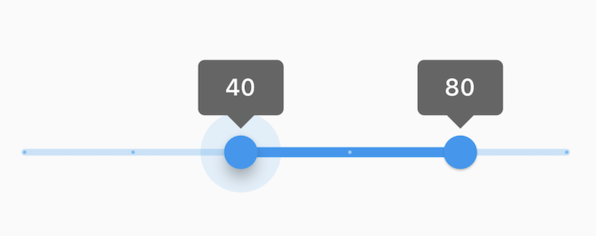
/// This range values are in intervals of 20 because the Range Slider has 5
|
|
/// divisions, from 0 to 100. This means are values are split between 0, 20, 40,
|
|
/// 60, 80, and 100. The range values are initialized with 40 and 80 in this demo.
|
|
///
|
|
/// ** See code in examples/api/lib/material/range_slider/range_slider.0.dart **
|
|
/// {@end-tool}
|
|
///
|
|
/// A range slider can be used to select from either a continuous or a discrete
|
|
/// set of values. The default is to use a continuous range of values from [min]
|
|
/// to [max]. To use discrete values, use a non-null value for [divisions], which
|
|
/// indicates the number of discrete intervals. For example, if [min] is 0.0 and
|
|
/// [max] is 50.0 and [divisions] is 5, then the slider can take on the
|
|
/// discrete values 0.0, 10.0, 20.0, 30.0, 40.0, and 50.0.
|
|
///
|
|
/// The terms for the parts of a slider are:
|
|
///
|
|
/// * The "thumbs", which are the shapes that slide horizontally when the user
|
|
/// drags them to change the selected range.
|
|
/// * The "track", which is the horizontal line that the thumbs can be dragged
|
|
/// along.
|
|
/// * The "tick marks", which mark the discrete values of a discrete slider.
|
|
/// * The "overlay", which is a highlight that's drawn over a thumb in response
|
|
/// to a user tap-down gesture.
|
|
/// * The "value indicators", which are the shapes that pop up when the user
|
|
/// is dragging a thumb to show the value being selected.
|
|
/// * The "active" segment of the slider is the segment between the two thumbs.
|
|
/// * The "inactive" slider segments are the two track intervals outside of the
|
|
/// slider's thumbs.
|
|
///
|
|
/// The range slider will be disabled if [onChanged] is null or if the range
|
|
/// given by [min]..[max] is empty (i.e. if [min] is equal to [max]).
|
|
///
|
|
/// The range slider widget itself does not maintain any state. Instead, when
|
|
/// the state of the slider changes, the widget calls the [onChanged] callback.
|
|
/// Most widgets that use a range slider will listen for the [onChanged] callback
|
|
/// and rebuild the slider with new [values] to update the visual appearance of
|
|
/// the slider. To know when the value starts to change, or when it is done
|
|
/// changing, set the optional callbacks [onChangeStart] and/or [onChangeEnd].
|
|
///
|
|
/// By default, a slider will be as wide as possible, centered vertically. When
|
|
/// given unbounded constraints, it will attempt to make the track 144 pixels
|
|
/// wide (including margins on each side) and will shrink-wrap vertically.
|
|
///
|
|
/// Requires one of its ancestors to be a [Material] widget. This is typically
|
|
/// provided by a [Scaffold] widget.
|
|
///
|
|
/// Requires one of its ancestors to be a [MediaQuery] widget. Typically, a
|
|
/// [MediaQuery] widget is introduced by the [MaterialApp] or [WidgetsApp]
|
|
/// widget at the top of your application widget tree.
|
|
///
|
|
/// To determine how it should be displayed (e.g. colors, thumb shape, etc.),
|
|
/// a slider uses the [SliderThemeData] available from either a [SliderTheme]
|
|
/// widget, or the [ThemeData.sliderTheme] inside a [Theme] widget above it in
|
|
/// the widget tree. You can also override some of the colors with the
|
|
/// [activeColor] and [inactiveColor] properties, although more fine-grained
|
|
/// control of the colors, and other visual properties is achieved using a
|
|
/// [SliderThemeData].
|
|
///
|
|
/// See also:
|
|
///
|
|
/// * [SliderTheme] and [SliderThemeData] for information about controlling
|
|
/// the visual appearance of the slider.
|
|
/// * [Slider], for a single-valued slider.
|
|
/// * [Radio], for selecting among a set of explicit values.
|
|
/// * [Checkbox] and [Switch], for toggling a particular value on or off.
|
|
/// * <https://material.io/design/components/sliders.html>
|
|
/// * [MediaQuery], from which the text scale factor is obtained.
|
|
class RangeSlider extends StatefulWidget {
|
|
/// Creates a Material Design range slider.
|
|
///
|
|
/// The range slider widget itself does not maintain any state. Instead, when
|
|
/// the state of the slider changes, the widget calls the [onChanged]
|
|
/// callback. Most widgets that use a range slider will listen for the
|
|
/// [onChanged] callback and rebuild the slider with new [values] to update
|
|
/// the visual appearance of the slider. To know when the value starts to
|
|
/// change, or when it is done changing, set the optional callbacks
|
|
/// [onChangeStart] and/or [onChangeEnd].
|
|
///
|
|
/// * [values], which determines currently selected values for this range
|
|
/// slider.
|
|
/// * [onChanged], which is called while the user is selecting a new value for
|
|
/// the range slider.
|
|
/// * [onChangeStart], which is called when the user starts to select a new
|
|
/// value for the range slider.
|
|
/// * [onChangeEnd], which is called when the user is done selecting a new
|
|
/// value for the range slider.
|
|
///
|
|
/// You can override some of the colors with the [activeColor] and
|
|
/// [inactiveColor] properties, although more fine-grained control of the
|
|
/// appearance is achieved using a [SliderThemeData].
|
|
///
|
|
/// The [min] must be less than or equal to the [max].
|
|
///
|
|
/// The [RangeValues.start] attribute of the [values] parameter must be less
|
|
/// than or equal to its [RangeValues.end] attribute. The [RangeValues.start]
|
|
/// and [RangeValues.end] attributes of the [values] parameter must be greater
|
|
/// than or equal to the [min] parameter and less than or equal to the [max]
|
|
/// parameter.
|
|
///
|
|
/// The [divisions] parameter must be null or greater than zero.
|
|
RangeSlider({
|
|
super.key,
|
|
required this.values,
|
|
required this.onChanged,
|
|
this.onChangeStart,
|
|
this.onChangeEnd,
|
|
this.min = 0.0,
|
|
this.max = 1.0,
|
|
this.divisions,
|
|
this.labels,
|
|
this.activeColor,
|
|
this.inactiveColor,
|
|
this.overlayColor,
|
|
this.mouseCursor,
|
|
this.semanticFormatterCallback,
|
|
}) : assert(min <= max),
|
|
assert(values.start <= values.end),
|
|
assert(values.start >= min && values.start <= max),
|
|
assert(values.end >= min && values.end <= max),
|
|
assert(divisions == null || divisions > 0);
|
|
|
|
/// The currently selected values for this range slider.
|
|
///
|
|
/// The slider's thumbs are drawn at horizontal positions that corresponds to
|
|
/// these values.
|
|
final RangeValues values;
|
|
|
|
/// Called when the user is selecting a new value for the slider by dragging.
|
|
///
|
|
/// The slider passes the new values to the callback but does not actually
|
|
/// change state until the parent widget rebuilds the slider with the new
|
|
/// values.
|
|
///
|
|
/// If null, the slider will be displayed as disabled.
|
|
///
|
|
/// The callback provided to [onChanged] should update the state of the parent
|
|
/// [StatefulWidget] using the [State.setState] method, so that the parent
|
|
/// gets rebuilt; for example:
|
|
///
|
|
/// {@tool snippet}
|
|
///
|
|
/// ```dart
|
|
/// RangeSlider(
|
|
/// values: _rangeValues,
|
|
/// min: 1.0,
|
|
/// max: 10.0,
|
|
/// onChanged: (RangeValues newValues) {
|
|
/// setState(() {
|
|
/// _rangeValues = newValues;
|
|
/// });
|
|
/// },
|
|
/// )
|
|
/// ```
|
|
/// {@end-tool}
|
|
///
|
|
/// See also:
|
|
///
|
|
/// * [onChangeStart], which is called when the user starts changing the
|
|
/// values.
|
|
/// * [onChangeEnd], which is called when the user stops changing the values.
|
|
final ValueChanged<RangeValues>? onChanged;
|
|
|
|
/// Called when the user starts selecting new values for the slider.
|
|
///
|
|
/// This callback shouldn't be used to update the slider [values] (use
|
|
/// [onChanged] for that). Rather, it should be used to be notified when the
|
|
/// user has started selecting a new value by starting a drag or with a tap.
|
|
///
|
|
/// The values passed will be the last [values] that the slider had before the
|
|
/// change began.
|
|
///
|
|
/// {@tool snippet}
|
|
///
|
|
/// ```dart
|
|
/// RangeSlider(
|
|
/// values: _rangeValues,
|
|
/// min: 1.0,
|
|
/// max: 10.0,
|
|
/// onChanged: (RangeValues newValues) {
|
|
/// setState(() {
|
|
/// _rangeValues = newValues;
|
|
/// });
|
|
/// },
|
|
/// onChangeStart: (RangeValues startValues) {
|
|
/// print('Started change at $startValues');
|
|
/// },
|
|
/// )
|
|
/// ```
|
|
/// {@end-tool}
|
|
///
|
|
/// See also:
|
|
///
|
|
/// * [onChangeEnd] for a callback that is called when the value change is
|
|
/// complete.
|
|
final ValueChanged<RangeValues>? onChangeStart;
|
|
|
|
/// Called when the user is done selecting new values for the slider.
|
|
///
|
|
/// This differs from [onChanged] because it is only called once at the end
|
|
/// of the interaction, while [onChanged] is called as the value is getting
|
|
/// updated within the interaction.
|
|
///
|
|
/// This callback shouldn't be used to update the slider [values] (use
|
|
/// [onChanged] for that). Rather, it should be used to know when the user has
|
|
/// completed selecting a new [values] by ending a drag or a click.
|
|
///
|
|
/// {@tool snippet}
|
|
///
|
|
/// ```dart
|
|
/// RangeSlider(
|
|
/// values: _rangeValues,
|
|
/// min: 1.0,
|
|
/// max: 10.0,
|
|
/// onChanged: (RangeValues newValues) {
|
|
/// setState(() {
|
|
/// _rangeValues = newValues;
|
|
/// });
|
|
/// },
|
|
/// onChangeEnd: (RangeValues endValues) {
|
|
/// print('Ended change at $endValues');
|
|
/// },
|
|
/// )
|
|
/// ```
|
|
/// {@end-tool}
|
|
///
|
|
/// See also:
|
|
///
|
|
/// * [onChangeStart] for a callback that is called when a value change
|
|
/// begins.
|
|
final ValueChanged<RangeValues>? onChangeEnd;
|
|
|
|
/// The minimum value the user can select.
|
|
///
|
|
/// Defaults to 0.0. Must be less than or equal to [max].
|
|
///
|
|
/// If the [max] is equal to the [min], then the slider is disabled.
|
|
final double min;
|
|
|
|
/// The maximum value the user can select.
|
|
///
|
|
/// Defaults to 1.0. Must be greater than or equal to [min].
|
|
///
|
|
/// If the [max] is equal to the [min], then the slider is disabled.
|
|
final double max;
|
|
|
|
/// The number of discrete divisions.
|
|
///
|
|
/// Typically used with [labels] to show the current discrete values.
|
|
///
|
|
/// If null, the slider is continuous.
|
|
final int? divisions;
|
|
|
|
/// Labels to show as text in the [SliderThemeData.rangeValueIndicatorShape]
|
|
/// when the slider is active and [SliderThemeData.showValueIndicator]
|
|
/// is satisfied.
|
|
///
|
|
/// There are two labels: one for the start thumb and one for the end thumb.
|
|
///
|
|
/// Each label is rendered using the active [ThemeData]'s
|
|
/// [TextTheme.bodyLarge] text style, with the theme data's
|
|
/// [ColorScheme.onPrimary] color. The label's text style can be overridden
|
|
/// with [SliderThemeData.valueIndicatorTextStyle].
|
|
///
|
|
/// If null, then the value indicator will not be displayed.
|
|
///
|
|
/// See also:
|
|
///
|
|
/// * [RangeSliderValueIndicatorShape] for how to create a custom value
|
|
/// indicator shape.
|
|
final RangeLabels? labels;
|
|
|
|
/// The color of the track's active segment, i.e. the span of track between
|
|
/// the thumbs.
|
|
///
|
|
/// Defaults to [ColorScheme.primary].
|
|
///
|
|
/// Using a [SliderTheme] gives more fine-grained control over the
|
|
/// appearance of various components of the slider.
|
|
final Color? activeColor;
|
|
|
|
/// The color of the track's inactive segments, i.e. the span of tracks
|
|
/// between the min and the start thumb, and the end thumb and the max.
|
|
///
|
|
/// Defaults to [ColorScheme.primary] with 24% opacity.
|
|
///
|
|
/// Using a [SliderTheme] gives more fine-grained control over the
|
|
/// appearance of various components of the slider.
|
|
final Color? inactiveColor;
|
|
|
|
/// The highlight color that's typically used to indicate that
|
|
/// the range slider thumb is hovered or dragged.
|
|
///
|
|
/// If this property is null, [RangeSlider] will use [activeColor] with
|
|
/// an opacity of 0.12. If null, [SliderThemeData.overlayColor]
|
|
/// will be used, otherwise defaults to [ColorScheme.primary] with
|
|
/// an opacity of 0.12.
|
|
final MaterialStateProperty<Color?>? overlayColor;
|
|
|
|
/// The cursor for a mouse pointer when it enters or is hovering over the
|
|
/// widget.
|
|
///
|
|
/// If null, then the value of [SliderThemeData.mouseCursor] is used. If that
|
|
/// is also null, then [MaterialStateMouseCursor.clickable] is used.
|
|
///
|
|
/// See also:
|
|
///
|
|
/// * [MaterialStateMouseCursor], which can be used to create a [MouseCursor].
|
|
final MaterialStateProperty<MouseCursor?>? mouseCursor;
|
|
|
|
/// The callback used to create a semantic value from the slider's values.
|
|
///
|
|
/// Defaults to formatting values as a percentage.
|
|
///
|
|
/// This is used by accessibility frameworks like TalkBack on Android to
|
|
/// inform users what the currently selected value is with more context.
|
|
///
|
|
/// {@tool snippet}
|
|
///
|
|
/// In the example below, a slider for currency values is configured to
|
|
/// announce a value with a currency label.
|
|
///
|
|
/// ```dart
|
|
/// RangeSlider(
|
|
/// values: _dollarsRange,
|
|
/// min: 20.0,
|
|
/// max: 330.0,
|
|
/// onChanged: (RangeValues newValues) {
|
|
/// setState(() {
|
|
/// _dollarsRange = newValues;
|
|
/// });
|
|
/// },
|
|
/// semanticFormatterCallback: (double newValue) {
|
|
/// return '${newValue.round()} dollars';
|
|
/// }
|
|
/// )
|
|
/// ```
|
|
/// {@end-tool}
|
|
final SemanticFormatterCallback? semanticFormatterCallback;
|
|
|
|
// Touch width for the tap boundary of the slider thumbs.
|
|
static const double _minTouchTargetWidth = kMinInteractiveDimension;
|
|
|
|
@override
|
|
State<RangeSlider> createState() => _RangeSliderState();
|
|
|
|
@override
|
|
void debugFillProperties(DiagnosticPropertiesBuilder properties) {
|
|
super.debugFillProperties(properties);
|
|
properties.add(DoubleProperty('valueStart', values.start));
|
|
properties.add(DoubleProperty('valueEnd', values.end));
|
|
properties.add(ObjectFlagProperty<ValueChanged<RangeValues>>('onChanged', onChanged, ifNull: 'disabled'));
|
|
properties.add(ObjectFlagProperty<ValueChanged<RangeValues>>.has('onChangeStart', onChangeStart));
|
|
properties.add(ObjectFlagProperty<ValueChanged<RangeValues>>.has('onChangeEnd', onChangeEnd));
|
|
properties.add(DoubleProperty('min', min));
|
|
properties.add(DoubleProperty('max', max));
|
|
properties.add(IntProperty('divisions', divisions));
|
|
properties.add(StringProperty('labelStart', labels?.start));
|
|
properties.add(StringProperty('labelEnd', labels?.end));
|
|
properties.add(ColorProperty('activeColor', activeColor));
|
|
properties.add(ColorProperty('inactiveColor', inactiveColor));
|
|
properties.add(ObjectFlagProperty<ValueChanged<double>>.has('semanticFormatterCallback', semanticFormatterCallback));
|
|
}
|
|
}
|
|
|
|
class _RangeSliderState extends State<RangeSlider> with TickerProviderStateMixin {
|
|
static const Duration enableAnimationDuration = Duration(milliseconds: 75);
|
|
static const Duration valueIndicatorAnimationDuration = Duration(milliseconds: 100);
|
|
|
|
// Animation controller that is run when the overlay (a.k.a radial reaction)
|
|
// changes visibility in response to user interaction.
|
|
late AnimationController overlayController;
|
|
|
|
// Animation controller that is run when the value indicators change visibility.
|
|
late AnimationController valueIndicatorController;
|
|
|
|
// Animation controller that is run when enabling/disabling the slider.
|
|
late AnimationController enableController;
|
|
|
|
// Animation controllers that are run when transitioning between one value
|
|
// and the next on a discrete slider.
|
|
late AnimationController startPositionController;
|
|
late AnimationController endPositionController;
|
|
Timer? interactionTimer;
|
|
// Value Indicator paint Animation that appears on the Overlay.
|
|
PaintRangeValueIndicator? paintTopValueIndicator;
|
|
PaintRangeValueIndicator? paintBottomValueIndicator;
|
|
|
|
bool get _enabled => widget.onChanged != null;
|
|
|
|
bool _dragging = false;
|
|
|
|
bool _hovering = false;
|
|
void _handleHoverChanged(bool hovering) {
|
|
if (hovering != _hovering) {
|
|
setState(() { _hovering = hovering; });
|
|
}
|
|
}
|
|
|
|
@override
|
|
void initState() {
|
|
super.initState();
|
|
overlayController = AnimationController(
|
|
duration: kRadialReactionDuration,
|
|
vsync: this,
|
|
);
|
|
valueIndicatorController = AnimationController(
|
|
duration: valueIndicatorAnimationDuration,
|
|
vsync: this,
|
|
);
|
|
enableController = AnimationController(
|
|
duration: enableAnimationDuration,
|
|
vsync: this,
|
|
value: _enabled ? 1.0 : 0.0,
|
|
);
|
|
startPositionController = AnimationController(
|
|
duration: Duration.zero,
|
|
vsync: this,
|
|
value: _unlerp(widget.values.start),
|
|
);
|
|
endPositionController = AnimationController(
|
|
duration: Duration.zero,
|
|
vsync: this,
|
|
value: _unlerp(widget.values.end),
|
|
);
|
|
}
|
|
|
|
@override
|
|
void didUpdateWidget(RangeSlider oldWidget) {
|
|
super.didUpdateWidget(oldWidget);
|
|
if (oldWidget.onChanged == widget.onChanged) {
|
|
return;
|
|
}
|
|
final bool wasEnabled = oldWidget.onChanged != null;
|
|
final bool isEnabled = _enabled;
|
|
if (wasEnabled != isEnabled) {
|
|
if (isEnabled) {
|
|
enableController.forward();
|
|
} else {
|
|
enableController.reverse();
|
|
}
|
|
}
|
|
}
|
|
|
|
@override
|
|
void dispose() {
|
|
interactionTimer?.cancel();
|
|
overlayController.dispose();
|
|
valueIndicatorController.dispose();
|
|
enableController.dispose();
|
|
startPositionController.dispose();
|
|
endPositionController.dispose();
|
|
overlayEntry?.remove();
|
|
overlayEntry?.dispose();
|
|
overlayEntry = null;
|
|
super.dispose();
|
|
}
|
|
|
|
void _handleChanged(RangeValues values) {
|
|
assert(_enabled);
|
|
final RangeValues lerpValues = _lerpRangeValues(values);
|
|
if (lerpValues != widget.values) {
|
|
widget.onChanged!(lerpValues);
|
|
}
|
|
}
|
|
|
|
void _handleDragStart(RangeValues values) {
|
|
assert(widget.onChangeStart != null);
|
|
_dragging = true;
|
|
widget.onChangeStart!(_lerpRangeValues(values));
|
|
}
|
|
|
|
void _handleDragEnd(RangeValues values) {
|
|
assert(widget.onChangeEnd != null);
|
|
_dragging = false;
|
|
widget.onChangeEnd!(_lerpRangeValues(values));
|
|
}
|
|
|
|
// Returns a number between min and max, proportional to value, which must
|
|
// be between 0.0 and 1.0.
|
|
double _lerp(double value) => ui.lerpDouble(widget.min, widget.max, value)!;
|
|
|
|
// Returns a new range value with the start and end lerped.
|
|
RangeValues _lerpRangeValues(RangeValues values) {
|
|
return RangeValues(_lerp(values.start), _lerp(values.end));
|
|
}
|
|
|
|
// Returns a number between 0.0 and 1.0, given a value between min and max.
|
|
double _unlerp(double value) {
|
|
assert(value <= widget.max);
|
|
assert(value >= widget.min);
|
|
return widget.max > widget.min ? (value - widget.min) / (widget.max - widget.min) : 0.0;
|
|
}
|
|
|
|
// Returns a new range value with the start and end unlerped.
|
|
RangeValues _unlerpRangeValues(RangeValues values) {
|
|
return RangeValues(_unlerp(values.start), _unlerp(values.end));
|
|
}
|
|
|
|
// Finds closest thumb. If the thumbs are close to each other, no thumb is
|
|
// immediately selected while the drag displacement is zero. If the first
|
|
// non-zero displacement is negative, then the left thumb is selected, and if its
|
|
// positive, then the right thumb is selected.
|
|
Thumb? _defaultRangeThumbSelector(
|
|
TextDirection textDirection,
|
|
RangeValues values,
|
|
double tapValue,
|
|
Size thumbSize,
|
|
Size trackSize,
|
|
double dx, // The horizontal delta or displacement of the drag update.
|
|
) {
|
|
final double touchRadius = math.max(thumbSize.width, RangeSlider._minTouchTargetWidth) / 2;
|
|
final bool inStartTouchTarget = (tapValue - values.start).abs() * trackSize.width < touchRadius;
|
|
final bool inEndTouchTarget = (tapValue - values.end).abs() * trackSize.width < touchRadius;
|
|
|
|
// Use dx if the thumb touch targets overlap. If dx is 0 and the drag
|
|
// position is in both touch targets, no thumb is selected because it is
|
|
// ambiguous to which thumb should be selected. If the dx is non-zero, the
|
|
// thumb selection is determined by the direction of the dx. The left thumb
|
|
// is chosen for negative dx, and the right thumb is chosen for positive dx.
|
|
if (inStartTouchTarget && inEndTouchTarget) {
|
|
final (bool towardsStart, bool towardsEnd) = switch (textDirection) {
|
|
TextDirection.ltr => (dx < 0, dx > 0),
|
|
TextDirection.rtl => (dx > 0, dx < 0),
|
|
};
|
|
if (towardsStart) {
|
|
return Thumb.start;
|
|
}
|
|
if (towardsEnd) {
|
|
return Thumb.end;
|
|
}
|
|
} else {
|
|
// Snap position on the track if its in the inactive range.
|
|
if (tapValue < values.start || inStartTouchTarget) {
|
|
return Thumb.start;
|
|
}
|
|
if (tapValue > values.end || inEndTouchTarget) {
|
|
return Thumb.end;
|
|
}
|
|
}
|
|
return null;
|
|
}
|
|
|
|
@override
|
|
Widget build(BuildContext context) {
|
|
assert(debugCheckHasMaterial(context));
|
|
assert(debugCheckHasMediaQuery(context));
|
|
|
|
final ThemeData theme = Theme.of(context);
|
|
SliderThemeData sliderTheme = SliderTheme.of(context);
|
|
|
|
// If the widget has active or inactive colors specified, then we plug them
|
|
// in to the slider theme as best we can. If the developer wants more
|
|
// control than that, then they need to use a SliderTheme. The default
|
|
// colors come from the ThemeData.colorScheme. These colors, along with
|
|
// the default shapes and text styles are aligned to the Material
|
|
// Guidelines.
|
|
|
|
const double defaultTrackHeight = 4;
|
|
const RangeSliderTrackShape defaultTrackShape = RoundedRectRangeSliderTrackShape();
|
|
const RangeSliderTickMarkShape defaultTickMarkShape = RoundRangeSliderTickMarkShape();
|
|
const SliderComponentShape defaultOverlayShape = RoundSliderOverlayShape();
|
|
const RangeSliderThumbShape defaultThumbShape = RoundRangeSliderThumbShape();
|
|
const RangeSliderValueIndicatorShape defaultValueIndicatorShape = RectangularRangeSliderValueIndicatorShape();
|
|
const ShowValueIndicator defaultShowValueIndicator = ShowValueIndicator.onlyForDiscrete;
|
|
const double defaultMinThumbSeparation = 8;
|
|
|
|
final Set<MaterialState> states = <MaterialState>{
|
|
if (!_enabled) MaterialState.disabled,
|
|
if (_hovering) MaterialState.hovered,
|
|
if (_dragging) MaterialState.dragged,
|
|
};
|
|
|
|
// The value indicator's color is not the same as the thumb and active track
|
|
// (which can be defined by activeColor) if the
|
|
// RectangularSliderValueIndicatorShape is used. In all other cases, the
|
|
// value indicator is assumed to be the same as the active color.
|
|
final RangeSliderValueIndicatorShape valueIndicatorShape = sliderTheme.rangeValueIndicatorShape ?? defaultValueIndicatorShape;
|
|
final Color valueIndicatorColor;
|
|
if (valueIndicatorShape is RectangularRangeSliderValueIndicatorShape) {
|
|
valueIndicatorColor = sliderTheme.valueIndicatorColor ?? Color.alphaBlend(theme.colorScheme.onSurface.withOpacity(0.60), theme.colorScheme.surface.withOpacity(0.90));
|
|
} else {
|
|
valueIndicatorColor = widget.activeColor ?? sliderTheme.valueIndicatorColor ?? theme.colorScheme.primary;
|
|
}
|
|
|
|
Color? effectiveOverlayColor() {
|
|
return widget.overlayColor?.resolve(states)
|
|
?? widget.activeColor?.withOpacity(0.12)
|
|
?? MaterialStateProperty.resolveAs<Color?>(sliderTheme.overlayColor, states)
|
|
?? theme.colorScheme.primary.withOpacity(0.12);
|
|
}
|
|
|
|
sliderTheme = sliderTheme.copyWith(
|
|
trackHeight: sliderTheme.trackHeight ?? defaultTrackHeight,
|
|
activeTrackColor: widget.activeColor ?? sliderTheme.activeTrackColor ?? theme.colorScheme.primary,
|
|
inactiveTrackColor: widget.inactiveColor ?? sliderTheme.inactiveTrackColor ?? theme.colorScheme.primary.withOpacity(0.24),
|
|
disabledActiveTrackColor: sliderTheme.disabledActiveTrackColor ?? theme.colorScheme.onSurface.withOpacity(0.32),
|
|
disabledInactiveTrackColor: sliderTheme.disabledInactiveTrackColor ?? theme.colorScheme.onSurface.withOpacity(0.12),
|
|
activeTickMarkColor: widget.inactiveColor ?? sliderTheme.activeTickMarkColor ?? theme.colorScheme.onPrimary.withOpacity(0.54),
|
|
inactiveTickMarkColor: widget.activeColor ?? sliderTheme.inactiveTickMarkColor ?? theme.colorScheme.primary.withOpacity(0.54),
|
|
disabledActiveTickMarkColor: sliderTheme.disabledActiveTickMarkColor ?? theme.colorScheme.onPrimary.withOpacity(0.12),
|
|
disabledInactiveTickMarkColor: sliderTheme.disabledInactiveTickMarkColor ?? theme.colorScheme.onSurface.withOpacity(0.12),
|
|
thumbColor: widget.activeColor ?? sliderTheme.thumbColor ?? theme.colorScheme.primary,
|
|
overlappingShapeStrokeColor: sliderTheme.overlappingShapeStrokeColor ?? theme.colorScheme.surface,
|
|
disabledThumbColor: sliderTheme.disabledThumbColor ?? Color.alphaBlend(theme.colorScheme.onSurface.withOpacity(.38), theme.colorScheme.surface),
|
|
overlayColor: effectiveOverlayColor(),
|
|
valueIndicatorColor: valueIndicatorColor,
|
|
rangeTrackShape: sliderTheme.rangeTrackShape ?? defaultTrackShape,
|
|
rangeTickMarkShape: sliderTheme.rangeTickMarkShape ?? defaultTickMarkShape,
|
|
rangeThumbShape: sliderTheme.rangeThumbShape ?? defaultThumbShape,
|
|
overlayShape: sliderTheme.overlayShape ?? defaultOverlayShape,
|
|
rangeValueIndicatorShape: valueIndicatorShape,
|
|
showValueIndicator: sliderTheme.showValueIndicator ?? defaultShowValueIndicator,
|
|
valueIndicatorTextStyle: sliderTheme.valueIndicatorTextStyle ?? theme.textTheme.bodyLarge!.copyWith(
|
|
color: theme.colorScheme.onPrimary,
|
|
),
|
|
minThumbSeparation: sliderTheme.minThumbSeparation ?? defaultMinThumbSeparation,
|
|
thumbSelector: sliderTheme.thumbSelector ?? _defaultRangeThumbSelector,
|
|
);
|
|
final MouseCursor effectiveMouseCursor = widget.mouseCursor?.resolve(states)
|
|
?? sliderTheme.mouseCursor?.resolve(states)
|
|
?? MaterialStateMouseCursor.clickable.resolve(states);
|
|
|
|
// This size is used as the max bounds for the painting of the value
|
|
// indicators. It must be kept in sync with the function with the same name
|
|
// in slider.dart.
|
|
Size screenSize() => MediaQuery.sizeOf(context);
|
|
|
|
final double fontSize = sliderTheme.valueIndicatorTextStyle?.fontSize ?? kDefaultFontSize;
|
|
final double fontSizeToScale = fontSize == 0.0 ? kDefaultFontSize : fontSize;
|
|
final double effectiveTextScale = MediaQuery.textScalerOf(context).scale(fontSizeToScale) / fontSizeToScale;
|
|
|
|
return FocusableActionDetector(
|
|
enabled: _enabled,
|
|
onShowHoverHighlight: _handleHoverChanged,
|
|
includeFocusSemantics: false,
|
|
mouseCursor: effectiveMouseCursor,
|
|
child: CompositedTransformTarget(
|
|
link: _layerLink,
|
|
child: _RangeSliderRenderObjectWidget(
|
|
values: _unlerpRangeValues(widget.values),
|
|
divisions: widget.divisions,
|
|
labels: widget.labels,
|
|
sliderTheme: sliderTheme,
|
|
textScaleFactor: effectiveTextScale,
|
|
screenSize: screenSize(),
|
|
onChanged: _enabled && (widget.max > widget.min) ? _handleChanged : null,
|
|
onChangeStart: widget.onChangeStart != null ? _handleDragStart : null,
|
|
onChangeEnd: widget.onChangeEnd != null ? _handleDragEnd : null,
|
|
state: this,
|
|
semanticFormatterCallback: widget.semanticFormatterCallback,
|
|
hovering: _hovering,
|
|
),
|
|
),
|
|
);
|
|
}
|
|
|
|
final LayerLink _layerLink = LayerLink();
|
|
|
|
OverlayEntry? overlayEntry;
|
|
|
|
void showValueIndicator() {
|
|
if (overlayEntry == null) {
|
|
overlayEntry = OverlayEntry(
|
|
builder: (BuildContext context) {
|
|
return CompositedTransformFollower(
|
|
link: _layerLink,
|
|
child: _ValueIndicatorRenderObjectWidget(
|
|
state: this,
|
|
),
|
|
);
|
|
},
|
|
);
|
|
Overlay.of(context, debugRequiredFor: widget).insert(overlayEntry!);
|
|
}
|
|
}
|
|
}
|
|
|
|
class _RangeSliderRenderObjectWidget extends LeafRenderObjectWidget {
|
|
const _RangeSliderRenderObjectWidget({
|
|
required this.values,
|
|
required this.divisions,
|
|
required this.labels,
|
|
required this.sliderTheme,
|
|
required this.textScaleFactor,
|
|
required this.screenSize,
|
|
required this.onChanged,
|
|
required this.onChangeStart,
|
|
required this.onChangeEnd,
|
|
required this.state,
|
|
required this.semanticFormatterCallback,
|
|
required this.hovering,
|
|
});
|
|
|
|
final RangeValues values;
|
|
final int? divisions;
|
|
final RangeLabels? labels;
|
|
final SliderThemeData sliderTheme;
|
|
final double textScaleFactor;
|
|
final Size screenSize;
|
|
final ValueChanged<RangeValues>? onChanged;
|
|
final ValueChanged<RangeValues>? onChangeStart;
|
|
final ValueChanged<RangeValues>? onChangeEnd;
|
|
final SemanticFormatterCallback? semanticFormatterCallback;
|
|
final _RangeSliderState state;
|
|
final bool hovering;
|
|
|
|
@override
|
|
_RenderRangeSlider createRenderObject(BuildContext context) {
|
|
return _RenderRangeSlider(
|
|
values: values,
|
|
divisions: divisions,
|
|
labels: labels,
|
|
sliderTheme: sliderTheme,
|
|
theme: Theme.of(context),
|
|
textScaleFactor: textScaleFactor,
|
|
screenSize: screenSize,
|
|
onChanged: onChanged,
|
|
onChangeStart: onChangeStart,
|
|
onChangeEnd: onChangeEnd,
|
|
state: state,
|
|
textDirection: Directionality.of(context),
|
|
semanticFormatterCallback: semanticFormatterCallback,
|
|
platform: Theme.of(context).platform,
|
|
hovering: hovering,
|
|
gestureSettings: MediaQuery.gestureSettingsOf(context),
|
|
);
|
|
}
|
|
|
|
@override
|
|
void updateRenderObject(BuildContext context, _RenderRangeSlider renderObject) {
|
|
renderObject
|
|
// We should update the `divisions` ahead of `values`, because the `values`
|
|
// setter dependent on the `divisions`.
|
|
..divisions = divisions
|
|
..values = values
|
|
..labels = labels
|
|
..sliderTheme = sliderTheme
|
|
..theme = Theme.of(context)
|
|
..textScaleFactor = textScaleFactor
|
|
..screenSize = screenSize
|
|
..onChanged = onChanged
|
|
..onChangeStart = onChangeStart
|
|
..onChangeEnd = onChangeEnd
|
|
..textDirection = Directionality.of(context)
|
|
..semanticFormatterCallback = semanticFormatterCallback
|
|
..platform = Theme.of(context).platform
|
|
..hovering = hovering
|
|
..gestureSettings = MediaQuery.gestureSettingsOf(context);
|
|
}
|
|
}
|
|
|
|
class _RenderRangeSlider extends RenderBox with RelayoutWhenSystemFontsChangeMixin {
|
|
_RenderRangeSlider({
|
|
required RangeValues values,
|
|
required int? divisions,
|
|
required RangeLabels? labels,
|
|
required SliderThemeData sliderTheme,
|
|
required ThemeData? theme,
|
|
required double textScaleFactor,
|
|
required Size screenSize,
|
|
required TargetPlatform platform,
|
|
required ValueChanged<RangeValues>? onChanged,
|
|
required SemanticFormatterCallback? semanticFormatterCallback,
|
|
required this.onChangeStart,
|
|
required this.onChangeEnd,
|
|
required _RangeSliderState state,
|
|
required TextDirection textDirection,
|
|
required bool hovering,
|
|
required DeviceGestureSettings gestureSettings,
|
|
}) : assert(values.start >= 0.0 && values.start <= 1.0),
|
|
assert(values.end >= 0.0 && values.end <= 1.0),
|
|
_platform = platform,
|
|
_semanticFormatterCallback = semanticFormatterCallback,
|
|
_labels = labels,
|
|
_values = values,
|
|
_divisions = divisions,
|
|
_sliderTheme = sliderTheme,
|
|
_theme = theme,
|
|
_textScaleFactor = textScaleFactor,
|
|
_screenSize = screenSize,
|
|
_onChanged = onChanged,
|
|
_state = state,
|
|
_textDirection = textDirection,
|
|
_hovering = hovering {
|
|
_updateLabelPainters();
|
|
final GestureArenaTeam team = GestureArenaTeam();
|
|
_drag = HorizontalDragGestureRecognizer()
|
|
..team = team
|
|
..onStart = _handleDragStart
|
|
..onUpdate = _handleDragUpdate
|
|
..onEnd = _handleDragEnd
|
|
..onCancel = _handleDragCancel
|
|
..gestureSettings = gestureSettings;
|
|
_tap = TapGestureRecognizer()
|
|
..team = team
|
|
..onTapDown = _handleTapDown
|
|
..onTapUp = _handleTapUp
|
|
..gestureSettings = gestureSettings;
|
|
_overlayAnimation = CurvedAnimation(
|
|
parent: _state.overlayController,
|
|
curve: Curves.fastOutSlowIn,
|
|
);
|
|
_valueIndicatorAnimation = CurvedAnimation(
|
|
parent: _state.valueIndicatorController,
|
|
curve: Curves.fastOutSlowIn,
|
|
)..addStatusListener((AnimationStatus status) {
|
|
if (status == AnimationStatus.dismissed) {
|
|
_state.overlayEntry?.remove();
|
|
_state.overlayEntry?.dispose();
|
|
_state.overlayEntry = null;
|
|
}
|
|
});
|
|
_enableAnimation = CurvedAnimation(
|
|
parent: _state.enableController,
|
|
curve: Curves.easeInOut,
|
|
);
|
|
}
|
|
|
|
// Keep track of the last selected thumb so they can be drawn in the
|
|
// right order.
|
|
Thumb? _lastThumbSelection;
|
|
|
|
static const Duration _positionAnimationDuration = Duration(milliseconds: 75);
|
|
|
|
// This value is the touch target, 48, multiplied by 3.
|
|
static const double _minPreferredTrackWidth = 144.0;
|
|
|
|
// Compute the largest width and height needed to paint the slider shapes,
|
|
// other than the track shape. It is assumed that these shapes are vertically
|
|
// centered on the track.
|
|
double get _maxSliderPartWidth => _sliderPartSizes.map((Size size) => size.width).reduce(math.max);
|
|
double get _maxSliderPartHeight => _sliderPartSizes.map((Size size) => size.height).reduce(math.max);
|
|
List<Size> get _sliderPartSizes => <Size>[
|
|
_sliderTheme.overlayShape!.getPreferredSize(isEnabled, isDiscrete),
|
|
_sliderTheme.rangeThumbShape!.getPreferredSize(isEnabled, isDiscrete),
|
|
_sliderTheme.rangeTickMarkShape!.getPreferredSize(isEnabled: isEnabled, sliderTheme: sliderTheme),
|
|
];
|
|
double? get _minPreferredTrackHeight => _sliderTheme.trackHeight;
|
|
|
|
// This rect is used in gesture calculations, where the gesture coordinates
|
|
// are relative to the sliders origin. Therefore, the offset is passed as
|
|
// (0,0).
|
|
Rect get _trackRect => _sliderTheme.rangeTrackShape!.getPreferredRect(
|
|
parentBox: this,
|
|
sliderTheme: _sliderTheme,
|
|
isDiscrete: false,
|
|
);
|
|
|
|
static const Duration _minimumInteractionTime = Duration(milliseconds: 500);
|
|
|
|
final _RangeSliderState _state;
|
|
late CurvedAnimation _overlayAnimation;
|
|
late CurvedAnimation _valueIndicatorAnimation;
|
|
late CurvedAnimation _enableAnimation;
|
|
final TextPainter _startLabelPainter = TextPainter();
|
|
final TextPainter _endLabelPainter = TextPainter();
|
|
late HorizontalDragGestureRecognizer _drag;
|
|
late TapGestureRecognizer _tap;
|
|
bool _active = false;
|
|
late RangeValues _newValues;
|
|
Offset _startThumbCenter = Offset.zero;
|
|
Offset _endThumbCenter = Offset.zero;
|
|
Rect? overlayStartRect;
|
|
Rect? overlayEndRect;
|
|
|
|
bool get isEnabled => onChanged != null;
|
|
|
|
bool get isDiscrete => divisions != null && divisions! > 0;
|
|
|
|
double get _minThumbSeparationValue => isDiscrete ? 0 : sliderTheme.minThumbSeparation! / _trackRect.width;
|
|
|
|
RangeValues get values => _values;
|
|
RangeValues _values;
|
|
set values(RangeValues newValues) {
|
|
assert(newValues.start >= 0.0 && newValues.start <= 1.0);
|
|
assert(newValues.end >= 0.0 && newValues.end <= 1.0);
|
|
assert(newValues.start <= newValues.end);
|
|
final RangeValues convertedValues = isDiscrete ? _discretizeRangeValues(newValues) : newValues;
|
|
if (convertedValues == _values) {
|
|
return;
|
|
}
|
|
_values = convertedValues;
|
|
if (isDiscrete) {
|
|
// Reset the duration to match the distance that we're traveling, so that
|
|
// whatever the distance, we still do it in _positionAnimationDuration,
|
|
// and if we get re-targeted in the middle, it still takes that long to
|
|
// get to the new location.
|
|
final double startDistance = (_values.start - _state.startPositionController.value).abs();
|
|
_state.startPositionController.duration = startDistance != 0.0 ? _positionAnimationDuration * (1.0 / startDistance) : Duration.zero;
|
|
_state.startPositionController.animateTo(_values.start, curve: Curves.easeInOut);
|
|
final double endDistance = (_values.end - _state.endPositionController.value).abs();
|
|
_state.endPositionController.duration = endDistance != 0.0 ? _positionAnimationDuration * (1.0 / endDistance) : Duration.zero;
|
|
_state.endPositionController.animateTo(_values.end, curve: Curves.easeInOut);
|
|
} else {
|
|
_state.startPositionController.value = convertedValues.start;
|
|
_state.endPositionController.value = convertedValues.end;
|
|
}
|
|
markNeedsSemanticsUpdate();
|
|
}
|
|
|
|
TargetPlatform _platform;
|
|
TargetPlatform get platform => _platform;
|
|
set platform(TargetPlatform value) {
|
|
if (_platform == value) {
|
|
return;
|
|
}
|
|
_platform = value;
|
|
markNeedsSemanticsUpdate();
|
|
}
|
|
|
|
DeviceGestureSettings? get gestureSettings => _drag.gestureSettings;
|
|
set gestureSettings(DeviceGestureSettings? gestureSettings) {
|
|
_drag.gestureSettings = gestureSettings;
|
|
_tap.gestureSettings = gestureSettings;
|
|
}
|
|
|
|
SemanticFormatterCallback? _semanticFormatterCallback;
|
|
SemanticFormatterCallback? get semanticFormatterCallback => _semanticFormatterCallback;
|
|
set semanticFormatterCallback(SemanticFormatterCallback? value) {
|
|
if (_semanticFormatterCallback == value) {
|
|
return;
|
|
}
|
|
_semanticFormatterCallback = value;
|
|
markNeedsSemanticsUpdate();
|
|
}
|
|
|
|
int? get divisions => _divisions;
|
|
int? _divisions;
|
|
set divisions(int? value) {
|
|
if (value == _divisions) {
|
|
return;
|
|
}
|
|
_divisions = value;
|
|
markNeedsPaint();
|
|
}
|
|
|
|
RangeLabels? get labels => _labels;
|
|
RangeLabels? _labels;
|
|
set labels(RangeLabels? labels) {
|
|
if (labels == _labels) {
|
|
return;
|
|
}
|
|
_labels = labels;
|
|
_updateLabelPainters();
|
|
}
|
|
|
|
SliderThemeData get sliderTheme => _sliderTheme;
|
|
SliderThemeData _sliderTheme;
|
|
set sliderTheme(SliderThemeData value) {
|
|
if (value == _sliderTheme) {
|
|
return;
|
|
}
|
|
_sliderTheme = value;
|
|
markNeedsPaint();
|
|
}
|
|
|
|
ThemeData? get theme => _theme;
|
|
ThemeData? _theme;
|
|
set theme(ThemeData? value) {
|
|
if (value == _theme) {
|
|
return;
|
|
}
|
|
_theme = value;
|
|
markNeedsPaint();
|
|
}
|
|
|
|
double get textScaleFactor => _textScaleFactor;
|
|
double _textScaleFactor;
|
|
set textScaleFactor(double value) {
|
|
if (value == _textScaleFactor) {
|
|
return;
|
|
}
|
|
_textScaleFactor = value;
|
|
_updateLabelPainters();
|
|
}
|
|
|
|
Size get screenSize => _screenSize;
|
|
Size _screenSize;
|
|
set screenSize(Size value) {
|
|
if (value == screenSize) {
|
|
return;
|
|
}
|
|
_screenSize = value;
|
|
markNeedsPaint();
|
|
}
|
|
|
|
ValueChanged<RangeValues>? get onChanged => _onChanged;
|
|
ValueChanged<RangeValues>? _onChanged;
|
|
set onChanged(ValueChanged<RangeValues>? value) {
|
|
if (value == _onChanged) {
|
|
return;
|
|
}
|
|
final bool wasEnabled = isEnabled;
|
|
_onChanged = value;
|
|
if (wasEnabled != isEnabled) {
|
|
markNeedsPaint();
|
|
markNeedsSemanticsUpdate();
|
|
}
|
|
}
|
|
|
|
ValueChanged<RangeValues>? onChangeStart;
|
|
ValueChanged<RangeValues>? onChangeEnd;
|
|
|
|
TextDirection get textDirection => _textDirection;
|
|
TextDirection _textDirection;
|
|
set textDirection(TextDirection value) {
|
|
if (value == _textDirection) {
|
|
return;
|
|
}
|
|
_textDirection = value;
|
|
_updateLabelPainters();
|
|
}
|
|
|
|
/// True if this slider is being hovered over by a pointer.
|
|
bool get hovering => _hovering;
|
|
bool _hovering;
|
|
set hovering(bool value) {
|
|
if (value == _hovering) {
|
|
return;
|
|
}
|
|
_hovering = value;
|
|
_updateForHover(_hovering);
|
|
}
|
|
|
|
/// True if the slider is interactive and the start thumb is being
|
|
/// hovered over by a pointer.
|
|
bool _hoveringStartThumb = false;
|
|
bool get hoveringStartThumb => _hoveringStartThumb;
|
|
set hoveringStartThumb(bool value) {
|
|
if (value == _hoveringStartThumb) {
|
|
return;
|
|
}
|
|
_hoveringStartThumb = value;
|
|
_updateForHover(_hovering);
|
|
}
|
|
|
|
/// True if the slider is interactive and the end thumb is being
|
|
/// hovered over by a pointer.
|
|
bool _hoveringEndThumb = false;
|
|
bool get hoveringEndThumb => _hoveringEndThumb;
|
|
set hoveringEndThumb(bool value) {
|
|
if (value == _hoveringEndThumb) {
|
|
return;
|
|
}
|
|
_hoveringEndThumb = value;
|
|
_updateForHover(_hovering);
|
|
}
|
|
|
|
void _updateForHover(bool hovered) {
|
|
// Only show overlay when pointer is hovering the thumb.
|
|
if (hovered && (hoveringStartThumb || hoveringEndThumb)) {
|
|
_state.overlayController.forward();
|
|
} else {
|
|
_state.overlayController.reverse();
|
|
}
|
|
}
|
|
|
|
bool get showValueIndicator {
|
|
return switch (_sliderTheme.showValueIndicator!) {
|
|
ShowValueIndicator.onlyForDiscrete => isDiscrete,
|
|
ShowValueIndicator.onlyForContinuous => !isDiscrete,
|
|
ShowValueIndicator.always => true,
|
|
ShowValueIndicator.never => false,
|
|
};
|
|
}
|
|
|
|
Size get _thumbSize => _sliderTheme.rangeThumbShape!.getPreferredSize(isEnabled, isDiscrete);
|
|
|
|
double get _adjustmentUnit {
|
|
switch (_platform) {
|
|
case TargetPlatform.iOS:
|
|
// Matches iOS implementation of material slider.
|
|
return 0.1;
|
|
case TargetPlatform.android:
|
|
case TargetPlatform.fuchsia:
|
|
case TargetPlatform.linux:
|
|
case TargetPlatform.macOS:
|
|
case TargetPlatform.windows:
|
|
// Matches Android implementation of material slider.
|
|
return 0.05;
|
|
}
|
|
}
|
|
|
|
void _updateLabelPainters() {
|
|
_updateLabelPainter(Thumb.start);
|
|
_updateLabelPainter(Thumb.end);
|
|
}
|
|
|
|
void _updateLabelPainter(Thumb thumb) {
|
|
final RangeLabels? labels = this.labels;
|
|
if (labels == null) {
|
|
return;
|
|
}
|
|
|
|
final (String text, TextPainter labelPainter) = switch (thumb) {
|
|
Thumb.start => (labels.start, _startLabelPainter),
|
|
Thumb.end => (labels.end, _endLabelPainter),
|
|
};
|
|
|
|
labelPainter
|
|
..text = TextSpan(
|
|
style: _sliderTheme.valueIndicatorTextStyle,
|
|
text: text,
|
|
)
|
|
..textDirection = textDirection
|
|
..textScaleFactor = textScaleFactor
|
|
..layout();
|
|
// Changing the textDirection can result in the layout changing, because the
|
|
// bidi algorithm might line up the glyphs differently which can result in
|
|
// different ligatures, different shapes, etc. So we always markNeedsLayout.
|
|
markNeedsLayout();
|
|
}
|
|
|
|
@override
|
|
void systemFontsDidChange() {
|
|
super.systemFontsDidChange();
|
|
_startLabelPainter.markNeedsLayout();
|
|
_endLabelPainter.markNeedsLayout();
|
|
_updateLabelPainters();
|
|
}
|
|
|
|
@override
|
|
void attach(PipelineOwner owner) {
|
|
super.attach(owner);
|
|
_overlayAnimation.addListener(markNeedsPaint);
|
|
_valueIndicatorAnimation.addListener(markNeedsPaint);
|
|
_enableAnimation.addListener(markNeedsPaint);
|
|
_state.startPositionController.addListener(markNeedsPaint);
|
|
_state.endPositionController.addListener(markNeedsPaint);
|
|
}
|
|
|
|
@override
|
|
void detach() {
|
|
_overlayAnimation.removeListener(markNeedsPaint);
|
|
_valueIndicatorAnimation.removeListener(markNeedsPaint);
|
|
_enableAnimation.removeListener(markNeedsPaint);
|
|
_state.startPositionController.removeListener(markNeedsPaint);
|
|
_state.endPositionController.removeListener(markNeedsPaint);
|
|
super.detach();
|
|
}
|
|
|
|
@override
|
|
void dispose() {
|
|
_drag.dispose();
|
|
_tap.dispose();
|
|
_startLabelPainter.dispose();
|
|
_endLabelPainter.dispose();
|
|
_enableAnimation.dispose();
|
|
_valueIndicatorAnimation.dispose();
|
|
_overlayAnimation.dispose();
|
|
super.dispose();
|
|
}
|
|
|
|
double _getValueFromVisualPosition(double visualPosition) {
|
|
return switch (textDirection) {
|
|
TextDirection.rtl => 1.0 - visualPosition,
|
|
TextDirection.ltr => visualPosition,
|
|
};
|
|
}
|
|
|
|
double _getValueFromGlobalPosition(Offset globalPosition) {
|
|
final double visualPosition = (globalToLocal(globalPosition).dx - _trackRect.left) / _trackRect.width;
|
|
return _getValueFromVisualPosition(visualPosition);
|
|
}
|
|
|
|
double _discretize(double value) {
|
|
double result = clampDouble(value, 0.0, 1.0);
|
|
if (isDiscrete) {
|
|
result = (result * divisions!).round() / divisions!;
|
|
}
|
|
return result;
|
|
}
|
|
|
|
RangeValues _discretizeRangeValues(RangeValues values) {
|
|
return RangeValues(_discretize(values.start), _discretize(values.end));
|
|
}
|
|
|
|
void _startInteraction(Offset globalPosition) {
|
|
if (_active) {
|
|
return;
|
|
}
|
|
|
|
_state.showValueIndicator();
|
|
final double tapValue = clampDouble(_getValueFromGlobalPosition(globalPosition), 0.0, 1.0);
|
|
_lastThumbSelection = sliderTheme.thumbSelector!(textDirection, values, tapValue, _thumbSize, size, 0);
|
|
|
|
if (_lastThumbSelection != null) {
|
|
_active = true;
|
|
// We supply the *current* values as the start locations, so that if we have
|
|
// a tap, it consists of a call to onChangeStart with the previous value and
|
|
// a call to onChangeEnd with the new value.
|
|
final RangeValues currentValues = _discretizeRangeValues(values);
|
|
_newValues = switch (_lastThumbSelection!) {
|
|
Thumb.start => RangeValues(tapValue, currentValues.end),
|
|
Thumb.end => RangeValues(currentValues.start, tapValue),
|
|
};
|
|
_updateLabelPainter(_lastThumbSelection!);
|
|
|
|
onChangeStart?.call(currentValues);
|
|
|
|
onChanged!(_discretizeRangeValues(_newValues));
|
|
|
|
_state.overlayController.forward();
|
|
if (showValueIndicator) {
|
|
_state.valueIndicatorController.forward();
|
|
_state.interactionTimer?.cancel();
|
|
_state.interactionTimer =
|
|
Timer(_minimumInteractionTime * timeDilation, () {
|
|
_state.interactionTimer = null;
|
|
if (!_active && _state.valueIndicatorController.status == AnimationStatus.completed) {
|
|
_state.valueIndicatorController.reverse();
|
|
}
|
|
});
|
|
}
|
|
}
|
|
}
|
|
|
|
void _handleDragUpdate(DragUpdateDetails details) {
|
|
if (!_state.mounted) {
|
|
return;
|
|
}
|
|
|
|
final double dragValue = _getValueFromGlobalPosition(details.globalPosition);
|
|
|
|
// If no selection has been made yet, test for thumb selection again now
|
|
// that the value of dx can be non-zero. If this is the first selection of
|
|
// the interaction, then onChangeStart must be called.
|
|
bool shouldCallOnChangeStart = false;
|
|
if (_lastThumbSelection == null) {
|
|
_lastThumbSelection = sliderTheme.thumbSelector!(textDirection, values, dragValue, _thumbSize, size, details.delta.dx);
|
|
if (_lastThumbSelection != null) {
|
|
shouldCallOnChangeStart = true;
|
|
_active = true;
|
|
_state.overlayController.forward();
|
|
if (showValueIndicator) {
|
|
_state.valueIndicatorController.forward();
|
|
}
|
|
}
|
|
}
|
|
|
|
if (isEnabled && _lastThumbSelection != null) {
|
|
final RangeValues currentValues = _discretizeRangeValues(values);
|
|
if (onChangeStart != null && shouldCallOnChangeStart) {
|
|
onChangeStart!(currentValues);
|
|
}
|
|
final double currentDragValue = _discretize(dragValue);
|
|
|
|
_newValues = switch (_lastThumbSelection!) {
|
|
Thumb.start => RangeValues(math.min(currentDragValue, currentValues.end - _minThumbSeparationValue), currentValues.end),
|
|
Thumb.end => RangeValues(currentValues.start, math.max(currentDragValue, currentValues.start + _minThumbSeparationValue)),
|
|
};
|
|
onChanged!(_newValues);
|
|
}
|
|
}
|
|
|
|
void _endInteraction() {
|
|
if (!_state.mounted) {
|
|
return;
|
|
}
|
|
|
|
if (showValueIndicator && _state.interactionTimer == null) {
|
|
_state.valueIndicatorController.reverse();
|
|
}
|
|
|
|
if (_active && _state.mounted && _lastThumbSelection != null) {
|
|
final RangeValues discreteValues = _discretizeRangeValues(_newValues);
|
|
onChangeEnd?.call(discreteValues);
|
|
_active = false;
|
|
}
|
|
_state.overlayController.reverse();
|
|
}
|
|
|
|
void _handleDragStart(DragStartDetails details) {
|
|
_startInteraction(details.globalPosition);
|
|
}
|
|
|
|
void _handleDragEnd(DragEndDetails details) {
|
|
_endInteraction();
|
|
}
|
|
|
|
void _handleDragCancel() {
|
|
_endInteraction();
|
|
}
|
|
|
|
void _handleTapDown(TapDownDetails details) {
|
|
_startInteraction(details.globalPosition);
|
|
}
|
|
|
|
void _handleTapUp(TapUpDetails details) {
|
|
_endInteraction();
|
|
}
|
|
|
|
@override
|
|
bool hitTestSelf(Offset position) => true;
|
|
|
|
@override
|
|
void handleEvent(PointerEvent event, HitTestEntry entry) {
|
|
assert(debugHandleEvent(event, entry));
|
|
if (event is PointerDownEvent && isEnabled) {
|
|
// We need to add the drag first so that it has priority.
|
|
_drag.addPointer(event);
|
|
_tap.addPointer(event);
|
|
}
|
|
if (isEnabled) {
|
|
if (overlayStartRect != null) {
|
|
hoveringStartThumb = overlayStartRect!.contains(event.localPosition);
|
|
}
|
|
if (overlayEndRect != null) {
|
|
hoveringEndThumb = overlayEndRect!.contains(event.localPosition);
|
|
}
|
|
}
|
|
}
|
|
|
|
@override
|
|
double computeMinIntrinsicWidth(double height) => _minPreferredTrackWidth + _maxSliderPartWidth;
|
|
|
|
@override
|
|
double computeMaxIntrinsicWidth(double height) => _minPreferredTrackWidth + _maxSliderPartWidth;
|
|
|
|
@override
|
|
double computeMinIntrinsicHeight(double width) => math.max(_minPreferredTrackHeight!, _maxSliderPartHeight);
|
|
|
|
@override
|
|
double computeMaxIntrinsicHeight(double width) => math.max(_minPreferredTrackHeight!, _maxSliderPartHeight);
|
|
|
|
@override
|
|
bool get sizedByParent => true;
|
|
|
|
@override
|
|
Size computeDryLayout(BoxConstraints constraints) {
|
|
return Size(
|
|
constraints.hasBoundedWidth ? constraints.maxWidth : _minPreferredTrackWidth + _maxSliderPartWidth,
|
|
constraints.hasBoundedHeight ? constraints.maxHeight : math.max(_minPreferredTrackHeight!, _maxSliderPartHeight),
|
|
);
|
|
}
|
|
|
|
@override
|
|
void paint(PaintingContext context, Offset offset) {
|
|
final double startValue = _state.startPositionController.value;
|
|
final double endValue = _state.endPositionController.value;
|
|
|
|
// The visual position is the position of the thumb from 0 to 1 from left
|
|
// to right. In left to right, this is the same as the value, but it is
|
|
// reversed for right to left text.
|
|
final (double startVisualPosition, double endVisualPosition) = switch (textDirection) {
|
|
TextDirection.rtl => (1.0 - startValue, 1.0 - endValue),
|
|
TextDirection.ltr => (startValue, endValue),
|
|
};
|
|
|
|
final Rect trackRect = _sliderTheme.rangeTrackShape!.getPreferredRect(
|
|
parentBox: this,
|
|
offset: offset,
|
|
sliderTheme: _sliderTheme,
|
|
isDiscrete: isDiscrete,
|
|
);
|
|
_startThumbCenter = Offset(trackRect.left + startVisualPosition * trackRect.width, trackRect.center.dy);
|
|
_endThumbCenter = Offset(trackRect.left + endVisualPosition * trackRect.width, trackRect.center.dy);
|
|
if (isEnabled) {
|
|
final Size overlaySize = sliderTheme.overlayShape!.getPreferredSize(isEnabled, false);
|
|
overlayStartRect = Rect.fromCircle(center: _startThumbCenter, radius: overlaySize.width / 2.0);
|
|
overlayEndRect = Rect.fromCircle(center: _endThumbCenter, radius: overlaySize.width / 2.0);
|
|
}
|
|
|
|
_sliderTheme.rangeTrackShape!.paint(
|
|
context,
|
|
offset,
|
|
parentBox: this,
|
|
sliderTheme: _sliderTheme,
|
|
enableAnimation: _enableAnimation,
|
|
textDirection: _textDirection,
|
|
startThumbCenter: _startThumbCenter,
|
|
endThumbCenter: _endThumbCenter,
|
|
isDiscrete: isDiscrete,
|
|
isEnabled: isEnabled,
|
|
);
|
|
|
|
final bool startThumbSelected = _lastThumbSelection == Thumb.start;
|
|
final bool endThumbSelected = _lastThumbSelection == Thumb.end;
|
|
final Size resolvedscreenSize = screenSize.isEmpty ? size : screenSize;
|
|
|
|
if (!_overlayAnimation.isDismissed) {
|
|
if (startThumbSelected || hoveringStartThumb) {
|
|
_sliderTheme.overlayShape!.paint(
|
|
context,
|
|
_startThumbCenter,
|
|
activationAnimation: _overlayAnimation,
|
|
enableAnimation: _enableAnimation,
|
|
isDiscrete: isDiscrete,
|
|
labelPainter: _startLabelPainter,
|
|
parentBox: this,
|
|
sliderTheme: _sliderTheme,
|
|
textDirection: _textDirection,
|
|
value: startValue,
|
|
textScaleFactor: _textScaleFactor,
|
|
sizeWithOverflow: resolvedscreenSize,
|
|
);
|
|
}
|
|
if (endThumbSelected || hoveringEndThumb) {
|
|
_sliderTheme.overlayShape!.paint(
|
|
context,
|
|
_endThumbCenter,
|
|
activationAnimation: _overlayAnimation,
|
|
enableAnimation: _enableAnimation,
|
|
isDiscrete: isDiscrete,
|
|
labelPainter: _endLabelPainter,
|
|
parentBox: this,
|
|
sliderTheme: _sliderTheme,
|
|
textDirection: _textDirection,
|
|
value: endValue,
|
|
textScaleFactor: _textScaleFactor,
|
|
sizeWithOverflow: resolvedscreenSize,
|
|
);
|
|
}
|
|
}
|
|
|
|
if (isDiscrete) {
|
|
final double tickMarkWidth = _sliderTheme.rangeTickMarkShape!.getPreferredSize(
|
|
isEnabled: isEnabled,
|
|
sliderTheme: _sliderTheme,
|
|
).width;
|
|
final double padding = trackRect.height;
|
|
final double adjustedTrackWidth = trackRect.width - padding;
|
|
// If the tick marks would be too dense, don't bother painting them.
|
|
if (adjustedTrackWidth / divisions! >= 3.0 * tickMarkWidth) {
|
|
final double dy = trackRect.center.dy;
|
|
for (int i = 0; i <= divisions!; i++) {
|
|
final double value = i / divisions!;
|
|
// The ticks are mapped to be within the track, so the tick mark width
|
|
// must be subtracted from the track width.
|
|
final double dx = trackRect.left + value * adjustedTrackWidth + padding / 2;
|
|
final Offset tickMarkOffset = Offset(dx, dy);
|
|
_sliderTheme.rangeTickMarkShape!.paint(
|
|
context,
|
|
tickMarkOffset,
|
|
parentBox: this,
|
|
sliderTheme: _sliderTheme,
|
|
enableAnimation: _enableAnimation,
|
|
textDirection: _textDirection,
|
|
startThumbCenter: _startThumbCenter,
|
|
endThumbCenter: _endThumbCenter,
|
|
isEnabled: isEnabled,
|
|
);
|
|
}
|
|
}
|
|
}
|
|
|
|
final double thumbDelta = (_endThumbCenter.dx - _startThumbCenter.dx).abs();
|
|
|
|
final bool isLastThumbStart = _lastThumbSelection == Thumb.start;
|
|
final Thumb bottomThumb = isLastThumbStart ? Thumb.end : Thumb.start;
|
|
final Thumb topThumb = isLastThumbStart ? Thumb.start : Thumb.end;
|
|
final Offset bottomThumbCenter = isLastThumbStart ? _endThumbCenter : _startThumbCenter;
|
|
final Offset topThumbCenter = isLastThumbStart ? _startThumbCenter : _endThumbCenter;
|
|
final TextPainter bottomLabelPainter = isLastThumbStart ? _endLabelPainter : _startLabelPainter;
|
|
final TextPainter topLabelPainter = isLastThumbStart ? _startLabelPainter : _endLabelPainter;
|
|
final double bottomValue = isLastThumbStart ? endValue : startValue;
|
|
final double topValue = isLastThumbStart ? startValue : endValue;
|
|
final bool shouldPaintValueIndicators = isEnabled && labels != null && !_valueIndicatorAnimation.isDismissed && showValueIndicator;
|
|
|
|
if (shouldPaintValueIndicators) {
|
|
_state.paintBottomValueIndicator = (PaintingContext context, Offset offset) {
|
|
if (attached) {
|
|
_sliderTheme.rangeValueIndicatorShape!.paint(
|
|
context,
|
|
bottomThumbCenter,
|
|
activationAnimation: _valueIndicatorAnimation,
|
|
enableAnimation: _enableAnimation,
|
|
isDiscrete: isDiscrete,
|
|
isOnTop: false,
|
|
labelPainter: bottomLabelPainter,
|
|
parentBox: this,
|
|
sliderTheme: _sliderTheme,
|
|
textDirection: _textDirection,
|
|
thumb: bottomThumb,
|
|
value: bottomValue,
|
|
textScaleFactor: textScaleFactor,
|
|
sizeWithOverflow: resolvedscreenSize,
|
|
);
|
|
}
|
|
};
|
|
}
|
|
|
|
_sliderTheme.rangeThumbShape!.paint(
|
|
context,
|
|
bottomThumbCenter,
|
|
activationAnimation: _valueIndicatorAnimation,
|
|
enableAnimation: _enableAnimation,
|
|
isDiscrete: isDiscrete,
|
|
isOnTop: false,
|
|
textDirection: textDirection,
|
|
sliderTheme: _sliderTheme,
|
|
thumb: bottomThumb,
|
|
isPressed: bottomThumb == Thumb.start ? startThumbSelected : endThumbSelected,
|
|
);
|
|
|
|
if (shouldPaintValueIndicators) {
|
|
final double startOffset = sliderTheme.rangeValueIndicatorShape!.getHorizontalShift(
|
|
parentBox: this,
|
|
center: _startThumbCenter,
|
|
labelPainter: _startLabelPainter,
|
|
activationAnimation: _valueIndicatorAnimation,
|
|
textScaleFactor: textScaleFactor,
|
|
sizeWithOverflow: resolvedscreenSize,
|
|
);
|
|
final double endOffset = sliderTheme.rangeValueIndicatorShape!.getHorizontalShift(
|
|
parentBox: this,
|
|
center: _endThumbCenter,
|
|
labelPainter: _endLabelPainter,
|
|
activationAnimation: _valueIndicatorAnimation,
|
|
textScaleFactor: textScaleFactor,
|
|
sizeWithOverflow: resolvedscreenSize,
|
|
);
|
|
final double startHalfWidth = sliderTheme.rangeValueIndicatorShape!.getPreferredSize(
|
|
isEnabled,
|
|
isDiscrete,
|
|
labelPainter: _startLabelPainter,
|
|
textScaleFactor: textScaleFactor,
|
|
).width / 2;
|
|
final double endHalfWidth = sliderTheme.rangeValueIndicatorShape!.getPreferredSize(
|
|
isEnabled,
|
|
isDiscrete,
|
|
labelPainter: _endLabelPainter,
|
|
textScaleFactor: textScaleFactor,
|
|
).width / 2;
|
|
final double innerOverflow = startHalfWidth + endHalfWidth + switch (textDirection) {
|
|
TextDirection.ltr => startOffset - endOffset,
|
|
TextDirection.rtl => endOffset - startOffset,
|
|
};
|
|
|
|
_state.paintTopValueIndicator = (PaintingContext context, Offset offset) {
|
|
if (attached) {
|
|
_sliderTheme.rangeValueIndicatorShape!.paint(
|
|
context,
|
|
topThumbCenter,
|
|
activationAnimation: _valueIndicatorAnimation,
|
|
enableAnimation: _enableAnimation,
|
|
isDiscrete: isDiscrete,
|
|
isOnTop: thumbDelta < innerOverflow,
|
|
labelPainter: topLabelPainter,
|
|
parentBox: this,
|
|
sliderTheme: _sliderTheme,
|
|
textDirection: _textDirection,
|
|
thumb: topThumb,
|
|
value: topValue,
|
|
textScaleFactor: textScaleFactor,
|
|
sizeWithOverflow: resolvedscreenSize,
|
|
);
|
|
}
|
|
};
|
|
}
|
|
|
|
_sliderTheme.rangeThumbShape!.paint(
|
|
context,
|
|
topThumbCenter,
|
|
activationAnimation: _overlayAnimation,
|
|
enableAnimation: _enableAnimation,
|
|
isDiscrete: isDiscrete,
|
|
isOnTop: thumbDelta < sliderTheme.rangeThumbShape!.getPreferredSize(isEnabled, isDiscrete).width,
|
|
textDirection: textDirection,
|
|
sliderTheme: _sliderTheme,
|
|
thumb: topThumb,
|
|
isPressed: topThumb == Thumb.start ? startThumbSelected : endThumbSelected,
|
|
);
|
|
}
|
|
|
|
/// Describe the semantics of the start thumb.
|
|
SemanticsNode? _startSemanticsNode;
|
|
|
|
/// Describe the semantics of the end thumb.
|
|
SemanticsNode? _endSemanticsNode;
|
|
|
|
// Create the semantics configuration for a single value.
|
|
SemanticsConfiguration _createSemanticsConfiguration(
|
|
double value,
|
|
double increasedValue,
|
|
double decreasedValue,
|
|
VoidCallback increaseAction,
|
|
VoidCallback decreaseAction,
|
|
) {
|
|
final SemanticsConfiguration config = SemanticsConfiguration();
|
|
config.isEnabled = isEnabled;
|
|
config.textDirection = textDirection;
|
|
config.isSlider = true;
|
|
if (isEnabled) {
|
|
config.onIncrease = increaseAction;
|
|
config.onDecrease = decreaseAction;
|
|
}
|
|
|
|
if (semanticFormatterCallback != null) {
|
|
config.value = semanticFormatterCallback!(_state._lerp(value));
|
|
config.increasedValue = semanticFormatterCallback!(_state._lerp(increasedValue));
|
|
config.decreasedValue = semanticFormatterCallback!(_state._lerp(decreasedValue));
|
|
} else {
|
|
config.value = '${(value * 100).round()}%';
|
|
config.increasedValue = '${(increasedValue * 100).round()}%';
|
|
config.decreasedValue = '${(decreasedValue * 100).round()}%';
|
|
}
|
|
|
|
return config;
|
|
}
|
|
|
|
@override
|
|
void assembleSemanticsNode(
|
|
SemanticsNode node,
|
|
SemanticsConfiguration config,
|
|
Iterable<SemanticsNode> children,
|
|
) {
|
|
assert(children.isEmpty);
|
|
|
|
final SemanticsConfiguration startSemanticsConfiguration = _createSemanticsConfiguration(
|
|
values.start,
|
|
_increasedStartValue,
|
|
_decreasedStartValue,
|
|
_increaseStartAction,
|
|
_decreaseStartAction,
|
|
);
|
|
final SemanticsConfiguration endSemanticsConfiguration = _createSemanticsConfiguration(
|
|
values.end,
|
|
_increasedEndValue,
|
|
_decreasedEndValue,
|
|
_increaseEndAction,
|
|
_decreaseEndAction,
|
|
);
|
|
|
|
// Split the semantics node area between the start and end nodes.
|
|
final Rect leftRect = Rect.fromCenter(
|
|
center: _startThumbCenter,
|
|
width: kMinInteractiveDimension,
|
|
height: kMinInteractiveDimension,
|
|
);
|
|
final Rect rightRect = Rect.fromCenter(
|
|
center: _endThumbCenter,
|
|
width: kMinInteractiveDimension,
|
|
height: kMinInteractiveDimension,
|
|
);
|
|
|
|
_startSemanticsNode ??= SemanticsNode();
|
|
_endSemanticsNode ??= SemanticsNode();
|
|
|
|
switch (textDirection) {
|
|
case TextDirection.ltr:
|
|
_startSemanticsNode!.rect = leftRect;
|
|
_endSemanticsNode!.rect = rightRect;
|
|
case TextDirection.rtl:
|
|
_startSemanticsNode!.rect = rightRect;
|
|
_endSemanticsNode!.rect = leftRect;
|
|
}
|
|
|
|
_startSemanticsNode!.updateWith(config: startSemanticsConfiguration);
|
|
_endSemanticsNode!.updateWith(config: endSemanticsConfiguration);
|
|
|
|
final List<SemanticsNode> finalChildren = <SemanticsNode>[
|
|
_startSemanticsNode!,
|
|
_endSemanticsNode!,
|
|
];
|
|
|
|
node.updateWith(config: config, childrenInInversePaintOrder: finalChildren);
|
|
}
|
|
|
|
@override
|
|
void clearSemantics() {
|
|
super.clearSemantics();
|
|
_startSemanticsNode = null;
|
|
_endSemanticsNode = null;
|
|
}
|
|
|
|
@override
|
|
void describeSemanticsConfiguration(SemanticsConfiguration config) {
|
|
super.describeSemanticsConfiguration(config);
|
|
config.isSemanticBoundary = true;
|
|
}
|
|
|
|
double get _semanticActionUnit => divisions != null ? 1.0 / divisions! : _adjustmentUnit;
|
|
|
|
void _increaseStartAction() {
|
|
if (isEnabled) {
|
|
onChanged!(RangeValues(_increasedStartValue, values.end));
|
|
}
|
|
}
|
|
|
|
void _decreaseStartAction() {
|
|
if (isEnabled) {
|
|
onChanged!(RangeValues(_decreasedStartValue, values.end));
|
|
}
|
|
}
|
|
|
|
void _increaseEndAction() {
|
|
if (isEnabled) {
|
|
onChanged!(RangeValues(values.start, _increasedEndValue));
|
|
}
|
|
}
|
|
|
|
void _decreaseEndAction() {
|
|
if (isEnabled) {
|
|
onChanged!(RangeValues(values.start, _decreasedEndValue));
|
|
}
|
|
}
|
|
|
|
double get _increasedStartValue {
|
|
// Due to floating-point operations, this value can actually be greater than
|
|
// expected (e.g. 0.4 + 0.2 = 0.600000000001), so we limit to 2 decimal points.
|
|
final double increasedStartValue = double.parse((values.start + _semanticActionUnit).toStringAsFixed(2));
|
|
return increasedStartValue <= values.end - _minThumbSeparationValue ? increasedStartValue : values.start;
|
|
}
|
|
|
|
double get _decreasedStartValue {
|
|
return clampDouble(values.start - _semanticActionUnit, 0.0, 1.0);
|
|
}
|
|
|
|
double get _increasedEndValue {
|
|
return clampDouble(values.end + _semanticActionUnit, 0.0, 1.0);
|
|
}
|
|
|
|
double get _decreasedEndValue {
|
|
final double decreasedEndValue = values.end - _semanticActionUnit;
|
|
return decreasedEndValue >= values.start + _minThumbSeparationValue ? decreasedEndValue : values.end;
|
|
}
|
|
}
|
|
|
|
|
|
class _ValueIndicatorRenderObjectWidget extends LeafRenderObjectWidget {
|
|
const _ValueIndicatorRenderObjectWidget({
|
|
required this.state,
|
|
});
|
|
|
|
final _RangeSliderState state;
|
|
|
|
@override
|
|
_RenderValueIndicator createRenderObject(BuildContext context) {
|
|
return _RenderValueIndicator(
|
|
state: state,
|
|
);
|
|
}
|
|
@override
|
|
void updateRenderObject(BuildContext context, _RenderValueIndicator renderObject) {
|
|
renderObject._state = state;
|
|
}
|
|
}
|
|
|
|
class _RenderValueIndicator extends RenderBox with RelayoutWhenSystemFontsChangeMixin {
|
|
_RenderValueIndicator({
|
|
required _RangeSliderState state,
|
|
}) :_state = state {
|
|
_valueIndicatorAnimation = CurvedAnimation(
|
|
parent: _state.valueIndicatorController,
|
|
curve: Curves.fastOutSlowIn,
|
|
);
|
|
}
|
|
|
|
late Animation<double> _valueIndicatorAnimation;
|
|
late _RangeSliderState _state;
|
|
|
|
@override
|
|
bool get sizedByParent => true;
|
|
|
|
@override
|
|
void attach(PipelineOwner owner) {
|
|
super.attach(owner);
|
|
_valueIndicatorAnimation.addListener(markNeedsPaint);
|
|
_state.startPositionController.addListener(markNeedsPaint);
|
|
_state.endPositionController.addListener(markNeedsPaint);
|
|
}
|
|
|
|
@override
|
|
void detach() {
|
|
_valueIndicatorAnimation.removeListener(markNeedsPaint);
|
|
_state.startPositionController.removeListener(markNeedsPaint);
|
|
_state.endPositionController.removeListener(markNeedsPaint);
|
|
super.detach();
|
|
}
|
|
|
|
@override
|
|
void paint(PaintingContext context, Offset offset) {
|
|
_state.paintBottomValueIndicator?.call(context, offset);
|
|
_state.paintTopValueIndicator?.call(context, offset);
|
|
}
|
|
|
|
@override
|
|
Size computeDryLayout(BoxConstraints constraints) {
|
|
return constraints.smallest;
|
|
}
|
|
}
|